
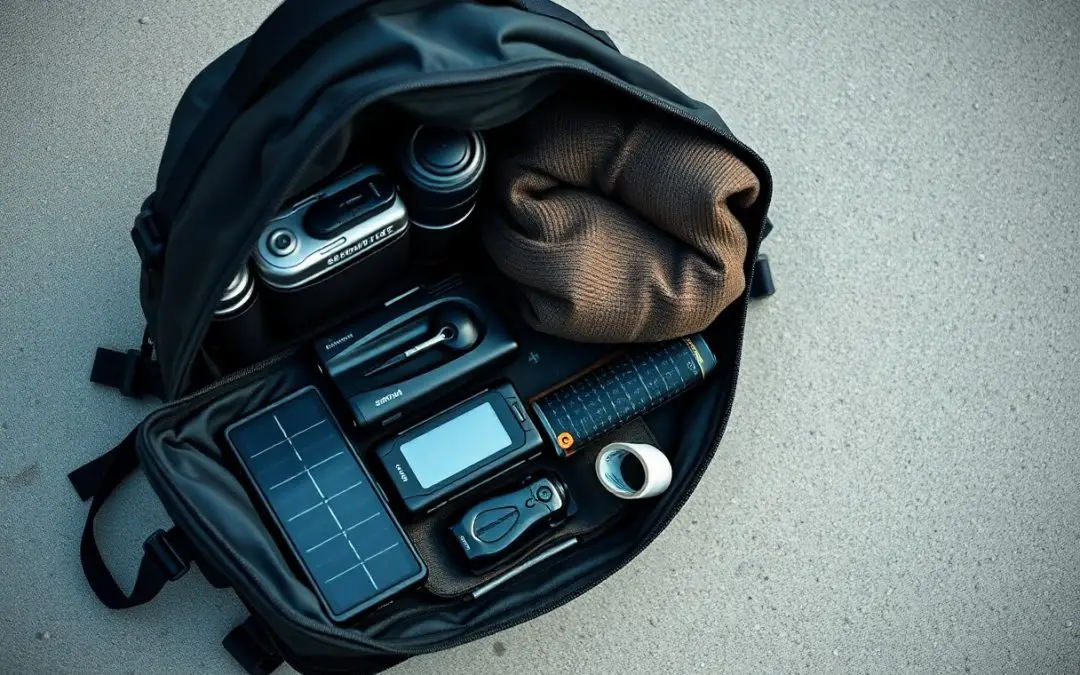
Survival planning requires you to add compact, high-impact items to your kit beyond water, food, and shelter: a multi-tool, water filter or purification tablets, an advanced first-aid kit with extra meds, a reliable light source and spare batteries, a hand-crank or solar charger, a compact shelter or tarp, weather-appropriate clothing, local paper maps and a compass, emergency cash and copies of ID, and basic hygiene and sanitation supplies to keep you functional longer.
Essential Tools
Your go bag should include compact tools that multiply what you can do: a reliable light (300-1,000 lumens headlamp), 50-100 ft of 550 paracord, a small folding saw, a compact pry tool or crowbar tip, and at least two methods to make fire. You want gear that stays usable after rough handling-pick tools with stainless or coated steel, locking mechanisms, and an overall kit weight under 5-7 lbs to keep mobility.
Multi-tools and Knives
You’ll get the most utility from a 10-15 function multi-tool (pliers, wire cutters, can opener, Phillips, knife) weighing 6-12 oz, plus a fixed-blade or locking folder with a 3-4″ blade for heavy tasks. Choose full-tang knives for chopping and stainless or carbon steel with a simple sheath, and prefer locking blades on folders to avoid accidental closure when you’re working under stress or gloves.
Fire-Starting Devices
You should carry redundancy: a ferrocerium rod (10,000-20,000 sparks), a windproof gas lighter, and a small waterproof-match tin. Ferro rods produce ~3,000°C sparks that ignite char cloth or dry tinder even when wet, while lighters offer rapid, controllable flame for fuel stoves; having both covers wet, windy, and cold conditions where one method might fail.
When you practice, shave a small pile of magnesium or dry the inner bark to create a tinder nest-3-5 focused strikes from a ferro rod usually produce an ember if the tinder is fine. Store cotton balls treated with petroleum in a waterproof capsule for instant tinder that burns 30-60 seconds, enough to catch kindling. Note that butane lighters can underperform in subfreezing temps, so test your lighter model and add a ferro rod or stormproof lighter rated for cold weather.
Navigation Aids
Maps and Compasses
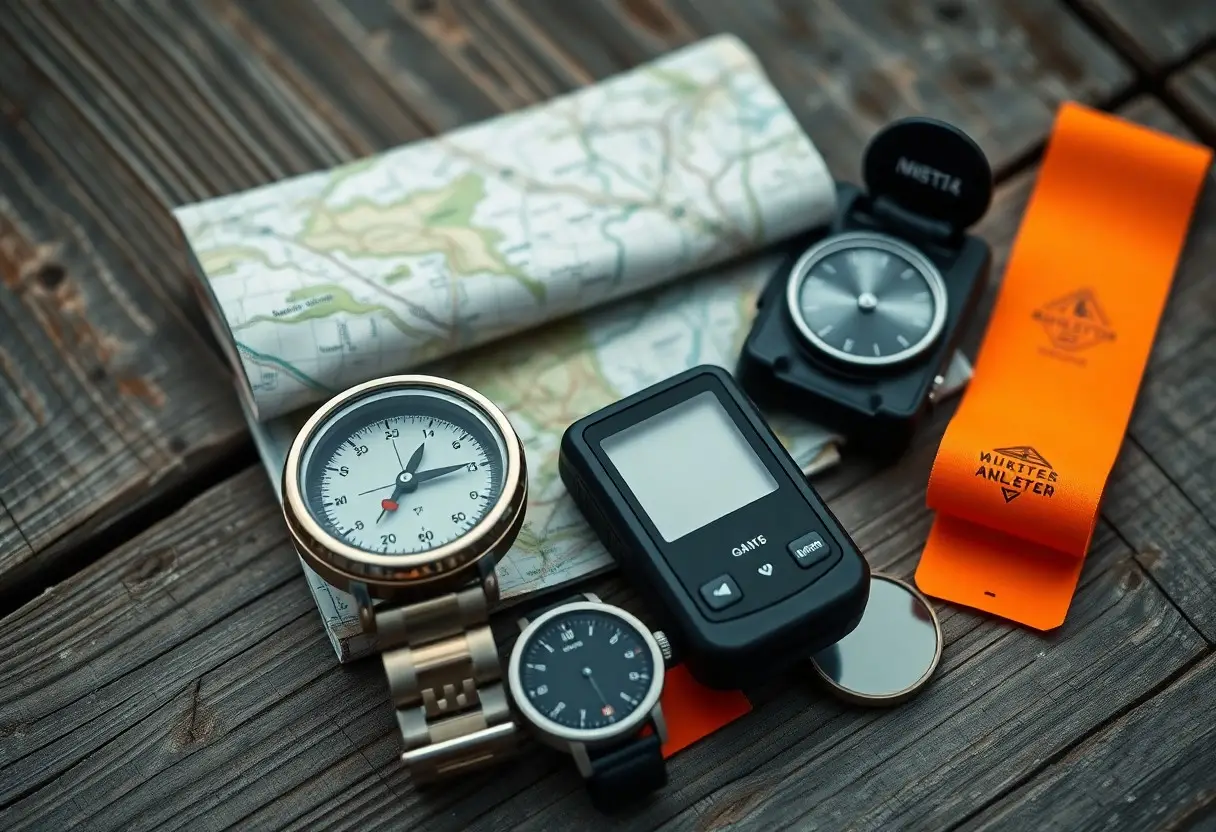
Carry laminated USGS 7.5-minute (1:24,000) topo sheets for your region and a quality baseplate compass with adjustable declination (Silva or Suunto are good examples). Use 1:24,000 for detailed route-finding or 1:50,000 for broader planning, mark key waypoints and water sources in pencil, and keep maps in a waterproof sleeve. Practice triangulating bearings and pacing distances so you can navigate in low visibility or when electronics fail.
GPS Devices
Add a handheld GPS like a Garmin eTrex or Garmin GPSMAP series with WAAS/GLONASS/Galileo support for ~3-10 m accuracy; many models offer 16-30+ hours battery life and accept AA cells or internal rechargeable packs. Preload topo maps and GPX routes, enable track logs, and consider a satellite communicator (Garmin inReach) for two-way text and SOS via Iridium. Always carry map and compass as redundancy.
Manage power and data by carrying two sets of AA batteries or a 5,000 mAh USB pack and downloading offline tiles and GPX routes before you go. Set track intervals to 5-30 seconds to extend battery and storage, and note that most units store hundreds of waypoints and thousands of track points. Test waypoint navigation, update firmware, and verify waterproof rating (IPX7 or higher) during routine drills so the device performs when you need it.
First Aid Supplies
Include adhesive bandages (20 assorted), sterile gauze pads (6-8), roller gauze, medical tape, antiseptic wipes (10), tweezers, trauma shears, 4 pairs of nitrile gloves, a CPR mask, a tourniquet, one pack of hemostatic gauze, a SAM splint, and basic OTC meds-ibuprofen, acetaminophen, antihistamine, anti-diarrheal plus oral rehydration salts-tailoring counts to the length of your trip and the number of people you’re supporting.
Emergency Medical Kits
Choose a compact, purpose-built kit for different scenarios: a Red Cross/basic kit for everyday use, a Stop the Bleed kit with 1 tourniquet and 2 hemostatic dressings for severe hemorrhage, and an Individual First Aid Kit (IFAK) with chest seals and occlusive dressings for remote or high-risk travel; you should check expiration dates and seal integrity every 6-12 months.
Specific Health Needs
Account for prescriptions by packing at least a two-week supply, 2 inhalers, 2 EpiPens, and any cardiac or blood-pressure meds you take; include printed prescriptions, dosage instructions, and a list of allergies so you or responders can act quickly, and keep spare batteries for devices like glucose meters or nebulizers.
Store insulin in an insulated pouch with cold packs and a thermometer if temperatures vary, rotate meds monthly to avoid expired doses, label containers with drug name, dose, and prescribing provider, and pack extras such as 100 lancets, 50 test strips, a glucagon emergency kit for diabetics, plus pharmacy contact and prescription numbers so you can refill or verify treatments on the go.
Food and Water Supplies
Stock enough to cover at least 72 hours: you should plan on 2-3 liters of water per person per day and 1,500-2,500 calories daily depending on activity. Prioritize compact, calorie-dense options, a balance of proteins/carbs, and a multi-method water strategy (filter, chemical, boil) so your kit works whether power, shops, or taps are unavailable.
Non-Perishable Food Items
Pack high-calorie, shelf-stable choices: 3 MREs per person for a 72-hour baseline or 2-3 freeze-dried meals plus a small canister stove, 6-10 energy bars, single-serve nut butter packets, canned tuna/chicken with pull-tabs, jerky, and electrolyte drink mixes. Rotate supplies annually, note expiration dates, and favor items providing 300-700 calories per serving for efficient weight-to-energy ratio.
Water Purification Methods
Carry at least two complementary purification options: a mechanical filter (Sawyer Mini, Katadyn Hiker), chemical disinfectant (chlorine dioxide/Aquatabs), and a battery-powered UV pen (SteriPEN) if weight permits. Filters (0.1-0.2 µm) remove bacteria and protozoa, chemicals treat viruses and lingering pathogens with proper contact time, and boiling remains the reliable fallback when fuel and cookware are available.
Mechanical filters like the Sawyer Mini (0.1 µm, rated ~100,000 gallons) give rapid flow and long service but don’t remove viruses, so pair them with chemical treatment if viral contamination is possible. Chlorine dioxide tablets disinfect bacteria and viruses in ~30 minutes and may need up to 4 hours for Cryptosporidium in cold water. Boiling (1 minute at sea level, 3 minutes above ~2,000 m) is foolproof; UV devices treat a liter in ~90 seconds but require clear water and charged batteries.
Clothing and Shelter
Pile your bag with specific, tested pieces: 2-3 moisture-wicking base layers, one insulating midlayer, a waterproof-breathable shell, two pairs of socks, a warm hat and gloves, plus a compact shelter option that fits your route. You should aim for a total clothing weight under 2-3 kg for day packs and 4-6 kg for multi-day kits, balancing warmth and packability so you can respond to sudden weather without overpacking.
Weather-Appropriate Apparel
Choose fabrics by function: merino or synthetic base layers for odor control and moisture wicking, a 700-fill down or synthetic puffy for insulation, and a 3-layer hardshell for rain and wind. You should carry at least one spare pair of socks, a beanie, and light waterproof gloves; for sub-freezing travel add a balaclava and insulated overmitts. Prioritize garments you’ve field-tested in conditions similar to your route.
Portable Shelter Options
Pack a shelter based on trip length and terrain: a 1-2 person tent (1.2-2 kg) offers reliable protection, an 8×10 ft tarp with guylines and 30-50 m of cord keeps weight low, and a hammock with bug net suits wooded areas. For emergency redundancy include a mylar bivvy (~50 g) or lightweight emergency shelter; your choice should match expected weather and available anchor points.
When selecting, compare season ratings, setup time, and packed volume: a 3-season tent with a vestibule stores gear and sheds wind, while ultralight tarps demand knot skills and suitable trees. Verify seam sealing and pole durability, test real-world setup once before relying on it, and favor shelters that balance coverage (floor space, headroom) with weight limits you can realistically carry for distance and elevation gain.
Communication Devices
Balance short-range radios, satellite messengers, and weather radios: carry a two-way handheld VHF/UHF radio (1-5 W) for group comms, a satellite messenger like Garmin inReach or ZOLEO for global two-way texting and SOS (subscription required), and a NOAA weather/alert radio to receive SAME alerts. Pack spare AA/NiMH cells or a 10,000-20,000 mAh power bank and a compact antenna, and label devices with a quick cheat-sheet of channels, frequencies, and your emergency plan.
Radios and Signal Mirrors
Choose FRS for license-free short-range use (roughly 0.5-2 miles) or GMRS/ham for greater range-handhelds typically output 1-5 W and may require licensing. Carry a multi-band handheld, 2-3 spare battery packs, and a compact signal mirror; a 3-6 cm rescue mirror with a sighting hole can flash sunlight visible to aircraft over 20 miles on a clear day. Practice basic call procedures and antenna orientation before you need them.
Whistles and Emergency Messaging
Pack a pea-less whistle rated around 110-120 dB and attach it both to your pack and your person; the standard distress pattern is three short blasts repeated at intervals until help arrives. Keep a backup whistle, test audibility in your terrain, and pair audible signals with prewritten digital messages on your satellite device so responders receive location and injury details quickly.
Draft concise emergency templates for quick sends, for example: “SOS; lat 37.1234N lon -122.1234W; 3 people; 1 fractured leg; bleeding controlled; evac needed.” Store a waterproof card with name, blood type, meds, allergies, emergency contacts, and planned route. Verify your satellite messenger’s tracking interval and battery settings-many devices offer between about 7 and 30+ days of operation depending on interval choices.
Final Words
So you should expand your go bag beyond basics with items that extend self-sufficiency and mobility: a quality multi-tool, water purification method, portable power bank and spare batteries, compact shelter and extra clothing, an enhanced first-aid kit and your prescriptions, copies of IDs and emergency cash, local maps and a reliable light source, hygiene items and a small comfort item, and supplies for pets or special needs.


