
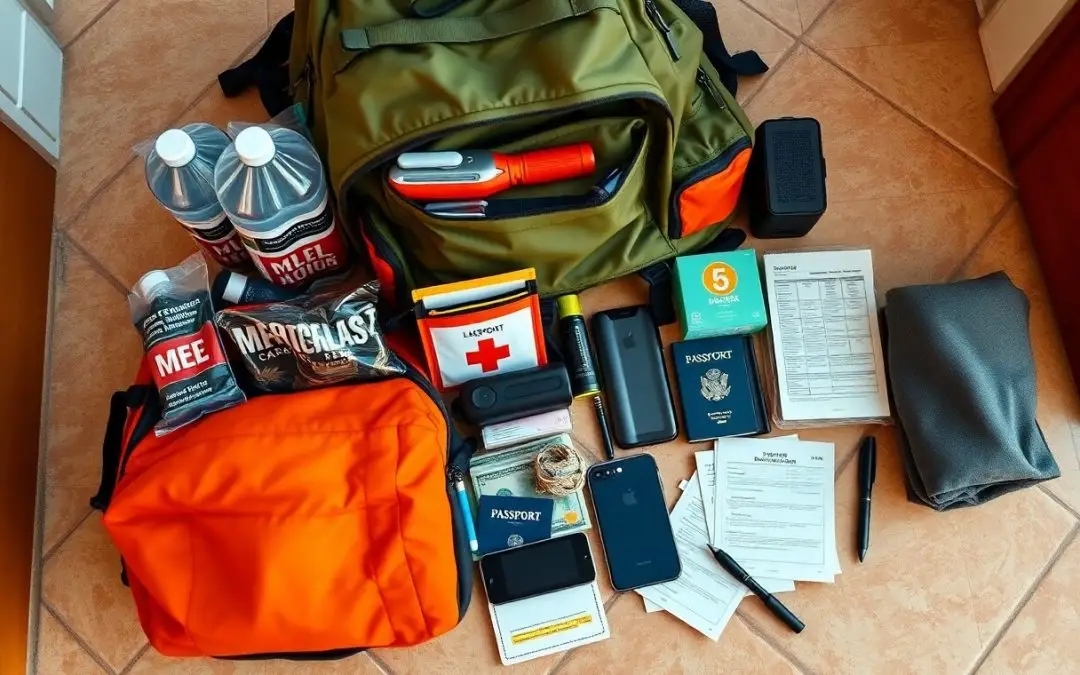
With a compact go bag stocked with water, first-aid, warm layers, tools, copies of documents, and a charged power bank, you can execute a rapid evacuation confidently; this guide outlines imperatives, packing order, and brief checklists so you act quickly and safely when time is limited.
The Framework of Emergency Preparedness
Your evacuation plan organizes priorities, supplies, communication, and roles so you can act quickly when seconds matter.
Defining the 72-Hour Survival Window
You should be self-sufficient for at least 72 hours after evacuation, carrying water, nonperishable food, basic medical supplies, and backup power and shelter options.
Assessing Regional Risks and Environmental Threats
Local hazards-floods, wildfires, earthquakes, and storms-determine the items you prioritize, the routes you choose, and the timing of your evacuation.
Identify local warning systems, seasonal weather patterns, and infrastructure vulnerabilities, then match your go bag to those threats: extra water for heat, dust masks for fires, waterproof storage for floods, and spare batteries for outages.
Selecting the Optimal Load-Out System
Pack selection shapes your mobility and access; match capacity to trip length, route, and priorities, favoring quick-access openings and secure closures so you can move fast without losing vitals.
Tactical vs. Low-Profile Pack Selection
Your choice between tactical and low-profile packs depends on expected environment: tactical packs offer dedicated compartments and attachment points, while low-profile models keep a lower signature for urban egress.
Modular Organization and Weight Distribution
Balance modular pouches around a core frame, placing heavy items close to your spine and high on the pack to maintain stability and reduce fatigue during long carries.
Organize your system by grouping gear into mission-specific modules-medical, water, comms, tools-so you can shed or swap items without unpacking the whole bag. Stow the heaviest mass near your center of gravity, roughly between shoulder blades, and use the hip belt to shift load to your hips. Use compression straps and removable pouches to prevent shifting; color-code modules and test loadouts on short hikes to fine-tune strap tension and pack balance.
Fundamental Life Support Essentials
Your go bag should prioritize breathable shelter, layered clothing, reliable lighting, and a compact first-aid kit so you can treat injuries and maintain core warmth during evacuation.
Hydration Systems and Water Purification Methods
When packing water, include a durable bottle, a collapsible bladder, and at least two purification options like tablets and a filter straw to keep you drinking for days.
High-Caloric Nutrition and Food Security
Pack calorie-dense, nonperishable foods-nuts, energy bars, and dehydrated meals-so you can sustain energy with minimal weight and preparation during extended evacuations.
Choose long-shelf items rated for years, prioritize high-calorie-per-ounce options, and rotate supplies so you can meet daily energy needs; include ready-to-eat meals, powdered milk, and allergy-safe options to maintain nutrition while on the move.
Rapid Evacuation Kits and Go Bag Essentials
Medical readiness means you pack personal medications, allergy and prescription info, spare glasses, and a small supply of OTC pain relievers; include copies of prescriptions and a list of emergency contacts to reduce delays during evacuation.
Trauma Management and Advanced First Aid Kits
Trauma kits should let you stop heavy bleeding, splint fractures, and manage airway and shock with tourniquets, hemostatic dressings, chest seals, and airway adjuncts for rapid care until professional help arrives.
- Tourniquet, hemostatic gauze, and pressure dressings
- Airway adjuncts, bag-valve mask, and suction
- Splints, SAM splint, and rigid immobilizers
- Medications, epinephrine auto-injector, and analgesics
| Item | Purpose |
|---|---|
| Tourniquet | You use it to control life-threatening limb hemorrhage |
| Hemostatic gauze | You apply it to accelerate clotting in deep wounds |
| Airway adjuncts | You insert them to maintain patency and support breathing |
| Splints | You stabilize fractures to prevent further injury during transport |
Sanitation and Hygiene in Field Conditions
Sanitation practices ensure you limit infection: carry compact hand sanitizer, biodegradable wipes, a trowel or portable toilet bags, and menstrual supplies to maintain hygiene during prolonged field stays.
You should prioritize waste containment, hand hygiene, and water purification: use sealable bags for waste, a lightweight folding trowel for cat-hole toilets, and enzyme deodorizer packets for odor control. Carry water purification tablets, a compact filter, and spare soap. Train on proper glove removal and wound cleansing so you avoid cross-contamination while on the move.
Shelter and Environmental Protection
You should prioritize compact shelter options like a tarp, emergency blanket, and lightweight repair kit to shield yourself from rain, wind, and sun while you move or wait.
Emergency Bivouac and Thermal Regulation
When building an emergency bivouac, insulate yourself from ground cold, trap heat using a space blanket or bivy, and manage ventilation to reduce condensation as you conserve energy.
Hardened Clothing Layers and Footwear Considerations
Layering for durability means you pack abrasion-resistant outer layers, moisture-wicking mid layers, and sturdy waterproof footwear that supports long movement and quick weather changes.
Inspect your clothing for wear and fit before you head out; choose merino or synthetic next-to-skin pieces, mid layers that retain warmth when damp, and a tough shell that sheds abrasion. Pack boots with ankle support and aggressive soles, break them in ahead of time, and include a spare pair of socks plus a small repair kit and duct tape for field fixes.
Navigation and Communication Protocols
Set communication protocols before you evacuate: assign check-in times, primary and backup channels, and a single contact for family reunification; keep concise, agreed phrases to reduce confusion under stress.
Analog Navigation and Signaling Tools
Carry a reliable compass, folded paper maps, a signal mirror, whistle, and waterproof notepad; you should practice bearings and map-reading so you can orient and mark routes if electronics fail.
Redundant Communication Devices and Power Reserves
Include multiple communication devices-handheld radios, a satellite messenger, and a charged phone-and store labeled spare batteries and SIM cards in waterproof pouches so you can swap quickly.
Maintain power reserves with high-capacity power banks, a foldable solar panel, and spare battery packs; you should test charge cycles, rotate batteries by date, carry charging cables and a small USB hub, and register satellite devices before departure to ensure firmware and accounts are active when needed.
Summing up
Following this you should maintain a compact go bag with water, first-aid, light, spare clothing, copies of documents, cash and a portable charger; inspect and update it regularly so you can evacuate quickly and sustain yourself for 72 hours.


