
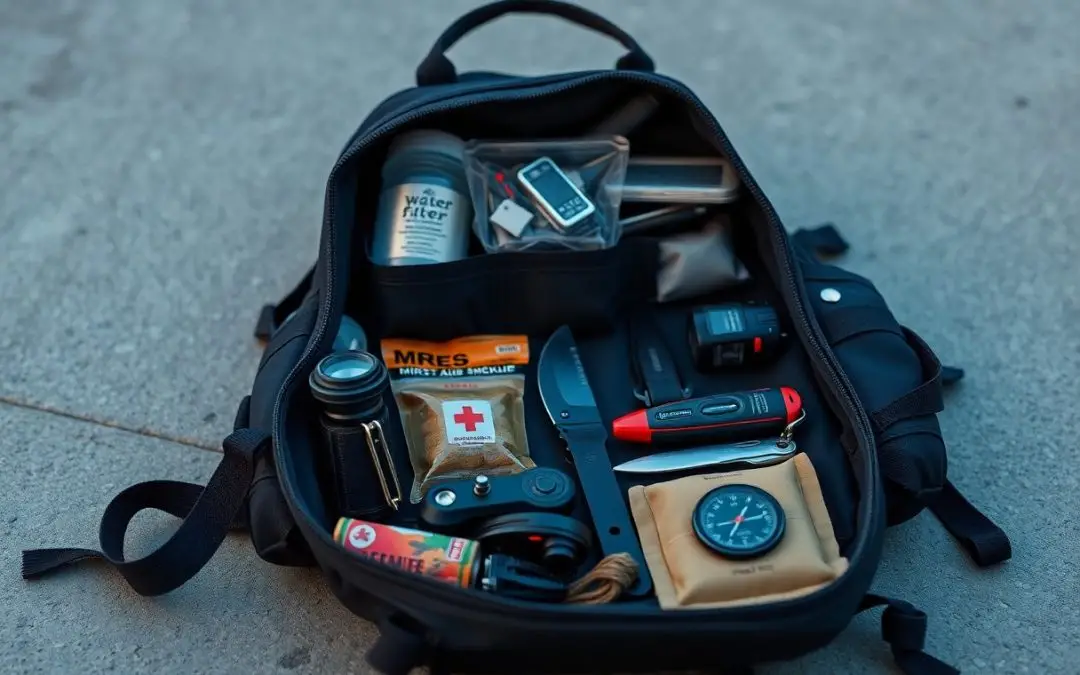
There’s vital gear you should pack in a go bag to keep you safe and self-sufficient: potable water, high-calorie food, shelter, first-aid, multi-tool, light source, fire starter, communication device, and copies of documents.
Core Hydration and Water Purification
Your go bag needs a sturdy water bottle, a backup filter or filter bottle, compact purification tablets, and a UV pen so you can treat water on the move and stay hydrated during extended outages.
Portable Filtration and UV Systems
Choose lightweight pump filters, straw-style filters, or gravity filters with replaceable cartridges, plus a UV pen for rapid disinfection so you can handle cloudy sources and kill viruses when needed.
Collapsible Storage and Chemical Treatment
Include foldable bladders, soft bottles, and measured chemical treatments like chlorine or iodine tablets so you can store treated water compactly and treat larger batches without heavy containers.
Pack food-grade collapsible bladders with secure screw caps in 1-3 liter sizes and bring spare caps or adapters; you should track chemical tablet shelf life, carry a small test kit or dropper for accurate dosing, and rotate consumables to keep your supply safe.
High-Calorie Nutrition and Sustenance
Stock high-calorie bars, nuts, and calorie-dense meal packs that sustain you when cooking isn’t possible; aim for variety to avoid fatigue and include electrolyte replacements.
Lightweight Emergency Food Rations
Pack compact, long-shelf items like MREs, energy gels, and dehydrated meals so you can eat calorie-rich food without weight or fuss.
Compact Cooking Gear and Utensils
Select a lightweight stove, fuel tabs, and a nesting pot set so you can heat meals, boil water, and limit pack bulk.
Consider multi-use utensils, a reliable windscreen, and a compact lighter or ferrocerium rod; prioritize fuel efficiency, durability, and easy cleaning so you can prepare varied meals quickly in adverse conditions.
Shelter and Environmental Protection
Pack lightweight shelter options to keep you protected from wind, rain, and cold while on the move; prioritize quick setup and a compact footprint to save space in your bag.
Emergency Bivvies and Tents
Choose an ultralight bivvy or compact tent so you can shelter quickly, retain heat, and set up in tight or exposed spaces without adding bulk to your load.
Thermal Blankets and Weatherproof Outerwear
Carry both a space blanket and a weatherproof shell so you can block wind and rain while preserving warmth and reducing heat loss during rest or transit.
Layering lets you adapt: a lightweight insulated blanket or packable down jacket secures core heat, while a seam-taped, windproof shell sheds rain and wind. Include a mylar emergency blanket as a low-weight liner or shelter backup, and avoid cotton that holds moisture and accelerates heat loss. Aim for breathable membranes, DWR finishes, and a hooded shell with adjustable cuffs so you can stay dry without overheating.
Medical Readiness and Trauma Supplies
Pack a compact trauma kit with a tourniquet, hemostatic gauze, chest seal, and pressure dressings so you can treat life-threatening injuries until help arrives.
Individual First Aid Kit (IFAK) Essentials
Include a CAT tourniquet, hemostatic agent, chest seal, trauma shears, and nitrile gloves so you can address severe bleeding and penetrating wounds immediately.
Personal Medications and Hygiene Kits
Store a multi-day supply of prescription meds, spare inhalers or EpiPens, OTC pain relievers, and a small hygiene kit so you maintain health and avoid complications.
Organize medications in labeled, waterproof pouches with dosing instructions, expiration dates, and a list of generic names; include a backup prescription note and contact info so you can refill while displaced.
Navigation and Communication Tools
Pack a compact GPS, spare batteries, extra charging cables, and a personal locator beacon so you can maintain position fixes and coordinate with others when phones fail.
Signal Mirrors and Hand-Crank Radios
Signal mirrors let you flash sunlight to distant rescuers, and hand-crank radios keep you informed without batteries so you can call for help or follow updates.
Topographic Maps and Compass Integration
Carry waterproof topographic maps and a reliable compass so you can plot bearings, estimate distances, and stay oriented when electronics die.
Practice pairing map features with ground landmarks, use contour lines to assess slope and travel time, and learn to take and follow compass azimuths so you can route around hazards.
Utility Hardware and Lighting
Pack compact hardware and reliable lighting so you can handle field repairs and maintain visibility; include carabiners, paracord, duct tape, spare batteries, and a compact utility kit for quick fixes.
Multi-tools and Fixed-Blade Knives
Choose a quality multi-tool and a fixed-blade knife so you can handle cutting, prying, and repairs; prioritize corrosion-resistant steel and secure sheaths for safe carry.
Tactical Flashlights and Hands-Free Headlamps
Carry a high-lumen tactical flashlight plus a hands-free headlamp so you can light scenes and work hands-free; opt for adjustable beams and long battery life.
Select flashlights rated 300-1000 lumens for general tasks, with spot-to-flood beams for distance and area lighting. Choose models with multiple output levels, a strobe option for signaling, and IPX7 water resistance. For power, rechargeable 18650/21700 cells offer runtime and convenience; carry spare batteries and a USB-C charging headlamp with a low-red mode to preserve night vision.
To wrap up
With these considerations, you can assemble a concise, personalized go bag that balances shelter, water, food, medical supplies, tools, and documentation; rotate and test items regularly so the kit stays ready and you can respond confidently in an emergency.


