
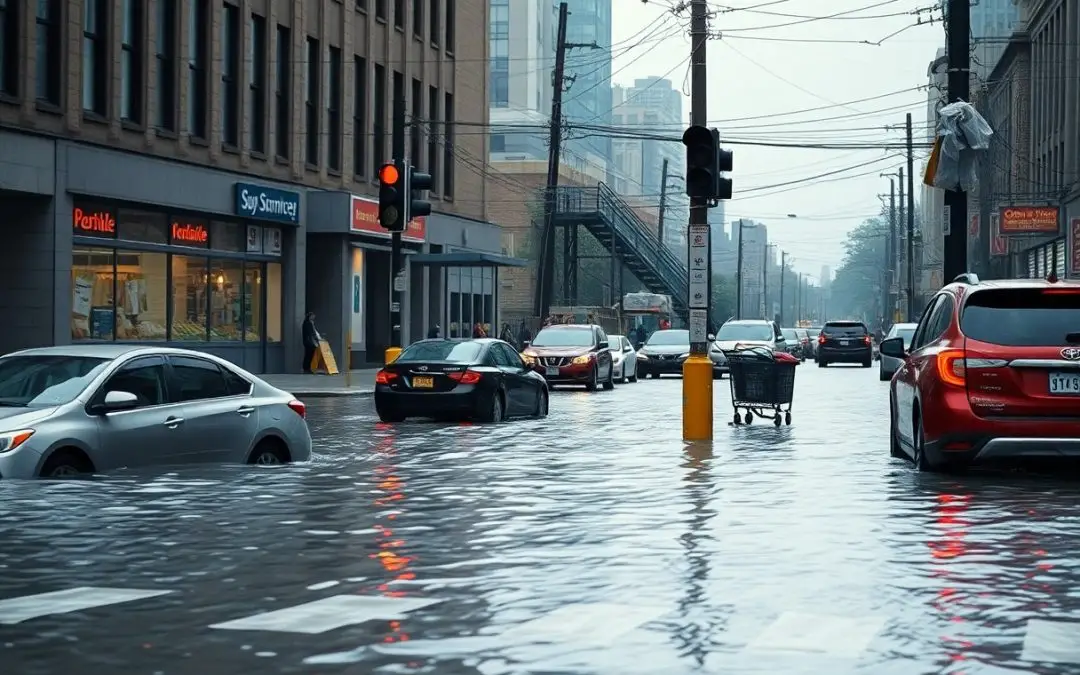
Many weather emergencies strike without warning, halting commutes, closing schools, and cutting off power. You may find your routine shattered by a storm, flood, or heatwave, even if you’re miles from the epicenter. These events test infrastructure, delay services, and expose how fragile daily life can be when nature intervenes.
The Cruel Change in the Sky
Weather shifts can turn a predictable day into chaos within hours. You step outside under clear skies, only to watch clouds gather like an advancing wall. What seemed like a routine morning unravels as wind picks up and temperatures drop. These sudden reversals catch even the prepared off guard.
Bright mornings lost to clouds
Light that once warmed your face vanishes as thick clouds roll in. You notice the sky dimming earlier than expected, shadows stretching across streets. What began as a cheerful sunrise becomes a muted haze, disrupting outdoor plans and shifting moods without warning.
The heavy scent of the storm
That sharp, earthy smell in the air signals what’s coming. You’ve noticed it before-damp soil and ozone mixing just before rain hits. It’s nature’s quiet warning, often ignored until thunder echoes in the distance.
Ozone, produced by lightning splitting oxygen molecules, reaches the ground ahead of storms, giving the air a clean, metallic tang. This scent, combined with moisture rising from heated pavement, creates a distinct atmosphere. You’ve likely paused and inhaled deeply without realizing why-your body responding to subtle environmental cues long before the first drop falls.
When the Power Fails
Blackouts transform ordinary routines into urgent challenges. You lose light, heat, and communication in moments, leaving you unprepared. Without warning, your home becomes unfamiliar, and simple tasks grow difficult. This sudden shift reveals how deeply dependent daily life is on a steady flow of electricity.
Cold stoves and dark rooms
You can’t cook a meal when your stove won’t ignite. Refrigerators fall silent, food begins to spoil, and the house grows colder with each passing hour. Darkness creeps into corners, making movement risky. These small failures add up, turning your safe space into an uncertain environment.
The end of the digital world
Your phone dies, the Wi-Fi stops, and screens go black. No messages, no maps, no music-just silence. You’re cut off from updates, loved ones, and the tools you rely on. In that moment, the digital safety net you didn’t notice vanishes completely.
Without internet or cellular service, even basic decisions become harder. You can’t check the storm’s path, confirm school closures, or call for help. GPS fails, ATMs lock out, and credit card machines shut down. You’re forced to rely on memory, paper maps, and face-to-face contact-skills long set aside in the digital age.
The Road is No Longer Yours
Weather turns familiar routes into obstacles without warning. What was a clear path yesterday may be impassable today. You leave home expecting routine, only to find nature has rewritten the rules. Roads you depend on can vanish beneath debris, ice, or floodwaters, leaving you stranded or rerouted through unfamiliar territory. Control slips away in moments.
Fallen pines blocking the way
Heavy winds snap mature pines at the trunk, dropping them across roads without warning. You approach a bend and suddenly face an impassable wall of branches and bark. Emergency crews take hours to clear it, leaving you waiting in cold or rain. These silent giants, once part of the scenery, now dictate your progress.
Ice that breaks the spirit
Black ice coats the road like a hidden trap, invisible until your tires lose grip. You feel the slide before you see the danger. Even cautious driving offers no guarantee. One patch can spin your car into a ditch or trigger a chain-reaction crash. The cold doesn’t just freeze the pavement-it freezes your confidence behind the wheel.
That thin, transparent layer of ice is more than a physical hazard-it reshapes your mindset. Each drive becomes a test of nerves, not skill. You second-guess every turn, every brake tap, every shadow on the asphalt. The road no longer feels like a right; it feels like a gamble. This mental toll lingers long after the thaw.
The Empty Larder
Shops with the lights off
Power outages during storms shut down supermarkets, leaving shelves bare. You can’t buy necessarys when delivery trucks are stranded and refrigeration fails. What looked like a routine grocery run becomes impossible, and your pantry stays empty longer than expected.
A lack of clean water
Heavy rains and flooding overwhelm treatment systems. You turn on the tap, only to be warned not to drink the water. Without safe supplies, even basic hygiene becomes a challenge, and your household must rely on bottled sources until services recover.
Contaminated water sources pose serious health risks, especially for children and the elderly. You may not see the bacteria or chemicals, but they’re there. Boil advisories last days or weeks, stretching your resources and demanding constant vigilance in cooking, cleaning, and drinking.
The Breach of the Threshold
Weather emergencies don’t announce their arrival with ceremony. One moment, your home feels secure; the next, wind forces open a window you swore was latched. That small gap becomes a gateway for rain, cold, and chaos-your indoor sanctuary no longer safe from the storm outside.
Rain through the roof
Water finds the weakest seam in your roof, seeping through long before you notice the stain on the ceiling. Once inside, it travels along beams and insulation, emerging where you least expect it-dripping onto furniture, warping floors, and undermining the dry comfort you take for granted.
Mud on the clean rug
Muddy footprints appear just inside the door after a soaked guest steps in. What seems minor quickly spreads-tracked across hardwood, into bedrooms, even the kitchen. Each step carries remnants of flooded yards and broken drains, turning your clean floors into a map of the storm’s reach.
Your rug absorbs more than dirt-it holds the residue of overwhelmed streets and saturated soil. Cleaning it won’t undo the fact that the outside has entered your space, unwashed and uninvited. This isn’t just a mess to mop up; it’s proof that boundaries, once firm, can dissolve in hours.
The Long Night of Waiting
Power lines snap under the weight of ice, and darkness wraps around your home like a heavy blanket. You sit in silence, watching the clock tick past midnight, unsure when help will arrive. Roads are impassable, phones lose signal, and the world outside feels distant, even though it’s just beyond your door.
Listening to the wind howl
Wind rattles your windows with a force that makes sleep impossible. Each gust sounds like a warning, a reminder that nature doesn’t follow schedules. You lie awake, counting the seconds between crashes, wondering if the roof will hold or if the tree by the garage will fall.
The slow return of the sun
Dawn breaks with a pale light filtering through clouds still heavy with snow. The storm has passed, but the silence feels strange after hours of chaos. You step outside to find a world transformed-familiar paths buried, power lines down, and neighbors emerging cautiously from their homes.
That first sunlight brings more than just visibility-it reveals the full scope of disruption. Fallen branches block driveways, frozen pipes threaten damage, and the absence of electricity lingers. Recovery begins not with a signal, but with small actions: checking on an elderly neighbor, shoveling a path, assessing what’s broken and what can wait. The sun is back, but normalcy remains just out of reach.
Final Words
With these considerations, you understand how weather emergencies can interrupt your routine without warning. A sudden storm, blizzard, or heatwave can close schools, halt transit, and cut power. Your safety depends on awareness and preparation. Stay informed through reliable sources and act quickly when conditions change. Your daily life may shift in moments, but your response makes all the difference.


