
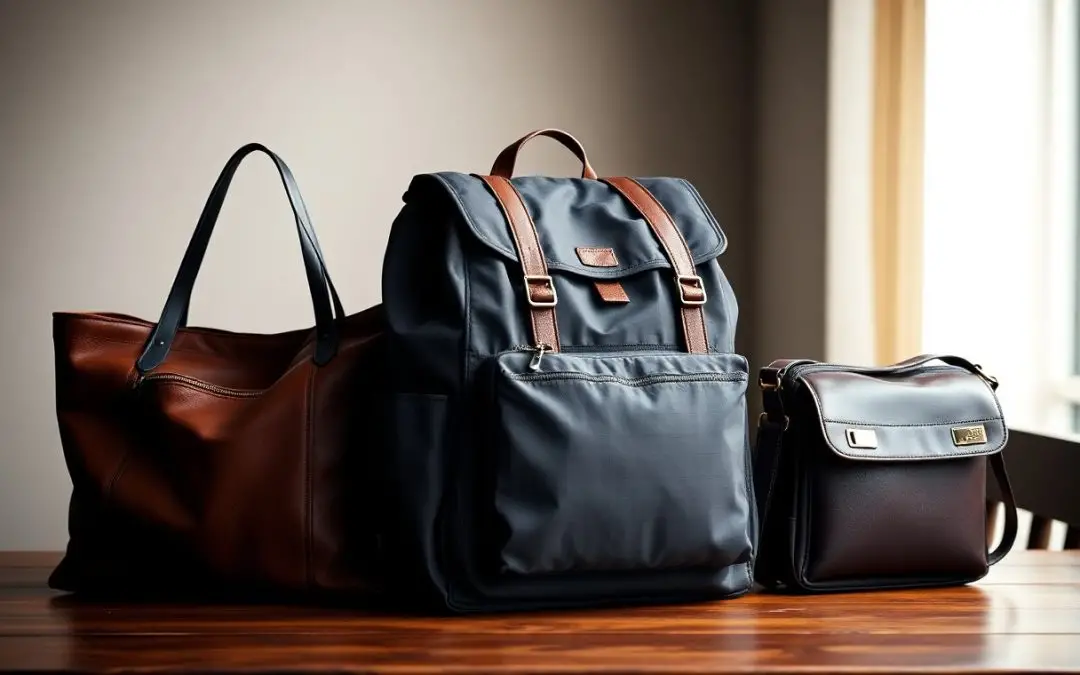
It’s imperative to choose a bag that complements your wardrobe while meeting daily needs; you should evaluate material, compartment layout, strap comfort, and durability so the piece carries your imperatives without sacrificing appearance. Favor versatile silhouettes, thoughtful closures, and easy maintenance that transition from work to weekend, enabling your bag to enhance outfits while performing reliably in real life.
The Importance of Style and Function in Bags
When you choose a bag, balance often decides whether it becomes your daily go-to: a 15L commuter pack with a padded 13-15″ laptop sleeve, water-resistant zippers, and a quick-access phone pocket pairs just as well with a tailored coat as a canvas tote does with weekend jeans. Designers at Bellroy and Fjällräven blend clean silhouettes with function, proving you can get durability, organization, and aesthetics without sacrificing any single element.
Defining Style in Modern Bags
You judge style by silhouette, material, and detailing: three core silhouettes dominate-tote, crossbody, backpack-while finishes like brushed hardware, pebble-grain leather or recycled nylon and colorways (black, tan, navy, seasonal accents) signal intent. Minimal lines suggest professional polish; structured boxes read formal, whereas slouchy shapes and contrast stitching communicate casualness, so you match the bag’s visual cues to your daily wardrobe and setting.
Understanding Functionality and Practicality
You look for measurable features: compartment count, dedicated 13″-15″ laptop sleeve, RFID pocket, strap adjustability, and weight under 1.2 kg for day use. Brands using YKK zippers and reinforced seams typically outlast cheaper rivals; modular inserts and removable pouches let you reconfigure capacity from 6-40L depending on needs. Practicality means the bag performs for how you actually live and work.
You should assess capacity against use: 6-10L suits minimalist daily carry, 15-25L fits commuters with chargers and lunch, while 30-40L handles short trips. Test strap width (3-5 cm for shoulder comfort), padding thickness, and whether the laptop sleeve clears a 15″ MacBook Pro or 16″ models. Field trials-carrying a loaded bag for a week-quickly reveal pressure points, pocket usefulness, and real-world water resistance performance.
Key Features of Stylish and Functional Bags
You want well-organized compartments, weather resistance, and a light carry weight-aim for under 1.2 kg for daily use. You expect durable hardware like YKK zippers rated ~10,000 cycles, abrasion-resistant textiles (Cordura 500-1000D) or full-grain leather 1.2-1.6 mm thick, plus reinforced stitching at stress points. You check strap comfort on a 2-3 hour commute and confirm repair or warranty support. Thou should test a 5 kg load to assess comfort and balance before buying.
- Organization: Dedicated laptop sleeve (fits up to 15″), quick-access phone pocket, and internal dividers to keep gadgets separate and upright.
- Materials: Water-repellent coatings (3000-10,000 mm hydrostatic head), Cordura 500-1000D, full-grain leather or waxed canvas for longevity.
- Hardware: YKK zippers, metal buckles rated to 20+ kg, and bar-tacked seams at load points to prevent failure.
- Straps & padding: 3.5-5 cm strap width with 8-12 mm foam for commuters; contoured, ventilated back panels for breathability.
- Weight & capacity: Keep empty weight <1.2 kg for everyday bags; internal volume matched to use (15-20 L for commuting, 25-35 L for travel).
- Security: Lockable zipper pulls, RFID-lined pockets, and hidden exterior pockets for passports or cash.
- Repairability & warranty: Modular components, replaceable straps, and brands offering multi-year warranties or repair services.
- Sustainability: Recycled nylons, vegetable-tanned leathers, and transparent supply chains for lower environmental impact.
Materials and Durability
You should favor textiles with measurable specs: Cordura 500-1000D resists abrasion, full-grain leather at 1.2-1.6 mm ages well, and PU or DWR coatings with 3,000-10,000 mm ratings repel heavy rain. You can expect a Cordura commuter bag to last 5-10 years with daily use and basic care; leather pieces often improve over 10+ years. You check seam taping, reinforced base panels, and brand repair policies when evaluating long-term value.
Design and Ergonomics
You assess ergonomics by strap shape, padding thickness, and load transfer: choose 3.5-5 cm wide straps with 8-12 mm foam and a ventilated 3D mesh back panel to reduce sweat. You aim for balanced internal layout so weight sits close to your spine; small sternum straps improve stability during a brisk 15-minute walk test. You also note how the bag rides when loaded with 3-7 kg of gear.
You can refine fit by adjusting shoulder straps so the bag sits at your lumbar curve, keeping the top of the pack 5-10 cm below your shoulders for mobility. Test with real loads: a 13-15″ laptop plus charger (~2-3 kg) and daily items (~1-3 kg) to see how the center of gravity shifts; the best commuter packs keep weight within 5 cm of your back. Observe features like load lifters, tapered straps to prevent digging, and hip belts or sternum straps that reduce shoulder strain-Osprey and Timbuk2 designs often demonstrate effective load transfer and adjustability in their commuter and daypack lines.
Types of Bags That Balance Style and Function
You can choose from a handful of proven silhouettes that marry aesthetics with utility: totes for work, backpacks for commuting, crossbodies for travel, satchels for meetings, and convertible options for weekends. Many designers offer structured leather totes that fit 15-inch laptops and organized pockets; commuter backpacks often range 20-30 L with padded sleeves. Perceiving the intended use lets you prioritize strap comfort, compartment count, material durability, and closure type.
- Tote Bags
- Backpacks
- Crossbody Bags
- Satchels
- Convertible Bags
| Tote Bags | 12-20 L; fits 15″ laptop; reinforced handles; open-top or zip closure |
| Backpacks | 20-30 L; padded laptop sleeve; ergonomic straps; ventilated back |
| Crossbody Bags | 3-8 L; adjustable drop 20-26 in; hands-free; anti-theft zips |
| Satchels | 8-12 L; structured shape; office-to-evening versatility; top handles |
| Convertible Bags | 10-25 L; transforms between shoulder and backpack; quick-access pockets |
Tote Bags
You’ll often pick a tote when you need a polished look with big capacity; typical leather totes hold 12-20 L and accommodate a 15-inch laptop, water bottle, and file folder. You should assess strap drop, internal zip pockets, and base reinforcement; examples like Cuyana’s Classic Tote favor thin profiles while Everlane’s Day Market adds gussets for volume.
Backpacks
When you commute, choose a 20-30 L backpack with a padded sleeve for a 15-17-inch laptop and ergonomic, adjustable straps to reduce shoulder load; brands like Aer and Fjällräven balance slim silhouettes with utility. You must inspect zippers, seam reinforcement, and external water bottle pockets for daily convenience.
To optimize comfort, you can prioritize a sternum strap, ventilated mesh back, and a hip belt for loads over 8-10 kg; Peak Design’s Everyday Backpack offers modular dividers and weatherproof fabric, while travel-focused packs add lockable compartments and luggage pass-throughs.
Crossbody Bags
For errands or travel, a 3-8 L crossbody keeps your hands free and necessarys secure; ideal strap drop is 20-26 inches so the bag sits at hip level, and anti-theft zips and RFID pockets add security. You should evaluate strap width and interior organization for phones, keys, and a compact wallet.
Many designs, such as Bellroy Sling or Pacsafe Citysafe, pair lightweight fabrics with slash-resistant straps and multiple compartments; you can size a crossbody to hold a 9.7-inch tablet or go smaller (2-4 L) for nights out when minimal bulk matters.
Best Brands Offering Stylish and Functional Bags
You can narrow choices by brand strengths: Tumi and Rimowa for travel engineering, Prada and Saint Laurent for structured leather pieces, and Everlane, Fjällräven, Herschel for budget-savvy daily carry. Tumi’s Alpha line emphasizes organized compartments and durable ballistic nylon, while Rimowa offers aluminum shells and TSA-friendly locks. Prada’s Saffiano leather resists scratches and maintains shape. Price brackets run roughly $70 for entry-level styles to $3,000+ for couture, so you can match performance needs with budget and resale potential.
High-End Options
Prada’s Saffiano totes and Saint Laurent’s Sac de Jour deliver refined silhouettes with reinforced stitching and structured interiors, often starting near $1,500. For business travel, Tumi Alpha 3 backpacks include dedicated laptop sleeves and modular pockets, typically $350-$700. Rimowa’s Classic Cabin aluminum case protects fragile contents, uses a multiwheel system and TSA locks, and generally retails above $800. These labels provide engineered components, global service centers, and strong secondary-market resale values.
Affordable Alternatives
Everlane, Fjällräven, Herschel, Baggu and Dagne Dover give you functional design without premium pricing: Everlane’s Day Market tote and Fjällräven Kånken (16L) focus on clean lines and sustainable fabrics, usually $70-$180. Herschel’s models add padded laptop sleeves and breathable backs for $50-$120, while Dagne Dover offers neoprene-like materials and inserts under $250. You get durability, straightforward organization, and easy-care finishes suitable for daily commuting or student use.
When you shop affordable lines, inspect materials and service: Fjällräven’s Vinylon F is water-resistant and cleans simply, and several brands offer limited repairs or parts. Compare capacity-16L Kånken fits a 13″ laptop, while many Herschel packs run 20-25L for gym plus tech-and test straps for comfort. Apply a DWR spray for extra weather resistance, swap in a padded insert if you carry fragile gear, and check return windows before buying.
Tips for Choosing the Right Bag
You should match capacity and protection to your daily load: a 15″ laptop needs a roughly 16×11″ compartment, while light carry fits in 8-12L crossbodies; check strap padding, zipper quality, and water resistance like nylon or waxed canvas. Consider hardware-brass lasts longer than plated alloys-and organization features such as dedicated tech pockets. Recognizing how a 30-45 minute commute affects comfort will steer you toward padded straps and breathable back panels.
- Capacity: 8-45L depending on commute or travel
- Protection: padded laptop sleeve and secure closures
- Comfort: padded straps, sternum strap, and weight distribution
- Material: leather for polish, nylon/waxed canvas for weather resistance
Assessing Your Needs
You should inventory daily items and measure them-charger, water bottle, shoes, 13″ or 15″ laptop-to pick a bag that fits without wasted space; for example, a 13″ laptop fits a 14×10″ pocket while a 17″ needs about 18×12″. If you bike commute, prioritize ergonomic straps and reflective details; if you travel weekly, target 30-40L with lockable zippers and compartmentalized packing.
Evaluating Style Preferences
You should align bag shape and material with your wardrobe: structured leather or a briefcase complements suits and tailored looks, matte nylon or sleek backpacks suit tech-casual attire, and slouchy canvas totes pair with relaxed weekend outfits. Favor neutral colors like black, navy, and tan for broad compatibility, and reserve bright hues for dedicated leisure pieces to avoid clashing across outfits.
You can test proportion and finish easily: hold the bag to see if it runs from your hip bone to lower ribs for balanced carry, choose clutches under 8×6″ for evenings and 20-30cm (8-12″) width for daytime use. Inspect trims-polished metal shows scratches sooner than matte hardware-and note that vegetable-tanned leather will develop patina over months, changing the bag’s look as you wear it.
Care and Maintenance of Functional Bags
Cleaning and Storage Tips
You can spot-clean most synthetics with a solution of 1 part mild detergent to 10 parts water, using a soft brush for grime and a damp cloth for neoprene or coated fabrics; avoid soap on waxed canvas, which needs re-waxing after heavy cleaning. Wipe leather with saddle soap and condition every 3-6 months, and unzip pockets to clear debris from seams and sliders. After, leave the bag unzipped to air-dry for 24-48 hours.
- Brush out dirt before washing to prevent abrasion.
- Use a soft cloth and mild soap for nylon; avoid machine drying.
- Re-wax canvas with a beeswax/paraffin blend every 6-12 months.
- Store in a cool, dry place away from direct sunlight and metal hangers.
- Remove batteries and electronics before long-term storage to prevent corrosion.
Repair and Care Recommendations
Patch torn seams with bonded nylon thread or a dedicated repair kit and reinforce strap bases with bartack stitching or stainless-steel rivets when you notice fraying; YKK zipper replacements typically run $20-60 if you opt for a professional swap, while simple slider swaps cost under $15. You can extend life by treating leather edges with edge paint and conditioning every 3-6 months, and by sending technical packs to reputable repair shops for structural fixes to avoid voiding warranties.
For DIY repairs, you can use a size-18 upholstery needle and bonded nylon or polyester thread for load-bearing seams, and a curved needle to reach strap bases; rivet kits cost $15-40 and let you replace split rivets quickly, while YKK zipper sliders or full replacements can be ordered online to match tape width. You should use seam sealant for taped seams and contact cement for heavy patches-allow 24-48 hours curing at room temperature. Prioritize professional repair for structural frame, molded foam back panels or integrated electronics, since pros have industrial machines and parts; turnaround is typically 3-7 days and can extend if custom components are needed.
To wrap up
From above, you can see that choosing a bag that balances style and function means prioritizing quality materials, thoughtful organization, and versatile design; you should evaluate capacity against silhouette, hardware durability, and comfort of carry, and opt for timeless finishes that suit multiple settings. By aligning your daily needs with enduring construction, you ensure your bag complements both your aesthetic and practical demands.


