
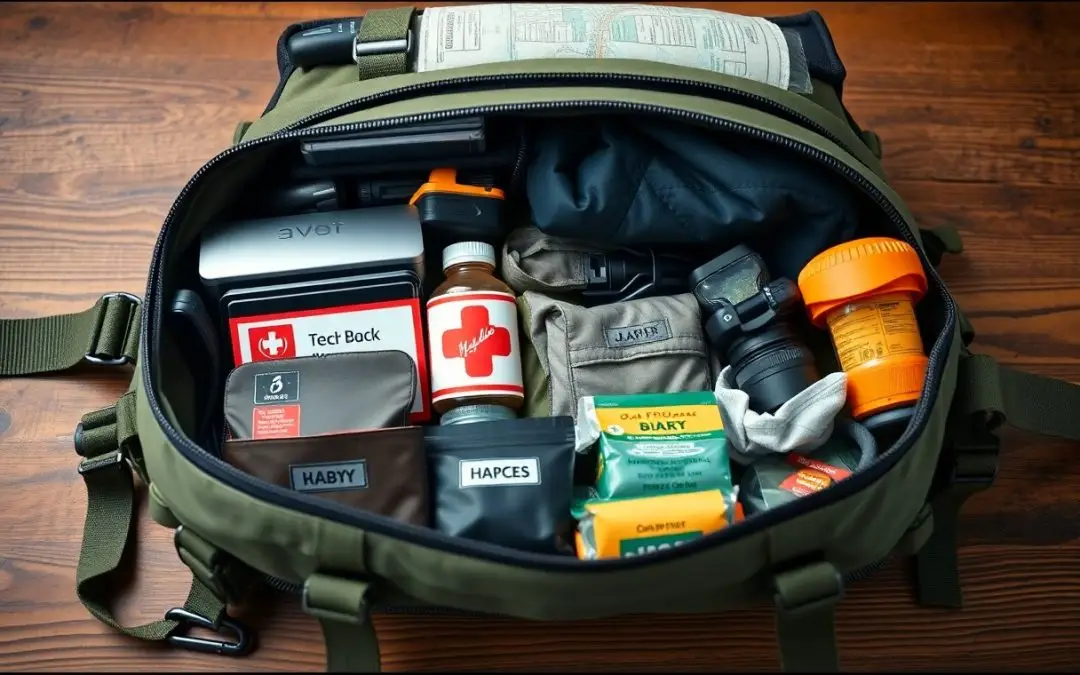
Lifestyle choices determine what you prioritize in an emergency; tailor your go bag to your routines, medical needs, local climate, work and family roles, ensuring you include suitable food, gear, documents and tools. You’ll learn how to assess risks, select compact crucials, and organize items for quick access and long-term readiness.
Assessing Your Lifestyle
Start by quantifying the daily rhythms you need to support: commute length, work hours, caregiving duties, and weekend activities. If you commute 30-60 minutes or hike 10+ miles twice a month, include a compact first-aid kit, spare battery, and calorie-dense snacks; if you care for an infant pack formula and extra diapers. Aim for a 24-72 hour baseline and adjust based on how often you encounter each scenario.
Identifying Your Activities
Catalog regular and occasional activities you do-commuting by bike, overnight camping, business travel, or caregiving-and note frequency and distance. For example, if you cycle five days a week carry a puncture kit and reflective vest; if you camp monthly bring a lightweight stove and water filter. Use concrete numbers (days/week, miles, hours) to prioritize weight, size, and redundancy in your bag.
Evaluating Your Environment
Assess climate, terrain, and local hazards where you live and travel: hot summers, subzero winters, seismic zones, coastal storm surge, or wildfire-prone areas. If you live in a floodplain or hurricane zone plan for 72 hours of water (1 gallon per person per day) and a windproof shelter; urban settings favor theft-resistant gear and compact solutions, while rural areas need extra fuel and long-range lighting.
Consult local resources-FEMA flood maps, state emergency management sites, and historical incident reports-to help you quantify risk and typical outage durations. For example, coastal counties often have 12-48 hour evacuation windows, while mountain passes can be closed for days after heavy snow; based on that, you should select insulated layers for freezing temps, sun protection and extra water for heat, and a manual can opener if power loss is likely.
Choosing Essential Items
You prioritize items that match your commute length and caregiving duties: pack a 1L water bottle or collapsible 1.5L reservoir, a 10,000 mAh power bank for full-day phone use, $100 in small bills, photocopies of ID and insurance cards, a multi-tool, and a compact first-aid kit with bandages, antiseptic wipes, and four common OTC meds; scale quantities for 48-72 hour scenarios.
Basic Survival Gear
Include proven mobility items: 72-hour food rations totaling 3,000-4,500 kcal, a 0.5-1L bottle plus a Sawyer Mini or LifeStraw, a 300-lumen headlamp with spare batteries, a reliable folding knife or small fixed blade, 50 ft of paracord, a lightweight emergency bivvy, ferro rod and lighter, and a whistle for signaling.
Customizing for Personal Needs
Match gear to medical, family, and work realities: carry a 7-14 day supply of prescriptions with labels, spare glasses or contact lens kit, infant formula and 48-72 hours of diapers if needed, pet food for 72 hours, copies of work ID and keys, and a compact hotspot if your job needs consistent connectivity.
Weigh and rotate thoughtfully: aim to keep a daily carry bag around 10-15 lb for comfort, swap perishables and meds every 3-6 months, store duplicate kits at work and in your car, and use modular pouches (meds, hygiene, electronics) so you can quickly reconfigure the bag for scenarios like evacuating with a child, managing chronic conditions, or supporting a pet.
Packing Strategies
Think in terms of modular layering: use 2-4 packing cubes or dry sacks to separate shelter/sleep gear, clothing, food, and medical items, and compress each to save space; pack a 72-hour food supply (3,000-6,000 kcal total) and 1-3 L of water depending on expected exertion, and reserve an exterior pocket for immediate-access items like a headlamp, gloves, and a lightweight rain shell.
Organizing for Efficiency
Group items by function and frequency of use: place first aid, medications, phone, and wallet in top or shoulder pockets for 10-20 second retrieval, stow bulky sleeping/shelter gear at the bottom, and keep fuel or stove in a sealed pouch to avoid spills; label cubes with colors or removable tags so you can rebuild the bag in under five minutes during rotations or drills.
Weight and Accessibility Considerations
Distribute heavy items close to your spine and low in the pack to preserve stability-water (1 L ≈ 1 kg) and batteries often become the heaviest pieces; aim to keep total weight under 20% of your body weight, and if you expect long carries target 10-15% to reduce fatigue; place meds, maps, and a multitool in shoulder or hip-belt pockets for rapid access.
If you weigh 70 kg, for example, a 14 kg pack hits 20%, so strive for 7-10 kg for extended travel: put a 2 L bladder centered against your back, shift a 300-800 g power bank to the hip belt, and use compression straps to pull weight inward; practice a loaded walk and adjust item placement until you can access your mask, headlamp, and medications within seconds while maintaining balance.
Regular Maintenance
Every 3-6 months you should inspect gear, test electronics, and rotate consumables: check water and food dates, verify prescriptions, and test batteries and chargers. Swap stored water every six months and replace alkaline batteries annually or move to lithium for a 10-year shelf life. You can run quick functional checks-turn on your headlamp and radio, inflate a sleeping pad, try zippers-and log results in a simple checklist app so your go bag remains ready and aligned with actual use.
Reviewing Contents Periodically
You should perform a focused review each quarter: rotate 6-12 months of energy bars or MREs, replace meds within 90 days of expiry, and check filters after 100-300 L of use or per the manufacturer. Verify communications gear by making a one-minute radio check and load-testing power banks to at least 50% capacity. Keep a 20-item checklist (water, food, meds, power, clothing, shelter, tools, comms, hygiene, documents) and update quantities based on recent trips or drills.
Updating Based on Changes in Lifestyle
When you change jobs, add caregiving, move climates, or alter daily routines, update your bag proactively: a commute expanding from 30 to 90 minutes warrants a 20,000mAh power bank and an extra 1.5-2 L of water; moving to colder regions means adding an insulated jacket and two chemical heat packs per 24 hours; new prescriptions require immediate replacement and storage adjustments. Date each change so you can audit what shifted and why.
For practical examples, if you return to daily office work add two protein bars, a compact umbrella, and upgrade from a 10,000mAh to a 20,000mAh battery to cover 8-12 hours of phone use; new parents should plan 24-48 hour windows by packing six diapers, ~36-48 oz of travel formula, a compact changing pad, and spare clothing for caregiver and infant. Track these updates against real-world use to refine quantities over time.
Tips for Specific Lifestyles
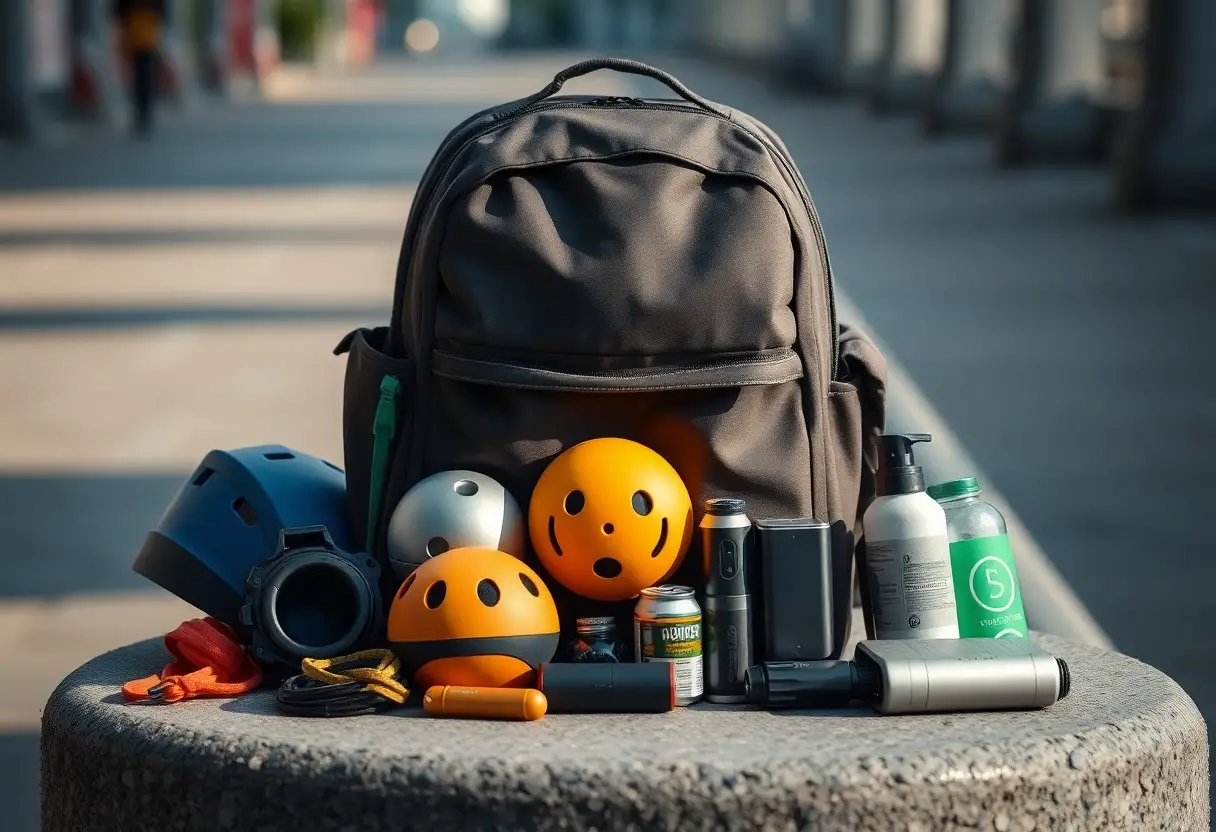
Match gear to the demands of your day: commute length, caregiving duties, outdoor time, and storage limits. Prioritize compact multi-use items – a 10,000 mAh battery, a 24-72 hour medical kit, and modular packing cubes for fast access. Include location-specific tools like a waterproof map near flood zones or a spare transit card for peak-hour delays. Any small tweak – swapping a 2L bladder for a 500 ml filter straw or adding a bike-specific multi-tool – can make your bag far more usable when minutes matter.
- Outdoor Enthusiasts: favor 20-40 L daypacks, 2-3 L hydration plus a Sawyer Mini or similar filter, 300-500 lumen headlamp, lightweight shelter, and an insulated layer rated 10°C below expected lows.
- Urban Dwellers: use a 10-15 L commuter pack with a 10,000-20,000 mAh power bank, compact first-aid, foldable rain jacket (<200 g), transit card, and photocopies of IDs.
- Caregivers/Parents: pack 48-72 hours of meds and formula, spare clothing, thin emergency blanket, copies of prescriptions, and contact list in both paper and phone.
Outdoor Enthusiasts
Choose capacity by trip length: 20-40 L for day hikes, 40-60 L for overnights. You should carry 2-3 L of water plus a lightweight filter (Sawyer Mini), a 300-500 lumen headlamp with spare batteries, an ultralight 1-1.5 kg one-person shelter or tarp, a stove like the MSR PocketRocket, and layers that handle a 10°C overnight drop; test everything on a 4-8 hour outing before relying on it in remote conditions.
Urban Dwellers
Keep the pack slim: target 10-15 L with a 10,000-20,000 mAh power bank (2-4 phone charges), a compact first-aid kit, a 200-500 lumen flashlight, a foldable rain jacket, and $20-50 cash. You should store a transit card and photocopies of IDs in a waterproof pouch for quick access during evacuations or transit disruptions.
Because city disruptions often last 6-24 hours, pack 24-48 hours of food (3-6 energy bars or meals ready-to-eat), two 500 ml water bottles or a 1 L bottle plus purification tablets, emergency contacts on paper, and a reserve face mask; organize these in a front pocket so you can retrieve imperatives while wearing a coat or in a crowded stairwell.
Final Thoughts
Last Steps
Aim to review your bag every 3-6 months: test electronics quarterly, rotate food and water on a 6-12 month cycle, and replace batteries annually. If you commute daily, keep the pack to 7-10 lb for mobility; if you care for others, add a 2-3 lb infant or pet kit. Use a one-page checklist and two practice drills per year to validate choices and adjust items based on real-world use.


