
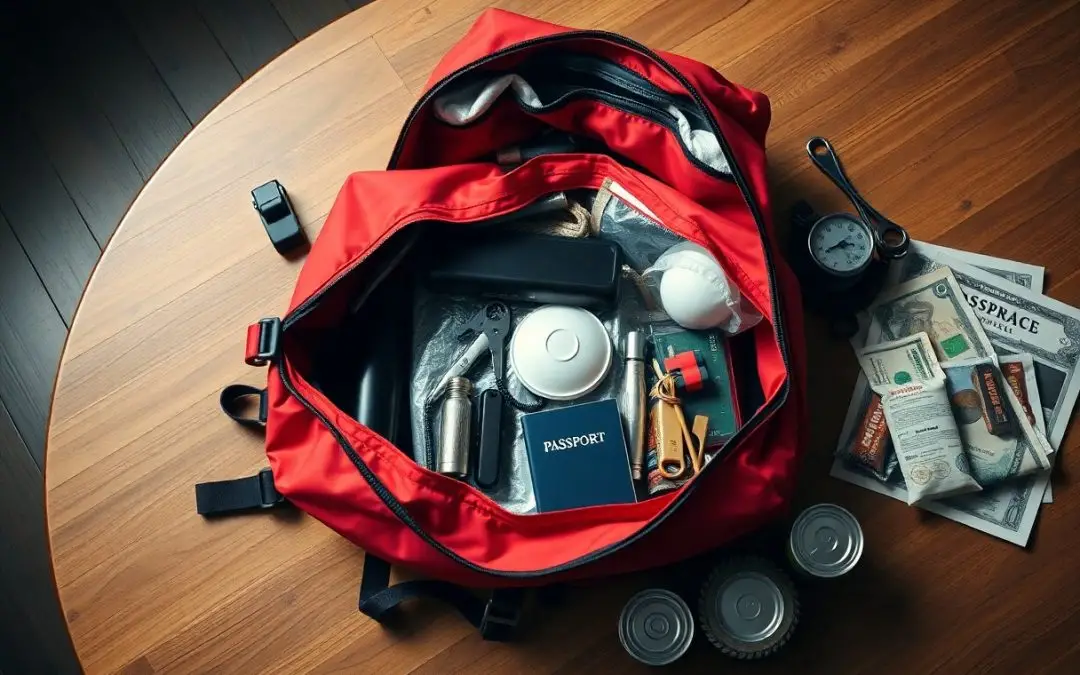

Just include durable tools and reliable equipment in your go bag so you can treat injuries, secure shelter, obtain water, and communicate after a disaster.
Critical Cutting and Multi-Functional Instruments
Cutting tools and multi-tools belong in your go bag for shelter, first-aid, and gear repair; you’ll value compact designs with corrosion-resistant steel, secure locks, and ergonomic grips for safe, repeated use under stress.
Heavy-Duty Fixed Blade Survival Knives
Fixed-blade knives give you dependable strength for chopping, batoning, and shelter work; you should choose full-tang construction, 4-7 inch steel, and a sheath that allows secure carry and quick access.
Precision Multi-Tools for Field Repairs
Precision multi-tools keep you ready for mechanical fixes and small electrical work; you’ll prefer models with pliers, wire cutters, screwdriver bits, and locking mechanisms packed into a compact frame.
Select multi-tools that balance weight, tool count, and durability so you can perform repairs without a full toolbox; prioritize replaceable bits, magnetic bit holders, lockable tools, and corrosion-resistant finishes, and practice common tasks before an emergency.
Emergency Illumination and Signaling Equipment
Pack compact lights and signaling gear in accessible pockets so you can reach them quickly during blackout or evacuation. Choose waterproof, rechargeable options with spare batteries and a small solar charger to extend runtime.
High-Lumen Tactical Flashlights and Headlamps
Select high-lumen tactical flashlights and headlamps with strobe modes, adjustable beams, and long battery life so you can signal and work hands-free. Pack extra batteries and a compact charger to keep them operational during prolonged outages.
Audible and Visual Distress Signals
Carry loud whistles, signal mirrors, and chemical light sticks so you can attract attention when visibility is poor or voice fails. Store compact LED beacons or flares for night signaling and keep them within easy reach.
Use a pea-less whistle rated at 120+ dB, practice mirror flashes and SOS patterns so you can execute them under stress, and rotate light sticks often to ensure full brightness. Keep both daytime mirrors and night flares or strobe beacons in an external pocket so you can access signals fast during chaotic evacuations.
Fire Ignition and Thermal Protection Resources
Fire ignition tools and thermal protection items belong in your go bag so you can create heat, cook, and signal; pack a lighter, ferro rod, waterproof tinder, an insulated hat, and a mylar blanket for heat retention.
All-Weather Fire Starters and Fuel Sources
All-weather fire starters such as a ferro rod, stormproof matches, and waterproof tinder let you reliably ignite flames in wet conditions; pack alcohol fuel tabs or waxed cotton for lightweight, long-burning fuel.
Emergency Bivvy Sacks and Heat-Reflective Blankets
Emergency bivvy sacks and heat-reflective blankets trap your body heat and cut hypothermia risk; choose tear-resistant sacks and multi-layer blankets you can slip into quickly and reuse when possible.
You can pair a lightweight bivvy with an insulating pad and dry clothing to preserve warmth; prioritize reflective blankets with reinforced edges, as they offer compact, low-weight shelter and emergency signaling, but be aware of condensation and limited abrasion resistance.
Communication and Navigation Hardware
Your go bag should include dependable communication and navigation hardware, giving you reliable contact and basic orientation when systems fail. Pack items that work without grid power and require minimal training so you can act quickly under stress.
Hand-Crank NOAA Weather Radios
Hand-crank NOAA weather radios let you receive emergency alerts and local forecasts without batteries; you crank to charge the internal capacitor and tune to NOAA channels so you can stay informed when power is out.
Analog Compasses and Topographic Map Sets
Analog compasses paired with topographic maps ensure you can determine direction and terrain when electronics fail; choose a liquid-filled lensatic or baseplate compass and maps covering your evacuation area.
Carry a compass with adjustable declination and practice reading contour lines so you can plot routes, estimate distances, and avoid hazards; laminate critical map sections for durability.
Shelter Construction and Maintenance Supplies
Shelter-focused kits-guy lines, grommet and patch kits, lashing tools and a folding mallet-help you erect and maintain emergency shelters quickly when conditions deteriorate.
High-Tensile Paracord and Specialized Cordage
You pack high-tensile paracord (550 lb) and specialty cordage for ridgelines, guyouts, repairs and improvised harnesses; include a cord cutter and labelled spares.
Reinforced Tarps and Heavy-Duty Adhesive Tapes
Durable reinforced tarps and heavy-duty adhesive tapes let you create shelter floors, roof covers and rapid repairs; pick tear-resistant fabric and multi-layer tapes rated for wet conditions.
Apply layered taping around seams, reinforce grommet points with fabric patches, and choose tarps with welded hems and UV coating; you can pre-cut panels and pre-fit grommets to speed deployment and reduce field repairs.
Power Management and Energy Solutions
Pack a compact power strategy including small solar panels, multi-port power banks, and fuel-free chargers so you can keep phones, radios, and lights running during outages.
Portable Solar Arrays and External Power Banks
Choose foldable solar arrays and high-capacity power banks that recharge devices and offer USB and AC outputs so you can power phones, radios, and lights during outages.
Long-Shelf-Life Battery Reserves
Stock AA/AAA lithium cells, spare 9V batteries, and sealed lead-acid packs for longer-term gear, labeling dates so you rotate stock before expiration.
Keep lithium primary cells for high-drain devices because they last up to 20 years and perform in cold conditions; store them in a cool, dry place, in original packaging, and mark purchase dates so you rotate oldest first. For repeat use, carry low-self-discharge NiMH rechargeables and a compact charger to reduce waste and dependency on single-use cells.
Final Words
On the whole you should prioritize compact emergency tools and vital equipment-multi-tool, flashlight with extra batteries, whistle, first-aid kit, water purification tablets, a portable radio, and spare phone power-so you can respond quickly and sustain safety until help arrives.


