
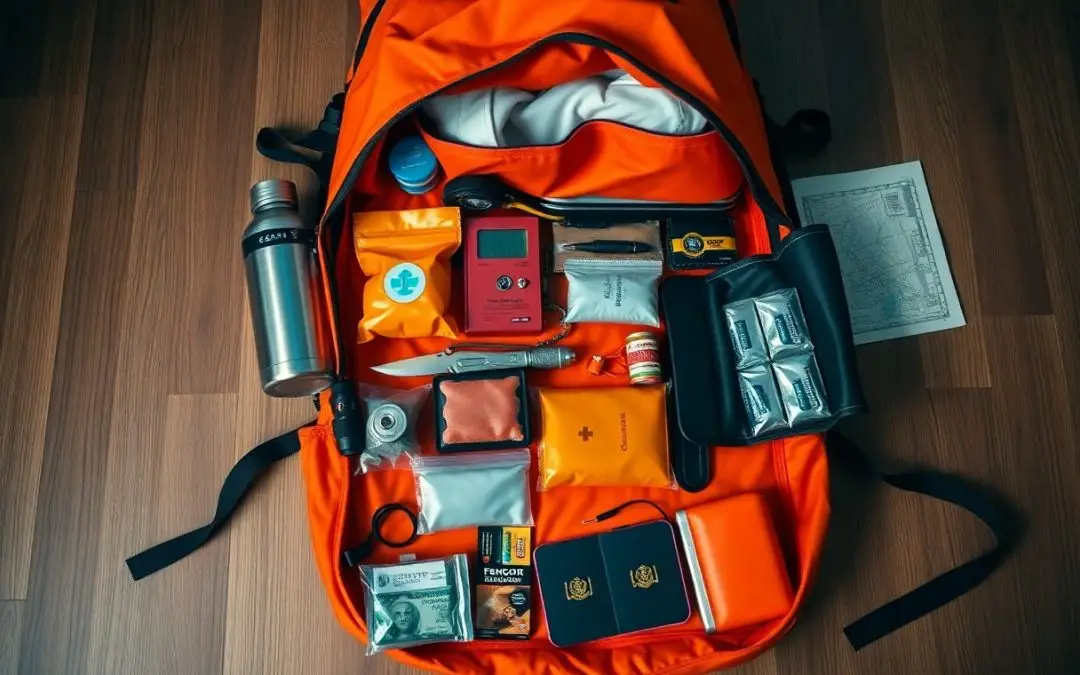
It’s wise to pack water, nonperishable food, a first-aid kit, flashlight with spare batteries, multi-tool, extra clothes, copies of documents and cash, a phone charger, and any necessary medications so you can respond quickly and sustain yourself during an emergency.
Hydration and Nutrition Fundamentals
You prioritize portable water, simple treatment methods, and calorie-dense food to maintain energy and endurance during evacuations or extended outages.
Potable Water and Filtration Systems
Pack at least one liter per person per day, a compact filter or purification tablets, and a collapsible bottle so you can refill and treat water safely in the field.
High-Calorie Shelf-Stable Rations
Choose shelf-stable bars, MREs, or calorie-dense meal packs with long shelf life and easy preparation to keep you fueled when cooking is impossible.
Include a mix of high-calorie bars, dehydrated meals, nut and seed packs, and ready-to-eat pouches that require minimal water. You should choose items with balanced macronutrients, added electrolytes, and long expiration dates; rotate supplies annually and test one meal so you know it’s palatable and simple to prepare. Keep a small can opener, compact stove, or fuel tabs if rehydration will be needed.
Shelter and Environmental Protection
Shelter gear protects you from exposure and weather: pack a compact tarp, lightweight tent, paracord, and a groundsheet so you can rig quick cover and stay off wet ground.
Thermal Blankets and Emergency Bivvies
Foil blankets and bivvies fold small, reflect body heat, and can prevent hypothermia; you should carry one per person plus an extra for insulation or wind cover.
All-Weather Outerwear and Footwear
Waterproof outer layers and durable boots keep you dry and mobile; choose breathable fabrics, sealed seams, and low-maintenance footwear suited to the terrain you expect.
Layering base, insulating, and outer pieces gives you flexibility for temperature swings; pack moisture-wicking base layers, an insulated midlayer, a waterproof breathable shell, spare socks, and sturdy ankle-support boots with non-slip soles for varied terrain.
Medical and First Aid Requirements
Pack a compact first-aid kit with adhesive bandages, sterile gauze, tape, antiseptic wipes, nitrile gloves, tweezers, scissors, and a simple instruction card; include basic pain relievers and antihistamines you use.
Trauma Supplies and Wound Management
Carry a tourniquet, hemostatic gauze, pressure dressings, trauma shears, and a chest seal; practice applying them so you can control severe bleeding quickly.
Personal Prescriptions and Hygiene Kits
Store at least two weeks of prescription medicine, photocopies of scripts, a pill organizer, and travel-size hygiene items-soap, toothbrush, pads or condoms; track expirations so you can replace supplies before they lapse.
Organize meds by name and dosage, include a paper and digital list of allergies and prescriber contacts, and pack backup power for refrigerated medications or medical devices; keep spare glasses, hearing-aid batteries, and menstrual supplies accessible so you maintain continuity of care.
Communication and Navigation Tools
Pack a compact set of communication and navigation tools so you can stay connected, receive alerts, and find your way when electronics falter.
Hand-Crank Radios and Portable Power
Choose a hand-crank radio with AM/FM/NOAA channels and multiple charging options so you can get broadcasts and recharge phones when mains power is unavailable.
Physical Maps and Signaling Equipment
Carry paper maps and a compass so you can orient yourself when GPS fails; add a whistle, signal mirror, and flares to attract attention.
Store large-scale topographic and local evacuation maps in waterproof sleeves and mark your home, shelter, and preferred routes with waterproof ink; practice basic compass bearings and standard signal patterns so you can use a mirror or whistle under stress, and keep non-expired flares and spare batteries secured separately for reliable signaling.
Multi-Functional Tools and Utility
Tools with multiple functions let you perform repairs, open cans, and improvise shelters without extra weight, so prioritize compact, corrosion-resistant models and secure storage to prevent injury.
Survival Knives and Multi-tools
Knives and multi-tools give you cutting, prying, and first-aid capabilities; choose full-tang blades and lockable tools, and practice safe handling to maximize utility in tight scenarios.
Fire-Starting Gear and Reliable Lighting
Fire starters and dependable lights let you signal, boil water, and stay visible at night; pack waterproof matches, a ferrocerium rod, spare lighters, and a headlamp with extra batteries.
Carry multiple ignition methods so you can light a fire even when one fails; include waterproof matches, a ferrocerium rod, and a refillable lighter, plus cotton balls smeared with petroleum as emergency tinder. Keep a high-lumen headlamp for hands-free tasks, store spare batteries in a sealed bag, and periodically test gear so you know it works when you need it.
Critical Documentation and Financial Security
Keep your personal, medical, and property documents organized in a single waterproof pouch; include IDs, insurance policies, wills, medical directives, emergency contacts, and encrypted digital backups on a flash drive.
Waterproof Storage for Legal Records
Protect your passports, birth certificates, deeds, and notarized papers in a waterproof, fire-resistant envelope so you can retrieve originals after water or smoke exposure.
Emergency Cash and Identification
Carry small-denomination cash, photocopies of IDs, and an extra driver’s license or passport photocopy in your go bag so you can pay for immediate needs and prove identity if cards fail.
Store at least $100-200 in small bills across multiple pockets or an inner pouch, and include a prepaid reloadable card for larger purchases; keep photocopies and a USB with scanned IDs, plus a separate list of bank contacts and card numbers so you can report losses and access funds quickly.
To wrap up
So pack water, nonperishable food, first-aid supplies, flashlight and batteries, a multi-tool, warm clothing, documents and cash, and a portable charger so you can respond and sustain yourself until help arrives.


