
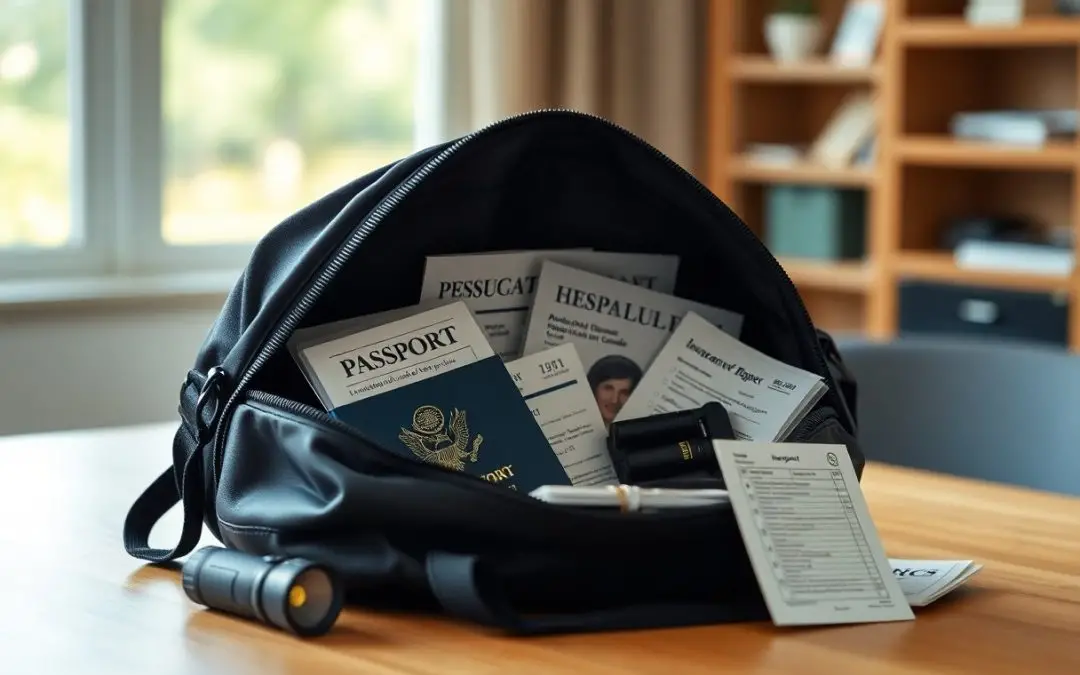
Emergency planning begins with a compact go bag containing crucials that let you act immediately: water, nonperishable food, a flashlight with extra batteries, a first-aid kit tailored to your needs, prescription medications, copies of important documents, a multi-tool, a portable phone charger, warm clothing, and cash. Include items for infants, pets, or personal medical devices, and rotate supplies regularly so your kit is ready when you must evacuate or shelter in place.
Understanding a Go Bag
Think of your go bag as a short-term survival kit designed to keep you self-sufficient for at least 72 hours when utilities and services are disrupted. You should include water (1 gallon per person per day), nonperishable food for three days, basic first-aid, a means of light and communication, and copies of ID and prescriptions. FEMA and Red Cross guidance emphasizes that the first 72 hours after an event are the most critical for individual readiness.
Definition of a Go Bag
Your go bag is a portable backpack or duffel packed with imperatives to support immediate evacuation or sheltering-in-place: water, three days of food, medications, a flashlight, battery-powered radio, spare batteries, multi-tool, emergency blanket, phone charger, cash, and sealed copies of important documents. You should size it for quick carry-20-35 liters works for many adults-and keep it accessible near exits.
Importance of Being Prepared
Being prepared reduces panic and speeds decision-making when seconds matter; you act rather than react. You’ll be able to leave immediately with supplies tailored to your needs-medications, infant formula, or pet food-so you’re less likely to return for forgotten items. Studies of disaster response show individuals with prepacked kits report fewer supply gaps and shorter evacuation times during events like floods and wildfires.
Maintain your bag by checking contents every 6-12 months: rotate food and batteries, update medication and document copies, and adjust gear for seasonal clothing or new household members. You should also create a checklist and label expiration dates on perishable items, store a compact water purification option, and keep an extra charging power bank charged so your communications remain functional when infrastructure is down.
Essential Items to Include
Assemble items that keep you self-sufficient for at least 72 hours: water (1 gallon per person per day), nonperishable food, flashlight with extra batteries, a multi-tool, portable charger, and copies of IDs and cash. Add a hand-crank or battery radio, local maps, sanitation supplies, weather-appropriate clothing, and spare footwear. Tailor the bag for infants, pets, or medical needs by including formula, pet food, or extra prescriptions so your go bag supports everyone who depends on you during an evacuation.
Food and Water Supplies
You should pack at least 1 gallon of water per person per day for 3 days and include water-purification tablets plus a compact filter like a LifeStraw. Add 72 hours of nonperishable, low-prep food: energy bars, MREs or dehydrated meals, canned protein with a manual can opener, and high-calorie snacks. Rotate supplies every 6-12 months, store a collapsible 2-4 liter container for refills, and include a lightweight stove and fuel if heating food is likely.
First Aid Kit
You should assemble a compact kit containing 20 assorted adhesive bandages, sterile gauze pads (4×4 and 6×6), adhesive tape, roller gauze, antiseptic wipes (10-20), antibiotic ointment, tweezers, scissors, disposable nitrile gloves (2-4 pairs), a CPR mask, instant cold pack, and basic OTC meds (ibuprofen, acetaminophen, antihistamine). Include copies of prescriptions, a digital thermometer, and sealed burn gel. Store everything in a waterproof pouch and update contents every 6-12 months to keep supplies effective.
For greater capability include a commercial tourniquet (CAT), hemostatic dressings, and a SAM splint if you’ve trained in their use; studies show properly applied tourniquets can control life‑threatening limb hemorrhage. Also maintain a written medication list with dosages and allergies, keep extra inhalers or epinephrine if needed, and check expiration dates every 3-6 months so critical items don’t fail when you need them most.
Important Documents
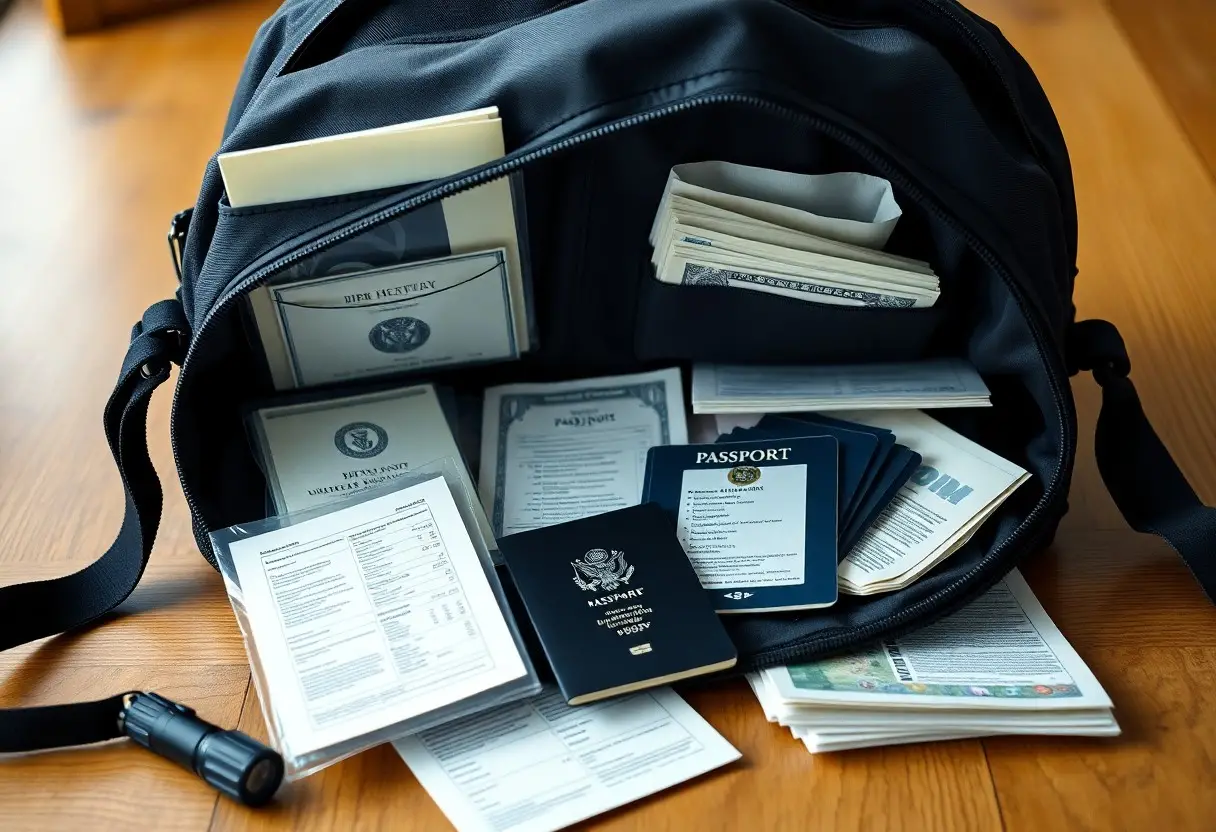
Keep originals and at least two copies of vital papers in a waterproof, fire-resistant pouch: passports, birth certificates, Social Security cards, insurance policies, property deeds, vehicle titles, and wills. Scan high-resolution PDFs and store them on an encrypted USB and a cloud service with two-factor authentication; many emergency management agencies recommend keeping digital copies in at least two separate locations. Include a dated inventory sheet listing document versions and contact info for your attorney and insurer.
Identification and Medical Records
Pack current photo IDs (driver’s license, passport), vaccine and immunization records, insurance cards, and a one-page medical summary listing diagnoses, allergies, blood type, and medications with dosages and prescribing physician contacts. Keep lab reports or advance directives if applicable, plus two photocopies-one with your bag and one stored digitally as a secured PDF-with dates and physician phone numbers for faster treatment at clinics or shelters.
Emergency Contacts
List at least three contacts: a local emergency contact, an out-of-area relative or friend, and your workplace emergency number, each with phone, email, and relationship. Store these in your phone, on paper in the pouch, and as a plain-text file in your digital copies; include preferred communication method (SMS, call, email) and any special instructions like language needs or accessibility considerations.
In past disasters, families who designated an out-of-area contact reunited faster; for example, during a 2017 hurricane, FEMA noted many victims used a single out-of-state contact to coordinate multiple household members. Add social media handles and a backup SIM-friendly phone number, and update the list every six months so responders or loved ones can act quickly when minutes matter.
Clothing and Personal Items
Pack layered clothing for your bag, including at least one complete change plus a 72-hour set of imperatives: moisture-wicking base layer, insulating mid-layer, waterproof outer shell, 3 pairs of socks, underwear, sturdy shoes, a hat and gloves. Include a compact rain poncho, a belt pouch for quick access, and a lightweight emergency blanket. Use size-appropriate garments and label kids’ clothing.
Clothing for Different Weather Conditions
For cold conditions, you should pack an insulated jacket (down rated to −10°C or synthetic equivalent), wool socks, thermal base layers and a warm hat; in heat choose moisture-wicking, light-colored shirts, a wide-brim sun hat and SPF-rated lip balm; in wet seasons bring a breathable waterproof shell, gaiters and waterproof boots. Aim for one pair of socks per day plus one spare-so three pairs for a 72-hour bag-and sizes that fit over insulated layers.
Personal Hygiene Products
You should pack a travel toothbrush and toothpaste (≤100 ml), a 60-70% alcohol hand sanitizer, a 30-count pack of unscented wet wipes, biodegradable soap, quick-dry towel, deodorant, razor, nail clippers and a week’s supply of any prescription topical meds in labeled containers. Include at least a 3-day supply of menstrual products and condoms if used. Store items in clear, resealable pouches for easy inspection.
FEMA advises you to prepare a 72-hour supply; for hygiene that typically means 30-50 wet wipes, travel-size toothpaste/shampoo (≤100 ml), and hand sanitizer with at least 60% alcohol. Keep prescription oral meds in original bottles and place feminine supplies in a separate waterproof pouch-shelters often distribute soap but shortage of menstrual products is common, so packing three to seven days’ worth is practical. Rotate items annually and replace used travel-size containers after deployment.
Tools and Equipment
You should pack a compact set of tools that solves common problems: a folding shovel, 50 feet of paracord, a 6-in-1 roll of duct tape, safety goggles, leather work gloves, and a small pry bar. Include a printed local map and a magnetic compass alongside a few zip ties and a compact stove or fuel canister if you expect longer displacement. Practicality wins: choose lightweight, multi-use items that together weigh under 5-7 pounds for most urban kits.
Multi-tool and Flashlight
Bring one quality multi-tool such as a Leatherman Wave or Victorinox with pliers, wire cutters, serrated blade, and Phillips/flat drivers; they cover repairs, first aid, and food prep. Pack an LED flashlight rated 500+ lumens and an IPX4 water resistance, plus a headlamp for hands-free tasks. Swap spare batteries or pick rechargeable models with USB-C input to consolidate charging gear.
Battery Backup and Charging Cables
Include a 10,000-20,000 mAh power bank with USB-C Power Delivery (18-30W) so you can recharge phones, radios, or small fans; a 10,000 mAh unit typically gives 2-3 full smartphone charges. Add a durable braided cable set: USB-C to USB-C, USB-C to Lightning, and micro-USB, each under 6 inches for portability, plus a wall and car adapter.
To size capacity, note a typical smartphone battery is ~3,000 mAh and power-bank efficiency is ~70-80%, so a 10,000 mAh bank yields roughly 2.3 charges. Store banks charged and test monthly; choose models with pass-through charging and at least one 2.4A USB-A port for older devices. Consider a compact solar panel (10-15W) as a backup in prolonged outages.
Creating a Family Emergency Plan
Set clear roles so you know who grabs your go bag, who escorts pets, and who secures documents; assign one out-of-area contact plus two local contacts and place their numbers on a laminated card in the bag. You should rehearse reunification drills twice a year, plan to be self-sufficient for 72 hours, and record medications, allergies, and special needs where every family member can access them.
Communication Strategies
Use layered communications: prioritize SMS because short texts are likelier to deliver when networks are congested, then voice calls and social media check-ins. You should program two local numbers and one out-of-state contact into every phone and keep a written copy. Pack a 20,000 mAh power bank (≈four full smartphone charges), an NOAA weather radio, and FRS/GMRS radios (1-5 mile range depending on terrain).
Meeting Points and Procedures
Choose two meeting points: an immediate spot within ~100 yards of your home (for quick evacuations) and an evacuation site 1-3 miles away like a school or community center; also pick an out-of-area location 50-100 miles away for wider separation. You should store addresses and GPS coordinates in your go bag and set a firm 1-hour check-in window after leaving the house.
Map each point with GPS coordinates on printed and digital maps and run full-family drills at least twice yearly-include a timed goal (target under 30 minutes to assemble). Assign roles (who drives, who grabs documents, who handles pets), keep backup keys with a trusted neighbor, and include school pickup authorizations, pet microchip details, and copies of custody or medical directives in the go bag.
Conclusion
Ultimately you should assemble a go bag that sustains you, secures your identity, and enables mobility: water and nonperishable food, a first-aid kit and needed medications, flashlight and spare batteries, portable charger, copies of important documents, multi-tool, extra clothing, basic hygiene items, and local maps or emergency contact info.


