
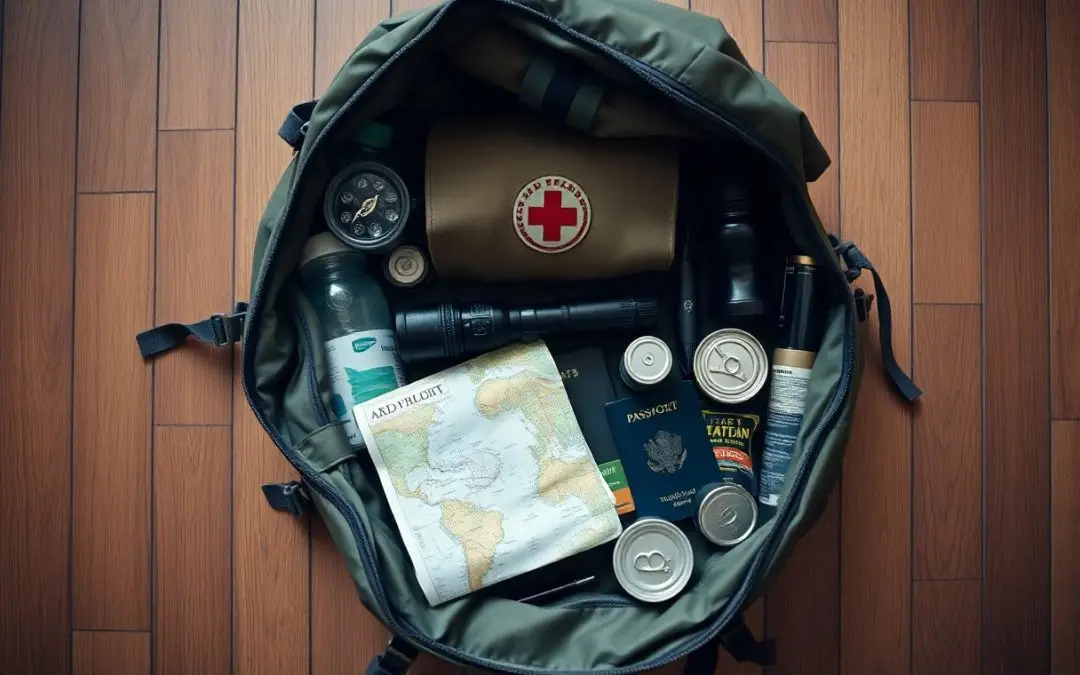
Preparedness ensures you maintain a compact, prioritized go bag with necessarys for shelter, first aid, water, and documents; you assess risks, tailor contents to trips or local threats, and rehearse deployment so you act quickly under pressure.
Core Philosophy of Go Bag Readiness
Your go bag readiness centers on practicality: compact supplies, adaptable plans, and routine checks so you can act quickly in any disruption.
Defining the 72-Hour Survival Window
Think of the 72-hour period as the immediate stabilization phase: water, food, shelter, basic medical care, and communication priorities that let you maintain safety until help arrives or you reach longer-term resources.
Assessing Personal and Regional Risk Profiles
Assess your personal health, mobility, family needs, and local hazards so your go bag fits likely scenarios and durations.
Map local threats by checking flood zones, wildfire history, earthquake fault lines, and seasonal storms, then align your gear and evacuation routes to those realities; also account for medications, pet needs, and mobility limits.
Essential Gear for Natural Disasters
You pack a multi-tool, warm layers, a headlamp with spare batteries, a power bank, a first-aid kit, and a compact tarp or emergency shelter to remain self-sufficient during outages.
Hydration and Water Filtration Systems
Carry a reliable water filter or purification tablets, collapsible bottles, and a liter-per-person-per-day reserve so you can avoid dehydration when taps are compromised.
Calorie-Dense Nutrition and Food Security
Stock high-calorie, nonperishable items like energy bars, nut butters, and dehydrated meals to keep you fueled when cooking isn’t possible.
Rotate your stock every six to twelve months, focusing on calorie-dense staples-peanut butter, compact meal bars, canned meats, and powdered milk-that store well and need little prep. Pack a manual can opener and a small stove if you can, select options for children or dietary restrictions, and include a multivitamin to help cover missing nutrients.
Strategic Packing for Travel and Transit
Pack only necessarys for transit-compact first-aid, layered clothing, quick-access toiletries, and a travel-size multitool-organized by priority so you can reach items fast during delays or evacuations.
Mobility and Modular Storage Solutions
Choose wheeled duffels and sling packs with modular pouches so you can shift weight and access gear on the move; use color-coded cubes to separate medical, tech, and clothing for quick retrieval.
Document Preservation and Digital Backups
Scan passports, insurance papers, and prescriptions; keep paper copies in a waterproof pouch and encrypted digital backups in cloud storage plus an encrypted USB you carry separately.
Store originals in a waterproof, fire-resistant pouch while leaving trusted copies with a family contact; maintain encrypted backups across two cloud providers and an offline encrypted USB kept separately. Use strong, unique passwords with two-factor authentication, label files consistently, record file hashes, and test restores routinely so you can access verified documents when time is limited.
Medical and Hygiene Fundamentals
Pack your go bag with prescription meds, over-the-counter basics, gloves, masks, hand sanitizer, water purification, and at least a small first-aid kit tailored to your needs.
Trauma Kits versus Basic First Aid
Choose a basic first-aid kit for cuts, burns, and sprains; carry a trauma kit with tourniquet, hemostatic dressings, chest seal, and training if you anticipate severe injuries or remote evacuation.
Sanitation Protocols for Extended Displacement
Plan sanitation for longer displacement: portable toilet or latrine setup, sealed waste bags, menstrual supplies, soap, disinfectant, and clear handwashing routines.
Establish a sanitation plan covering water treatment, waste management, and hygiene supply replacement. Treat water by boiling, filtering, or dosing with chlorine-use recommended concentrations (0.05% for emergency handwashing, 0.1% for surfaces, 0.5% for blood spills) and store safely. Place latrines at least 30 meters from springs, wells, or surface water and site them away from runoff paths; clearly mark and rotate pits if possible. Bag and seal menstrual and medical waste; bury non-hazardous solids 30 cm deep or use a designated burn or containment area following local rules. Set up regular handwashing stations with soap or chlorinated water, provide spare supplies, and train household members on consistent routines and surface disinfection.
Communication and Navigation Tools
Pack compact radios, a charged smartphone with offline maps, a whistle, and a signal mirror so you can maintain contact and orient under stress.
Redundant Power and Charging Systems
Keep a high-capacity power bank, a foldable solar charger, and fresh spare batteries so you can recharge phones, radios, and lights during prolonged outages.
Analog Navigation and Emergency Signaling
Carry a paper map, a reliable compass, and a waterproof notepad so you can set bearings, mark routes, and send written messages when electronics fail.
Practice basic map-and-compass techniques, learn to take and follow bearings, and rehearse signaling methods like the three-whistle or mirror flashes; store maps in a waterproof sleeve, label routes, and check magnetic declination before travel so you can orient and attract help without electronics.
Maintenance and Seasonal Rotation
Rotate your go bag each season to match clothing, supplies, and medical needs; set quarterly reminders to inspect contents, replace expired items, and refresh rations.
Auditing Perishables and Battery Life
Audit your perishables and batteries monthly, logging expiration dates and charge cycles; swap weak cells, top up soft consumables, and seal food in waterproof containers.
Adapting Gear for Climate Extremes
Adjust your clothing layers, shelter options, and hydration systems to match heat, cold, or humidity; store cold-weather items compressed and dry-weather items ventilated.
Plan for extremes by swapping insulation and ventilation materials: you should carry a lightweight down jacket that doubles as a pillow, pack insulating liners and moisture-wicking base layers, and include a compact four-season shelter plus reflective tarp. For high heat, prioritize evaporative cooling, shade, and electrolyte mixes; for freezing conditions, add chemical hand warmers, sealed fuel canisters, and battery redundancy stored in temperature-buffered compartments.
Conclusion
Upon reflecting, you should maintain a go bag stocked with water, food, first-aid, documents, and power sources, inspect it regularly, tailor contents to your needs, and plan evacuation routes so you can respond quickly to disasters, travel disruptions, or personal crises.


