
Just understanding the purpose of each will help you prepare wisely: a go bag is a compact emergency kit designed to sustain you for 72 hours during short evacuations or interruptions, while a bug-out bag is a more robust, long-term survival pack built for extended displacement; knowing their intended durations, contents, and mobility requirements lets you tailor your gear to different threats and scenarios.
Understanding Go Bags
When you assemble a go bag, prioritize mobility and short-term self-sufficiency for roughly 72 hours; keep the pack light-typically 5-10 lb-so you can cover a few miles on foot. Include necessarys like 1 L water for immediate use, three lightweight meals, a compact first-aid kit, a multi-tool, headlamp with spare batteries, a 10,000 mAh power bank, and a waterproof pouch for IDs and cash.
Definition of a Go Bag
You should treat a go bag as your immediate grab-and-go emergency kit designed for rapid evacuations and short displacements (about 72 hours). Meant to be stored where you can access it in seconds-car, entryway, or under the bed-it contains basic shelter, water, food, med supplies, and communication tools so you can move quickly and stay functional until aid or relocation.
Primary Uses and Features
When fire, flood, or sudden power loss forces you out, a go bag gets you to safety within minutes and sustains you for 72 hours. FEMA and Red Cross recommend three days’ supplies; practical features include lightweight, waterproof packs, MOLLE attachment points for adding gear, N95 masks for smoke or dust, and a 10,000 mAh power bank to keep your phone working for navigation and alerts.
Place your go bag where you can grab it in under 60 seconds-car trunk, by the front door, or under your bed-and aim for a carry weight under 20 lb so you can move a mile or more. Swap food, water, and batteries every 6-12 months, keep prescription meds current, and tailor contents for children, seniors, or pets (e.g., 72-hour pet food and an extra leash).
Exploring Bug-Out Bags
Definition of a Bug-Out Bag
You should treat a bug-out bag as a self-contained survival kit meant to sustain you away from home for 72 hours to two weeks; FEMA recommends a minimum 72-hour supply, though many plan for seven to fourteen days. Typical items include 3 liters of water per person per day or a reliable filter, 72+ hours of calorie-dense food, a lightweight tent or bivy, sleeping system, multi-tool, durable footwear, navigation aids, and basic medical supplies.
Key Differences from Go Bags
A go bag is geared for immediate, short-term evacuation-usually 24-48 hours, lighter (about 5-15 lb/2-7 kg), and staged by exits-while your bug-out bag is heavier (20-35 lb/9-16 kg) and intended for multi-day travel and off-grid living, with extended food, shelter, fuel, repair kits, and redundancy in water and fire-making tools. Go bags favor speed; bug-out bags favor endurance and self-sufficiency.
For example, plan on 3 liters of water per person per day in a bug-out bag versus roughly 1 liter in a go bag, and pack 5,000-10,000 kcal of compact food for several days. Add a 2-3 season sleeping bag, small stove with fuel, spare footwear, and repair supplies-accepting extra weight to increase your autonomy if roads, power, or services are disrupted.
Essential Items for a Go Bag
Plan for a 72-hour kit: carry 3 liters of water (1 L/day), roughly 6,000 kcal of calorie-dense food, a compact first-aid kit, multitool, and a 200-500 lumen flashlight. You should also pack a 10,000 mAh power bank, paper copies of IDs and $100 in small bills, one extra set of clothes with a waterproof layer, prescription meds, hygiene items, and a lightweight shelter such as a mylar blanket or emergency bivy.
Recommended Gear and Supplies
Prioritize gear proven in field use: a filtration straw or Sawyer Mini (treats 20,000+ gallons) plus backup purification tablets, a 10,000-20,000 mAh power bank (~200-400 g), an LED headlamp (200-400 lumens), a 100-150-piece first-aid kit with tourniquet and antiseptic, a compact stove with 1-2 fuel canisters, maps and a compass, N95 masks, duct tape, and a whistle. You’ll want things that balance weight, durability, and multi-functionality.
Size and Weight Considerations
Aim for a total pack weight of 10-15 pounds and a 20-30 liter pack so you can move 2-3 miles quickly. Because each liter of water adds about 2.2 pounds, you’ll often prefer a filter or caching water to carrying all water at once. Test your load by walking varied terrain for 2-4 miles; if pace drops, trim non-importants or swap to lighter items like dehydrated meals and ultralight shelter.
For perspective, carrying 3 liters equals roughly 6.6 pounds; a Sawyer Mini weighs ~2 ounces (57 g) while a 10,000 mAh power bank is about 7-8 ounces (200-250 g). Pack heavier items close to your spine and low, use compression sacks to cut volume, and keep water, snacks, and a headlamp in external pockets for quick access. Walk a 3-mile route with your loaded bag and adjust contents until you can maintain a steady pace without excessive fatigue.
Essential Items for a Bug-Out Bag
When you build a bug-out bag, prioritize self-sufficiency for days to weeks: a reliable 20-50 liter pack, water filtration (Sawyer Mini filters ~100,000 gallons), a fixed-blade knife, and shelter options like a lightweight tarp or 4-season bivy. You should plan for redundancy-two ways to make fire, spare clothing, and a compact solar charger-and test gear under load so you know what performs after 48-72 hours of continuous use.
Recommended Gear and Supplies
Include a tent or tarp, sleeping bag rated to expected lows (e.g., 0-20°F for cold regions), stove with 500-1,000 g fuel canisters, metal pot, multi-tool plus a 4-6″ fixed blade, trauma kit with sutures and 7-10 days of prescriptions, navigation kit (map, compass, handheld GPS), 14,000 kcal of nonperishables for a week (~2,000 kcal/day), and water treatment: filter, tablets, and a 2L bladder.
Preparation for Extended Survival
Train and plan for extended stays: run full-gear 24-72 hour drills twice a year, stock spare footwear and seasonal clothing, rotate food and meds every 6-12 months, and set evacuation routes with 2-3 alternate destinations. Learn water sourcing, basic field sanitation, and firecraft so you can sustain yourself when resupply is delayed for days or weeks.
Establish logistics by caching duplicate supplies in trusted spots-vehicle, relative’s property, or stashes roughly every 10-20 miles along escape routes-and map them. Test pack weight on a 10-15 mile overnight hike aiming to keep load under 25-30% of your body weight. Also document gear and prescriptions both digitally and in hard copy, and take a 16‑hour wilderness first aid plus basic navigation course to reduce single-point failures.
Scenarios for Using Each Type of Bag
Situational Applications for Go Bags
In sudden, short-term emergencies you rely on a go bag to bridge the first 72 hours: 3 liters of water, roughly 6,000 kcal of dense food, compact first aid, a phone charger, flashlight, N95 mask and cash. You grab it for building evacuations, localized flooding, workplace incidents or power outages where you expect to return or reach nearby shelter within days, prioritizing accessibility and minimal weight for rapid movement.
Situational Applications for Bug-Out Bags
When displacement becomes prolonged-wildfires forcing community-wide evacuations, levee failures, or major infrastructure collapse-you switch to a bug-out bag sized for 7-14 days with robust shelter, a water filter, multi-day rations, a stove, navigation gear and heavier medical supplies. You accept a heavier pack to gain self-sufficiency and the ability to traverse off-grid routes or survive without resupply for a week or more.
Logistics matter: whether you travel on foot or by vehicle changes contents and weight targets-aim for a loaded bug-out bag around 20-35 lb to stay mobile. You pre-plan primary and secondary routes, identify rendezvous points, keep extra cash and ID accessible, and rotate food and batteries every 6-12 months so your kit performs during regional evacuations that can span tens to hundreds of miles.
Maintenance and Upkeep
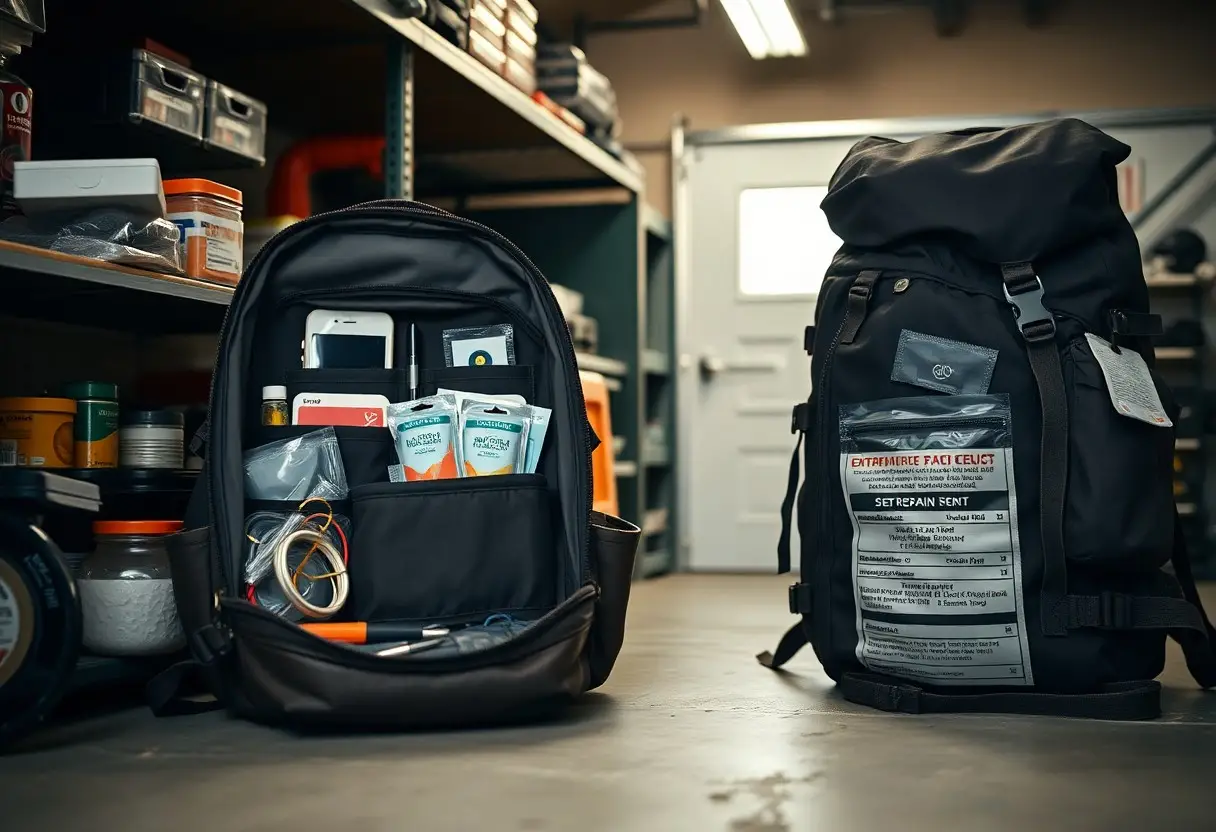
Schedule routine maintenance so your gear performs when needed: inspect seals and zippers, swap food and water every 6-12 months, replace alkaline batteries annually (lithium up to 10 years), and check prescription medication expiry dates. You should log inspections-date, issues found, actions taken-and keep a small roll of duct tape and multi-tool for quick repairs. Practical examples: rotate canned goods after 12 months, test flashlights monthly, and reseal waterproof sacks after each use in wet conditions.
Regular Checks for Go Bags
Every 3 months, open your go bag and run a 10-item checklist: ID, cash, phone charger, medications, water, snacks, flashlight, N95 mask, first-aid kit, and local maps. You should test electronics by charging devices, replace any single-use batteries, refresh high-energy snacks (bars with 1,200-2,000 kcal per box), and verify medical supplies-bandages, OTC meds-aren’t expired. Keep a printed inventory inside the bag to speed checks.
Seasonal Adjustments for Bug-Out Bags
Adjust your bug-out bag for seasonality: swap a lightweight 3-season sleeping bag for a 0°F bag in winter, add an insulated bivvy and chemical hand warmers (pack of 10), and increase water capacity from 2L to 4L in hot months. You should also change footwear-trail runners in summer, insulated boots in winter-and carry season-appropriate shelter like a four-season tent or tarp with snow stakes. Fuel type matters: replace butane with white gas for cold starts.
More specifically, list the exact swaps: add 3 extra pairs of heavyweight socks and gaiters for winter, crampons and an ice axe if traveling through frozen passes, and a compact shovel. For summer, include 20+ SPF sunblock, a 2-3L bladder with filter, and mosquito netting. Test lighters and stoves at expected temperatures-charge battery banks to 100% before cold seasons-and note that MREs last 3-5 years at 75°F, so rotate accordingly.
Final Words
Now you can clearly see that a go bag is designed for immediate, short-term needs while a bug-out bag prepares you for extended evacuation; you should tailor your contents, weight and storage to expected duration and mobility, inspect and update items periodically, and practice deploying the kit so you can act decisively when time matters.


