

This guide will help you navigate the necessary decision of how to pack your go bag. You want to be prepared for emergencies without overburdening yourself. By understanding the pros and cons of a lightweight approach versus a fully loaded pack, you can tailor your gear to suit your needs while ensuring optimal mobility. We’ll explore key considerations to achieve the right balance, so you can stay ready for whatever comes your way.
Understanding Go Bags
A go bag is an imperative preparedness tool designed to help you survive in emergencies, providing you with necessary supplies and gear. It should be compact and ready for rapid evacuation, ensuring you have everything you need to sustain yourself and your loved ones during unexpected situations.
What is a Go Bag?
While the specifics may vary, a go bag typically contains items such as food, water, first aid supplies, clothing, and tools you might need when evacuating. Think of it as your lifeline during a crisis, packed to help you navigate difficult circumstances effectively.
Importance of Weight Balance
To enhance your go bag’s effectiveness, achieving a balanced weight is key. A bag that’s too heavy can be cumbersome to carry, whereas a bag that’s too light may lack imperative supplies, leaving you vulnerable in times of need.
Weight balance is not merely about heft; it affects your mobility and overall effectiveness during an emergency. Carrying a well-distributed load allows you to maneuver easily, whether you’re fleeing from danger or setting up a secure location. This balance means positioning heavier items close to your back for stability and distributing lighter items evenly. You want to ensure you can access vital gear swiftly without getting fatigued or overwhelmed.
Factors to Consider for Weight Balance
Some vital factors to consider when balancing your go bag weight include:
- Your primary activities and potential threats
- The type of environment you may encounter
- The expected duration of your stay
- Your personal physical capabilities
This combination will help you craft a go bag that meets your needs while remaining manageable.
Urgency of Needs
Clearly, the urgency of your needs will dictate what you pack. If you anticipate immediate dangers, prioritize items like emergency supplies, first aid kits, or self-defense tools. A lightweight bag with these vitals can be more effective than a fully loaded pack that hampers your speed and agility.
Duration of Stay
With an extended stay, your bag should account for food, clothing, and other comfort items. On the contrary, for a quick getaway, you can stick to minimal vitals like water and first aid supplies to lighten your load.
The length of time you’ll be away significantly impacts what goes into your go bag. If you’re planning for a longer duration, you’ll need to include extra items such as portable food sources, clothing layers, and even hygiene products. Balancing these additional items against weight constraints is important to ensure you don’t sacrifice comfort for mobility. Assess your expected duration carefully to decide which extras justify the added weight.
Lightweight Go Bag Essentials
Despite the common belief that heavier is better, a lightweight go bag can provide you with all the imperatives needed for various situations without unnecessary bulk. Striking the right balance between weight and functionality allows for greater mobility and comfort, making it easier for you to navigate challenging environments. Prioritizing imperative items ensures you are prepared for emergencies while effectively managing your load.
Key Items to Include
The foundation of your lightweight go bag should consist of versatile items that serve multiple purposes. Essential gear may include a compact first aid kit, a reliable multi-tool, a lightweight water filter, and emergency food rations. These items not only keep the weight down but also enhance your ability to adapt to different situations. Prioritize quality over quantity to ensure that your bag serves you well when it matters most.
Selecting Multi-Purpose Gear
Include items that serve multiple functions to maximize your go bag’s versatility and reduce weight. Opting for gear like a multi-tool can save space, combining several tools into one compact design, while a tactical flashlight can also serve as a self-defense mechanism. Lightweight, collapsible gear, such as a tarp that can function as a shelter or a blanket, adds to your bag’s efficiency without compromising your load.
With careful selection of multi-purpose gear, you can significantly enhance your go bag’s functionality without adding excessive weight. This approach not only provides a variety of options in emergencies but also ensures you have imperative items readily available for your needs. Focusing on versatile tools allows you to tackle various challenges without overloading your go bag, making it easier to stay mobile and agile in unpredictable situations.

Fully Loaded Go Bag Essentials
For a fully loaded go bag, prioritize items that ensure your basic survival needs are met. Include water purification systems, non-perishable food, medical supplies, a first aid kit, a multi-tool, reliable communication devices, and appropriate clothing for varying weather conditions. The key is to select lightweight yet durable gear that provides versatility without compromising on your safety and comfort during emergencies.
Additional Items for Extended Needs
Any extended journey may require additional tools such as a portable stove, extra fuel, a lightweight tarp for shelter, or specialized equipment for specific activities, like fishing or navigation. These items can provide enhanced comfort and security but should be carefully considered to avoid overloading your bag.
Prioritizing Survival Gear
Items that will sustain you through emergencies, such as food and water, should always take precedence in your go bag. Your focus should be on high-quality survival gear like a reliable water filter, durable food rations, a comprehensive first aid kit, and necessary tools such as a knife or fire starter. Prioritizing these items lays the foundation for your go bag and ensures you are prepared for various survival scenarios, allowing you to adapt to the unexpected with confidence.
Prioritizing necessary survival gear means being strategic about what goes into your go bag. Start with the basics: a reliable source of water, high-energy food supplies, and appropriate clothing, then incorporate tools that enhance your safety and ability to endure challenging situations. Avoid packing unnecessary luxuries or items you can substitute with multifunctional gear. By keeping your focus on the necessarys, you can maintain a manageable weight while still being prepared for extended outings or unexpected scenarios.
How to Assess Your Go Bag Weight
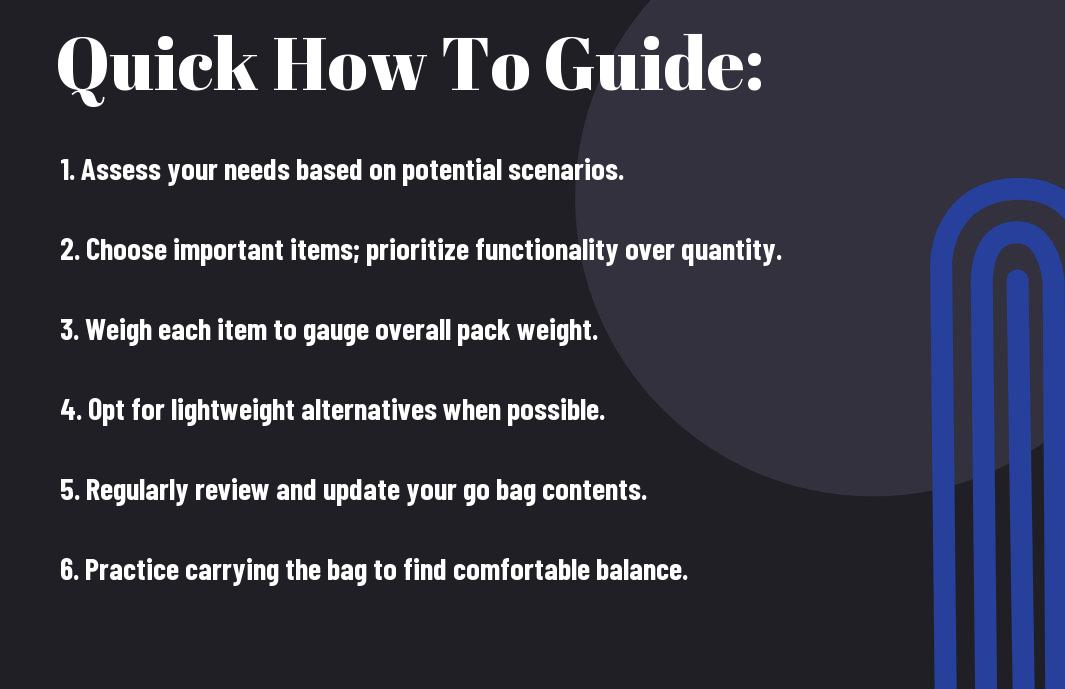
After packing your go bag, it’s imperative to evaluate its weight to ensure you can carry it comfortably in an emergency. You want to strike a balance between having enough supplies and keeping the bag manageable. Consider factors like your physical fitness level, the duration of your intended travel, and any specific needs you may have. This assessment is key to optimizing your go bag for a variety of scenarios.
Weighing Your Bag
Weighing your bag is a straightforward process. Use a reliable scale to get an accurate measurement of your packed go bag. Once you have the weight, evaluate it against guidelines for carrying manageable loads. Ideally, your go bag should weigh no more than 20% of your body weight. This will help ensure you can carry it over extended periods without taxing yourself physically.
Adjusting Based on Personal Needs
For optimal performance, adjust the contents of your go bag based on personal needs and preferences. Everyone has different requirements shaped by lifestyle, location, and individual circumstances. Therefore, tailor your supplies to fit your unique situation. Whether it’s adding extra medical supplies for a specific condition or including tools for a specific environment, customizing your bag ensures it meets your expectations.
Understanding your personal needs is vital when assessing your go bag weight. Take time to reflect on your activities and risks you may face in an emergency. For instance, if you live in a region prone to natural disasters, you might require additional items like a first aid kit or water purification tablets. Conversely, if you have less concern for extreme situations, lighter, more basic supplies may suffice. Customize your load so that it aligns with your lifestyle and potential scenarios, ensuring you’re prepared without overburdening yourself.
Tips for Maintaining an Optimal Balance
Unlike many assume, finding the right balance in your go bag involves thoughtful consideration of both weight and functionality. To achieve this, consider the following:
- Prioritize items based on necessity.
- Opt for lightweight materials without sacrificing durability.
- Utilize multi-functional tools.
- Remove or replace items as your needs change.
Knowing how to maintain an optimal balance will enhance your readiness and efficiency in emergencies.
Regularly Review and Update
To ensure your go bag remains effective, conduct periodic reviews and make updates as necessary. Check for expired items, replace old gear, and reassess your lifestyle changes to add or remove items accordingly. Regular evaluations help align your go bag with your current needs and circumstances.
Testing Your Go Bag in Real Scenarios
Real-life testing is an imperative part of preparing your go bag. You should occasionally put your go bag to the test in situations that mimic emergency scenarios, such as short camping trips or hikes. This practice allows you to experience how manageable the weight is and whether you have everything you need.
The more you test your go bag, the better you’ll understand its strengths and weaknesses. This hands-on experience can highlight items that may need adjustment or replacement and help you fine-tune the balance between being lightweight and fully loaded. Not only does this prepare you for real emergencies, but it also boosts your confidence in your ability to respond effectively when needed.
Final Words
With this in mind, finding the perfect balance between a lightweight and fully loaded go bag is necessary for your preparedness. You should evaluate your personal needs and the specific scenarios you might face, ensuring that your bag remains practical and manageable. Prioritize necessary items that enhance your safety while minimizing unnecessary weight. By regularly reviewing and adjusting your go bag’s contents, you can stay ready for any situation while maintaining overall comfort during travel or emergency situations.


