
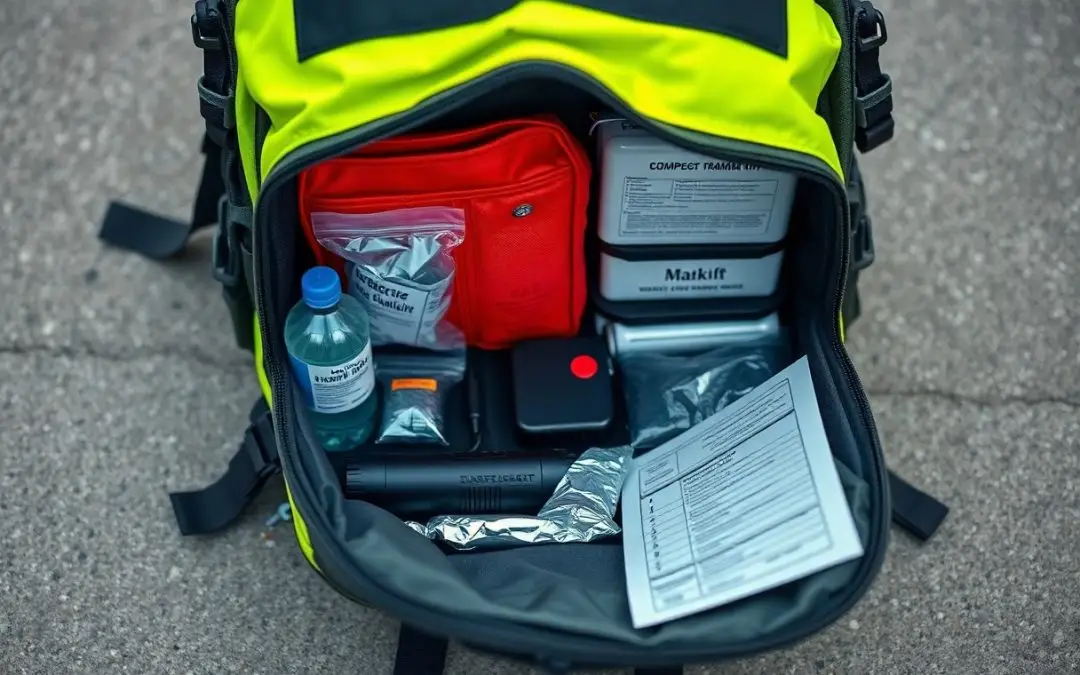
It’s prudent to have a preparedness kit designed for fast emergency response so you can access medical supplies, tools, and clear instructions immediately. You should select compact, labeled items and rehearse quick deployment to reduce response time.
Core Components of High-Efficiency Response Kits
Kits should be organized so you can grab crucials quickly: compact medical supplies, power sources, multi-tools, and clear communication devices for immediate deployment.
Critical Medical and Life-Saving Supplies
Stock first-aid kits, tourniquets, hemostatic dressings, airway adjuncts, and AEDs so you can stabilize severe injuries before help arrives.
Integrated Communication and Navigation Tools
Equip radios, satellite messengers, backup batteries, and concise SOPs so you can maintain contact, confirm locations, and coordinate rapid responses under stress.
You should pair handheld radios with a satellite messenger and a dedicated channel plan so you can send status updates, request support, and share precise coordinates. Include printed maps and a compact GPS unit with spare batteries so you can confirm position when signals weaken. Train your team on clear protocols for check-ins, message brevity, and power management.
Strategic Organization for Rapid Deployment
You organize kits with priority zones, labeled sections, and quick-access compartments so teams can grab necessarys in seconds. Clear labeling and task-based packing let you deploy personnel faster, reduce search time, and maintain operational focus during high-pressure responses.
Modular Design and Color-Coded Access
Color-coded modules help you identify supplies at a glance, cut retrieval time, and assign tasks by color to specific roles. Interchangeable pouches let you reconfigure kits quickly for different incidents without repacking everything.
Ergonomic Portability and Weight Distribution
Compact carry systems distribute load so you can move swiftly with minimal fatigue, keeping hands free for tools and navigation. Quick-release straps and balanced compartments let you transition from transport to action without delay.
Adjustable harnesses and waist belts keep weight centered near your hips, reducing strain during extended responses; place heavy items close to the spine and lighter gear outward for stability. Incorporate padded handles and optional wheeled modules so you can switch between carrying and rolling based on terrain and urgency.
Tailoring Kits to Specific Emergency Scenarios
You tailor kits to likely threats, balancing quick-access tools, compact medical supplies, multi-use gear, and clear labeling so responders deploy without delay or confusion.
Natural Disaster and Environmental Hazards
Floods, quakes, and fires push you to prioritize water purification, thermal blankets, emergency shelter, compact radios, and extra batteries stored in weatherproof cases for immediate use.
Tactical and Industrial Safety Configurations
Tactical and industrial setups require you to include PPE, task-specific tools, spare parts, high-intensity lighting, and secure mounting so teams maintain safety and speed during operations.
Industrial applications ask you to add gas detectors, lockout/tagout kits, heavy-duty gloves, modular storage, and clear SOP labeling so equipment integrates with site procedures and reduces downtime.
Rigorous Maintenance and Readiness Protocols
You maintain strict schedules for inspections, cleaning, and replenishment so kits deploy instantly when needed. Clear checklists, assigned responsibilities, and incident-ready staging ensure you can respond without delay while minimizing errors and equipment failures.
Systematic Inventory Audits and Expiry Tracking
Schedule routine audits to verify counts, rotate stock, and record expiry dates so you never deploy outdated supplies. Digital tracking with alerts lets you prioritize replacements and maintain audit trails for accountability and regulatory compliance.
Functional Testing of Electronic and Mechanical Gear
Test batteries, radios, lights, and servos on a set cadence so you confirm operational status before deployment. You log results, flag failures, and swap components promptly to keep response times predictable and equipment ready.
Inspect connectors, seals, mounting hardware, and cable integrity during each test cycle; vibration and moisture can degrade performance quickly. You should run firmware diagnostics, verify calibration against standards, and perform load tests under simulated conditions. Maintain a results log with timestamps, technician initials, and corrective actions so patterns of wear or intermittent faults are identified before they cause mission failure.
Operational Training for Instinctive Utilization
Training conditions you to access and deploy items without hesitation, using repetitive, scenario-based drills that embed quick decision pathways so you grab the right tool and act within seconds.
Time-Pressured Drills and Simulation Exercises
Simulations put you in focused scenarios with ticking clocks so you practice prioritization, speed, and communication while handling the kit under stress.
Mastery of Specialized Equipment
Equipment mastery trains you to operate medical, cutting, and power tools by touch, minimizing fumbling and ensuring you perform lifesaving tasks accurately under pressure.
Practice includes tactile drills, timed assembly and disassembly, blindfolded retrieval, and maintenance routines so you maintain readiness, check batteries, swap cartridges, and confirm compatibility. You should rehearse ergonomic grips, single-handed operation, and rapid troubleshooting until actions are instinctive and errors are rare.
Advanced Logistics and Scalability
You rely on adaptable supply chains and prepositioned caches so kits arrive fast; route prioritization, predictive restocking, and mobile staging shorten delivery windows while allowing you to scale counts as incidents grow.
- Stage caches by risk zone to reduce transit time.
- Modularize kits so you send only what you need.
- Automate resupply triggers to prevent stockouts.
| Component | Operational Benefit |
|---|---|
| Prepositioned caches | Faster arrival to incident sites |
| Modular packaging | Flexible scaling by severity |
| Automated inventory | Reduced gaps in replenishment |
Tiered Response Systems for Varying Severity
For incidents of different size, tiered kits let you dispatch basic to full-capacity sets, helping you conserve stock while matching clinical and logistical needs quickly.
Multi-Agency Compatibility and Interoperability
Coordinated protocols let you align equipment, labeling, and comms so disparate teams can use, request, and replenish kits without confusion during joint operations.
Agencies that adopt shared standards enable you to speed handoffs: common inventory codes, interoperable radios, unified packaging, and prearranged mutual-aid terms reduce duplication and cut deployment time.
Final Words
Upon reflecting, you understand that preparedness kits designed for fast emergency response organize critical supplies, durable tools, and concise instructions so you can act immediately, reduce delays, and maintain safety until professional aid arrives.


