
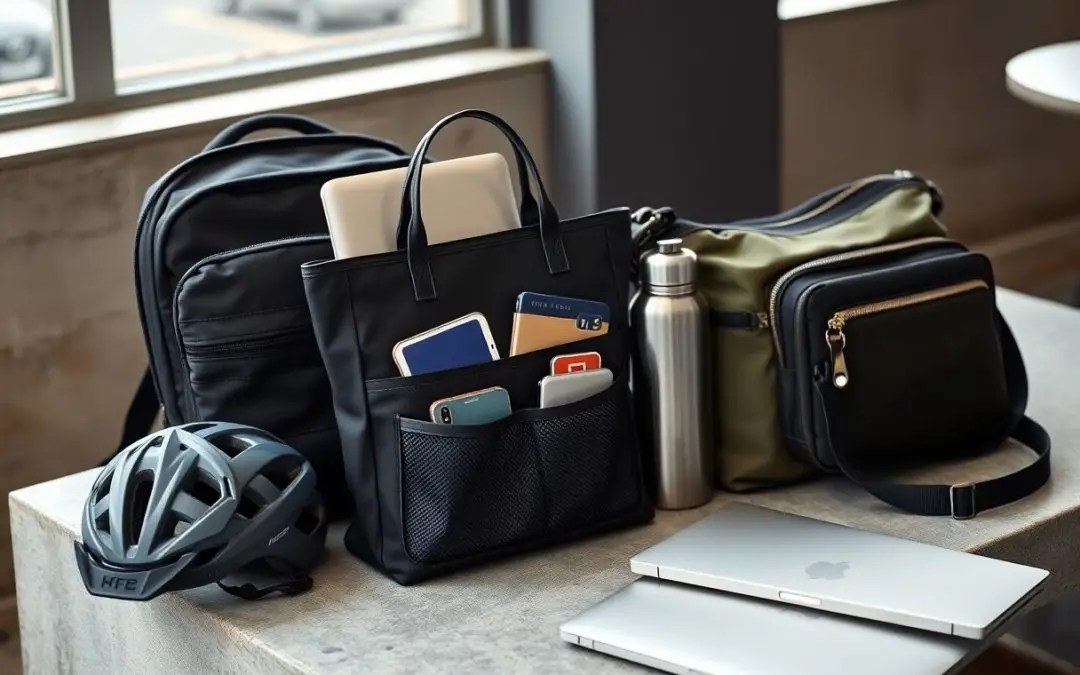
Bags designed with intention streamline how you move, work, and travel by prioritizing organization, durability, and sustainable materials; this guide shows how to choose designs that align with your routines, tech needs, and values so your bag becomes a practical extension of your lifestyle rather than just an accessory.
The Evolution of Purpose Driven Bags
Historical Context
By the 19th century military packs and leather satchels set functional standards-durability, load distribution, and easy access. You see the thread continue in the 1970s when Fjällräven introduced the Kånken (1978) to address schoolchildren’s posture, and again in the 1980s-90s as bike couriers popularized messenger bags; Timbuk2 (founded 1989) built designs around urban riders. The 2000s added padded sleeves for 13-15 inch laptops, shifting priorities toward tech protection and everyday versatility.
Modern Innovations
Today, materials like Cordura, ballistic nylon and rPET (recycled PET bottles) pair with YKK zippers and taped seams to deliver water resistance and longevity. You gain features such as RFID-blocking pockets, MOLLE-style modularity, and USB pass-throughs for charging on the move. Bellroy (2009) and Aer (2013) exemplify slim, tech-first layouts that integrate 13-16 inch laptop compartments, while some models add solar panels or TSA-friendly lay-flat sections for travel efficiency.
Consider capacity and organization: a 20-25 L commuter pack with a dedicated 13-15 inch sleeve, removable pouches, and compression straps keeps your gear balanced and accessible. You can prioritize sustainability with rPET fabrics and PFC-free DWR coatings, or opt for ultralight ripstop nylon that trims roughly 200-400 g versus older canvas builds. Riders favor messenger styles for short, stop-heavy routes and backpacks for longer commutes, so match form to your daily pattern.
Key Features of Purpose Driven Bags
You want bags that balance storage, protection, and comfort: think 5 internal compartments including a padded 13-inch laptop sleeve, an external quick-access pocket, and a 10,000mm water-resistant coating with YKK zippers. Designers add modular straps and trolley pass-throughs so you can adapt on the go. Any feature should serve a clear daily function and reduce friction in your routine.
- Organizational layout – 5+ compartments, dedicated laptop/tablet sleeves, and zippered mesh pockets so you can find chargers and keys in seconds.
- Protection & weatherproofing – 10,000mm water resistance, taped seams, and YKK water-resistant zippers to keep electronics dry during heavy rain.
- Materials & durability – 500D recycled nylon or 600D RPET fabric with reinforced bar-tacked stress points for years of daily use.
- Comfort & ergonomics – ventilated back panels, S-shaped adjustable straps, and load-lifter straps that distribute weight across your hips and shoulders.
- Security features – lockable zippers, RFID-blocking pockets for passports and cards, and hidden anti-theft compartments against your back.
- Modularity & expansion – expandable +8-12L capacity, removable daypack inserts, and strap systems that convert between backpack, sling, and brief modes.
- Maintenance & warranty – machine-washable panels or wipe-clean linings and typical brand warranties of 2-5 years to protect your investment.
- Sustainability indicators – RPET made from roughly 8-12 recycled bottles per bag, GOTS-certified cotton options, and plant-based dye alternatives you can verify on labels.
Functionality and Design
You should expect a clamshell opening that lays flat 180° for packing and inspection, three primary storage zones (work, daily vitals, and quick-access), and a padded 13-inch laptop sleeve with Velcro retention. Multiple attachment points let you clip on water bottles or roll-up umbrellas, while low-profile stowable straps convert the bag for air travel or city commuting without extra bulk.
Sustainable Materials
You can choose bags made from RPET (recycled polyester), GOTS-certified organic cotton, or biodegradable PU coatings; a typical RPET bag uses about 8-12 recycled 500ml plastic bottles. Labels increasingly list material origins and certification IDs so you can verify claims before purchase.
Digging deeper, lifecycle impacts matter: RPET reduces reliance on virgin petroleum feedstocks and diverts plastic from landfills, while GOTS cotton lowers pesticide and water impacts versus conventional cotton. You should compare declared recycled content percentages, look for third-party certification numbers, and check producer repair programs-some brands offer take-back schemes that extend product life and cut per-item carbon intensity by spreading embodied impacts over more years.
Choosing the Right Bag for Your Lifestyle
When selecting a bag, align capacity and form to daily routines: 10-15L for minimalist commutes, 15-25L for bike commuters carrying a 13-15″ laptop plus lunch, and 30-40L for short trips or carry-on use. You should factor in average items, commuting method, and storage constraints at work. Prioritize pockets, waterproofing, and weight distribution to reduce strain and improve daily efficiency.
Assessing Your Needs
Start by listing what you carry: laptop size (13″ vs 15″), chargers, water bottle (500-750ml), notebooks, and any camera or baby gear. If you commute over 45 minutes or carry more than 5 kg, look for padded straps and a hip belt; for short walks, a tote or crossbody suffices. Check frequency-daily versus occasional-to decide between durable materials or lightweight designs.
Matching Style and Purpose
You should match material and silhouette to context: full-grain leather or structured totes for client meetings, ballistic nylon or TPU-coated fabrics for cycling and rain, and canvas or washable fabrics for casual weekends. Pay attention to hardware-YKK zippers and lockable pulls add security-and choose a neutral color (black, navy, tan) if you need versatility across outfits and seasons.
For added versatility, opt for convertible designs: a 15-20L tote-backpack with removable dividers lets you switch between camera kit and laptop in under a minute. When you routinely carry over 7-8 kg, prioritize 10-20 mm padded straps, a sternum strap, and a hip belt to distribute load. Choose matte finishes and minimal branding for professional settings, and reflective accents if you cycle after dark.
The Impact of Purpose Driven Bags on Daily Life
When you choose a purpose driven bag, you change routine friction into reliable support: organized compartments mean your laptop, charger and notebook are each in a dedicated spot, ergonomic straps reduce shoulder strain on long commutes, and durable materials cut replacement frequency-helping lower the 92 million tonnes of annual textile waste. Case studies from urban professionals show fewer lost items and faster transitions between work, transit and errands, so your day becomes measurably smoother and less wasteful.
Enhancing Productivity
Design features like padded laptop sleeves, cable organizers, external quick-access pockets and modular inserts let you move between meetings and transit without rifling through contents; the average commuter carries 3-5 tech and personal items that benefit from separation. By distributing weight with sternum straps and using clear internal layouts, you reduce time spent searching and discomfort, which increases focus-professional users report improved punctuality and fewer forgotten chargers or documents when bags are purposefully structured.
Promoting Sustainability
Purpose driven bags often incorporate recycled textiles (rPET), repairable hardware and take-back programs so you can extend product life and lower environmental impact; brands offering lifetime repairs or refillable components reduce disposal rates and resource use. For you, this means fewer replacements, predictable long-term cost and the satisfaction of choosing gear that aligns with circular-design principles rather than single-use fashion cycles.
Digging deeper, materials and end-of-life strategies determine real sustainability: recycled polyester made from PET bottles can cut reliance on virgin polyester, vegetable-tanned leather avoids chrome-based processes, and modular construction simplifies repairs. You benefit when companies publish repair data or offer warranties-Patagonia’s Worn Wear and brands with in-house repair services demonstrate how maintenance adds years to a bag’s useful life. Opting for repairable, traceable components lets you reduce waste and track lifecycle impact more transparently.
Popular Brands and Their Contributions
Industry Leaders
You see Samsonite (founded 1910) and Rimowa (1898) setting durability and design benchmarks-Rimowa’s grooved aluminum shells and TSA locks define premium travel while Samsonite’s global scale drives innovation in polycarbonate and lightweight frames. Patagonia (1973) advanced sustainability with recycled fabrics and the Worn Wear repair program, and Tumi (1975) established business-focused organization and lifetime service that shape warranty expectations across the industry.
Emerging Designers
You track Peak Design’s community-driven rise-its Kickstarter raised over $6 million for the Everyday Backpack-proof that backer-driven design works; Topo Designs (2008) and AER (2011) remix outdoor fabrics for 10-20L urban packs; brands like Cuyana and Everlane apply limited SKUs and transparent sourcing so your choices favor longevity over trend cycles.
You’ll notice emerging labels prioritize small-batch runs (often under 2,000 units), local manufacturing, and repair services so products age with you. Many adopt recycled nylon, PFC-free DWR coatings, and modular pockets that let you customize loadouts; that practical focus helps you get high-spec features-like camera-friendly dividers or removable tech sleeves-without unnecessary embellishment.
Care and Maintenance of Purpose Driven Bags
Cleaning Techniques
You can spot-clean canvas and nylon with a mild detergent diluted 1:20 in warm water, using a soft brush and blotting dry; test in an inconspicuous seam first. For leather, apply a pH-balanced cleaner and a conditioner every 3-6 months, avoiding water saturation; use a soft cloth and work in circular motions. Waterproof shells tolerate a gentle machine wash on cold inside a laundry bag, then air-dry; avoid bleach and high heat to preserve coatings and seams.
Storage Tips
Store your bag in a breathable dust bag or pillowcase at 15-21°C (60-70°F) and 45-55% relative humidity to prevent mildew and leather drying. Stuff the main compartment with acid-free tissue or a rolled towel to retain the shape, and keep hardware fastened to reduce strap stress. Avoid plastic bags that trap moisture and direct sunlight, which fades fabrics and weakens finishes.
- Empty pockets and air the bag 2-4 hours after heavy use to prevent odor buildup.
- Place silica gel packets inside and replace them every 6-12 months to control moisture.
- Perceiving early mold or damp spots lets you act within 48 hours-wipe nylon with 70% isopropyl and consult a leather specialist for hides.
You should rotate frequently used bags every 3-6 months to avoid long-term compression of padding and straps; this preserves foam resilience and hardware alignment. Use cedar blocks or natural repellents (not mothballs) for long-term wool-lined storage, and hang structured bags by their handles on padded hooks if space allows to prevent base deformation. For backpacks, remove electronics and air out compartments between trips.
- Loosely stuff structured bags with tissue to maintain profile during longer storage periods.
- Store smaller accessories in zip pouches to prevent scratches from metal hardware.
- Perceiving subtle changes in scent, color, or stitch tension prompts immediate inspection and targeted cleaning.
Summing up
So purpose-driven bags give you organized, durable, and sustainable solutions that adapt to work, travel, and everyday life; they prioritize function without sacrificing style, streamline your routines, reduce waste, and support the choices that define your modern lifestyle.


