
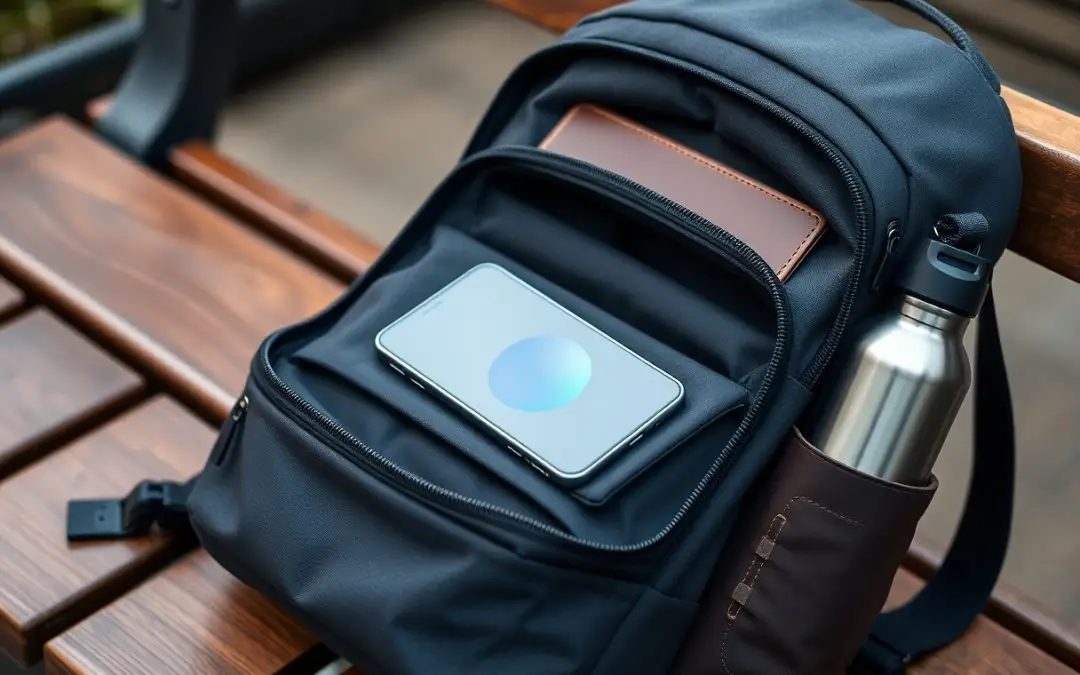
Smart choices in everyday carry let you streamline imperatives, protect valuables, and stay prepared without bulk. By assessing your routine and prioritizing versatile, durable pieces-modular bags, slim wallets, tech organizers-you ensure your gear adapts to work, travel, and leisure. Use proven materials and thoughtful layouts to make your carry reliably efficient.
The Importance of Smart Carry Solutions
Your carry choices determine how smoothly your day unfolds: a bag that fits a 15-inch laptop, a 6-7 inch phone, a 750 ml water bottle and a slim umbrella removes excess bulk and prevents constant repacking. Built-in RFID sleeves, quick-access pockets and padded compartments protect gear and speed transitions through transit gates, airport security and client meetings, letting you focus on tasks rather than hunting for items.
Enhancing Everyday Convenience
You gain immediate benefits from design details like a front-access transit pocket, a key leash and internal cable routing, which keep importants reachable without unpacking. A dedicated phone sleeve sized for 6-7-inch devices and an external USB port for a power bank let you stay connected while moving. These features reduce friction during commutes, airport transfers and quick work sessions.
Promoting Organization and Efficiency
You optimize workflows by using modular dividers, color-coded pouches and labeled compartments so each item has a predictable spot. Three to five interchangeable pouches can separate chargers, toiletries and documents, while a padded 15-inch laptop compartment plus a slim tablet sleeve prevents scrambling at checkpoints. Consistent placement makes packing and locating gear faster and more reliable.
For example, a field photographer replaced bulky cases with modular foam inserts holding two lenses, four batteries and a flash, cutting gear prep from roughly 10-15 minutes to under 5. You can mirror this approach: keep cables, adapters and a printed contract in a labeled pouch so setup between meetings or shoots becomes a brief unzip rather than a time-consuming search.
Types of Smart Carry Solutions
Five core smart-carry categories help you tailor gear to daily needs: integrated-charging bags, tracker-enabled wallets, modular briefcases, security pouches, and wearable carriers; each targets a specific pain point and delivers measurable benefits like 5,000-10,000 mAh onboard power or 20-30L commuter capacity.
- Smart bags & backpacks – modular storage and integrated power.
- Tech-enabled wallets – Bluetooth trackers and RFID protection.
- Smart briefcases – business organization and lockable compartments.
- Security pouches – slash-resistant, hidden-zipper travel security.
- The wearable carriers – belt pouches and sling packs for active days.
| Smart Bags & Backpacks | 20-30L capacity, laptop sleeve, integrated 5,000-10,000 mAh battery; examples: Peak Design Everyday, Nomatic Travel Pack |
| Tech-Enabled Wallets | Bluetooth trackers (~10-30 m range), RFID-blocking, AirTag/Tile-compatible; battery life ~6-12 months to 1 year |
| Smart Briefcases | Structured compartments, TSA-friendly pockets, lockable zippers; ideal for 8-15L business carry |
| Security Pouches | Slash-proof mesh, concealed zippers, RFID pockets; optimized for travel and crowded areas |
| Wearable Carriers | Chest rigs and belt bags for runners/commuters, quick access, water-resistant fabrics |
Smart Bags and Backpacks
You get modular organization and on-board power in models like Peak Design Everyday (20L) or Nomatic Travel Pack (30L); many include TSA-friendly laptop sleeves, weatherproof materials, and integrated 5,000-10,000 mAh batteries so you can commute, bike, or fly with fewer accessories in tow.
Tech-Enabled Wallets
Bluetooth-enabled wallets pair with your phone to give real-time location within roughly 10-30 m, while RFID-blocking linings stop contactless skimming; brands such as Ekster and Ridge combine slim metal or folio designs with replaceable or rechargeable batteries that commonly last six months to a year.
When evaluating units, check tracker range (30-100 ft / 10-30 m), battery type (replaceable CR2032 vs. rechargeable cells), and app features like separation alerts, last-seen maps, and crowd-finding; you should register devices, enable permissions for background location, and test recovery workflows-these steps materially increase your chances of finding a lost wallet quickly.
Features to Look For
Prioritize materials and layout that match how you use gear: 10-20L daypacks hold daily tech, 25-40L suits short trips; 1200D nylon or tarpaulin coatings resist rain and abrasion. You want YKK zippers, reinforced stitching, and a lifetime or 3-5 year warranty for durability. Look for modular organization-removable tech sleeves, dedicated laptop compartments with 15-17″ fit, and external quick-access pockets for keys, wallet, and transit cards.
Security and Anti-Theft Measures
Choose slash-resistant straps with stainless-steel cable, lockable YKK zippers, and hidden rear compartments to keep valuables out of reach during commutes. You can add RFID-blocking pockets (13.56 MHz) for cards and passports, integrated tracker pouches for AirTag/Tile, and backpacks with built-in motion alarms or cable locks-features proven to reduce opportunistic theft in crowded transit hubs and tourist areas.
Battery Life and Charging Capabilities
Check onboard power banks measured in mAh and watts: 10,000-20,000 mAh packs give multiple phone charges, and USB-C Power Delivery at 18-30W enables fast charging. You want pass-through charging and Qi wireless pads if you charge on the go, but note airline limits: up to 100Wh is allowed in carry-on, 100-160Wh needs airline approval, over 160Wh is prohibited.
In practice, a 10,000 mAh integrated battery typically yields about two full charges for a 3,300 mAh phone; a 20,000 mAh unit can reach four or more. Prefer PD 18W for a 0-50% boost in roughly 20-40 minutes on many phones, and check thermal management-continuous fast charge without ventilation shortens battery lifespan, so look for packs with temperature sensors or smart charging circuits.
Best Smart Carry Solutions on the Market
Peak Design Everyday Backpack 20L, Bellroy Classic Backpack Plus, and Osprey Farpoint 40 consistently lead for functionality and durability; Peak Design’s 20L offers configurable dividers and weatherproof zippers, Bellroy fits up to a 15″ laptop with tidy pockets, and Osprey’s 40L meets most international carry-on limits. You can pair any with an Anker PowerCore 20100 (~74Wh) and a Tile or AirTag for reliable on-the-go charging and tracking.
Top Picks for Daily Commuters
If you commute 30-90 minutes, pick the Peak Design Everyday 20L or Bellroy Classic Backpack Plus for quick-access pockets, padded 15″ laptop sleeves, and tidy cable organizers. Add a 20,100mAh Anker power bank for roughly two full phone charges, a compact Tile Mate for keys, and a slim rain cover-this setup minimizes fumbling at transit hubs and keeps your gear charged and accessible.
Ideal Choices for Travelers
When you travel, favor the Osprey Farpoint 40 or Peak Design Travel Backpack 45L for airline-friendly dimensions, dedicated 15″ laptop sleeves, and external luggage pass-throughs; pair with an Anker PowerCore 20100 (~74Wh) to stay comfortably under the 100Wh airline battery limit, plus an RFID-blocking wallet and TSA-friendly packing cubes to speed security.
If you fly twice a month, structure packing with two compression cubes (tops and bottoms), a 1L clear toiletry bag, and keep your laptop in its sleeve to move through screening faster. Choose lockable zippers and an integrated rain cover for unpredictable weather, and use a 45L travel pack to split gear between carry-on and checked when trips extend beyond a week.
Care and Maintenance of Smart Carry Solutions
Your smart bag or case should get routine attention: wash fabric liners every 2-3 months, condition leather every 3-6 months with a pH-balanced balm, and wipe electronics housings with a slightly damp microfiber cloth after trips. Inspect seams and hardware after heavy use-zippers that snag often respond to a graphite pencil or silicone lubricant, and weak stitching should be reinforced within the first 1-2 weeks of noticing fray to avoid larger repairs later.
Tips for Longevity
Rotate daily-use bags to reduce wear, avoid exceeding the manufacturer’s weight rating (often 5-10 kg for backpacks), and store items dry at 20-25°C with humidity below ~60% when possible. Use padded inserts for fragile gear and keep sharp objects sheathed to prevent punctures. The simple habit of wiping zippers and treating leather before long-term storage extends service life.
- Wipe fabric with mild soap and air-dry; avoid machine-drying high-tech fabrics.
- Apply leather conditioner every 3-6 months; test on an inconspicuous spot first.
- Use silica gel packs to control moisture when storing electronics for >2 weeks.
- Lubricate zippers with beeswax or a PTFE zipper lubricant every 6 months.
- Keep power banks at ~40-60% charge if storing longer than 2 months.
Troubleshooting Common Issues
If a zipper jams, run a graphite pencil or a small dab of PTFE-based lubricant along the teeth and gently work it back and forth; stuck electronics often respond to a soft reset or firmware update, and swollen batteries mean you should stop using the device and consult the manufacturer. For water exposure, remove electronics, blot moisture, and dry with desiccants for 24-48 hours in a ventilated area to reduce corrosion risk.
When straps fray, sew a reinforcing patch or apply a heat-shrink sleeve within the first tear to prevent propagation; replace buckles rated below your pack’s load-many manufacturers list replacement parts for 1-3 USD. If a built-in charger fails, test the cable and port with a multimeter (expect 5V/2A for many power banks) before contacting support. For lingering odors, wash removable liners with a cup of white vinegar in cold water or use activated charcoal sachets for 48-72 hours. Keep firmware current and document recurring faults with photos and serial numbers to speed warranty claims.
Future Trends in Smart Carry Technology
Expect UWB positioning, Bluetooth LE 5.x improvements, and embedded eSIMs to change how you interact with carry items; UWB (first mainstreamed with the iPhone 11’s U1 chip in 2019) already enables sub-meter locating in mixed-device ecosystems. You’ll see battery and mesh-network gains that push passive trackers from simple finders toward persistent asset management, while manufacturers fold sustainable materials and repairable modules into designs to extend product lifecycles and lower lifetime cost of ownership.
Innovations on the Horizon
Solar-charging backpacks with flexible panels delivering roughly 3-10 W let you top up phones and trackers on multi-day trips, and follow-me robotics like Piaggio’s Gita or Travelmate prototypes demonstrate autonomous last-mile mobility. You’ll also encounter e-ink luggage tags and embedded GPS + BLE combos that offer months-to-a-year runtime on coin-cell or thin lithium batteries, plus incoming Bluetooth LE Audio and sensor fusion features that enable context-aware alerts.
The Rise of Personalization
You already see modular systems from companies like Peak Design and Nomatic that let you snap in camera cubes, packing cubes, or tech sleeves to match specific workflows; companion apps store packing templates and item tags so your bag adapts to workdays, travel, or shoots. Expect mass-custom 3D-printed inserts and laser-cut foam services to let you order bespoke interiors sized to your gear within days.
For deeper personalization, you can scan your kit with a smartphone to generate a digital inventory, then order tailored inserts from services such as Shapeways or local makers, or choose magnetic divider systems that rearrange in seconds. You’ll also benefit from sensorized straps and load-distribution alerts that optimize comfort: small brands are already integrating pressure sensors and companion UX to notify you when weight shifts, helping prevent back strain on long hauls.


