
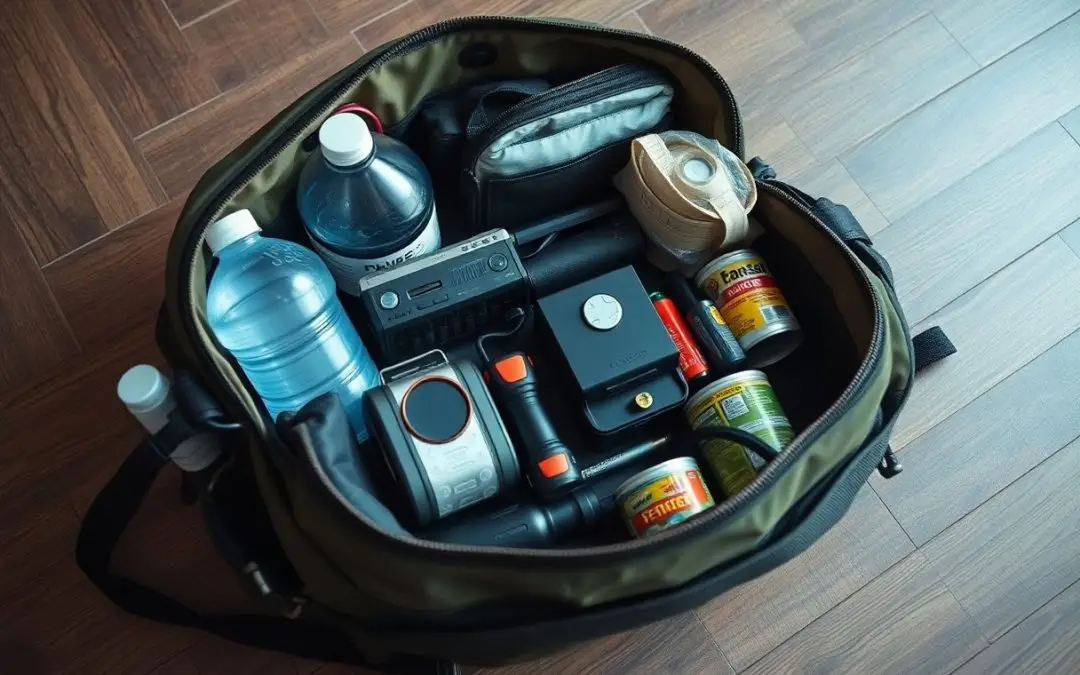
You must assemble a go bag with water, food, first-aid, warmth, light, tools, and documents to stay safe and act quickly during emergencies.
Core Hydration and Nutrition Essentials
Your go bag should prioritize clean water, electrolyte tablets, and calorie-dense rations so you can stay functional during emergencies. Include compact containers, a basic stove or means to heat food, and easy-access snacks to sustain energy until help arrives.
Potable Water Storage and Filtration Systems
Store at least three liters per person, plus a collapsible reservoir and a lightweight filter straw or pump. Pack purification tablets for backup and test filters before use so you can treat water from uncertain sources quickly.
High-Calorie, Non-Perishable Food Rations
Pack calorie-dense bars, MREs, and sealed freeze-dried meals that require minimal water or cooking. Choose items with long shelf life, dense calories per ounce, and flavors you will eat under stress to maintain strength.
Include a mix of flavors and textures, plus high-fat items like nut butters and dense protein bars to maximize calories. Consider your dietary restrictions, pack utensils, and rotate rations every six to twelve months so you always have fresh, palatable options when you need them.
Comprehensive First Aid and Medical Supplies
Stock your go bag with a well-rounded first aid kit, basic medications, allergy treatments, and items for chronic conditions so you can treat common injuries and manage ongoing needs until help arrives.
Essential Trauma and Wound Care Components
Include sterile gauze, a tourniquet, hemostatic dressings, adhesive bandages, and suture or closure strips so you can control bleeding, protect wounds, and reduce infection risk during evacuation or delayed care.
Prescription Medications and Personal Hygiene Kits
Pack a supply of prescription meds in labeled, waterproof containers, plus over-the-counter pain relievers and a compact personal hygiene kit so you can maintain medication schedules and basic sanitation on the move.
Organize prescriptions with a carry sheet listing dosages, pharmacy contacts, and expiration dates; include an extra week’s supply when feasible, medical ID, and an insulated sleeve for temperature-sensitive drugs so you can maintain proper dosing during extended outages.
Communication and Navigation Tools
Keep your go bag stocked with reliable communication and navigation items so you can stay informed and orient yourself during disruptions; include a compact compass, backup phone, written contact list, and weather radio to maintain situational awareness when networks fail.
Emergency Radios and Portable Power Solutions
Pack a battery-powered or hand-crank NOAA weather radio, plus a high-capacity power bank and solar charger so you can power phones and radios; include spare batteries and charging cables in a waterproof pouch.
Physical Maps and Signaling Devices
Carry paper maps, a durable compass, and simple signaling tools like a whistle, signal mirror, and high-visibility marker so you can mark routes and alert rescuers when electronic systems fail.
Maps and simple signals remain dependable: keep folded topo maps in a waterproof sleeve, mark routes and meeting points for you and your group, carry a compass and practice taking bearings, learn three-blast whistle and mirror-flash techniques, and include an LED strobe or approved flares, storing them safely and checking expiration dates.
Shelter and Environmental Protection
Shelter choices in your go bag should include a compact tarp, cordage, and an insulating pad so you can craft quick cover; add repair tape and a lightweight tarp stake set to stay dry and warm.
Lightweight Sleep Systems and Emergency Bivvies
Keep a lightweight sleeping bag or emergency bivvy that packs small, reflects heat, and resists moisture so you can rest briefly without bulk.
Tactical Clothing and Multi-Climate Layering
Pack modular layers-base, insulating, and a waterproof outer-so you can adjust to cold nights or wet days; prioritize quick-dry fabrics and a compact shell for unpredictable conditions.
Your clothing choices should focus on layering that lets you regulate temperature and moisture: a moisture-wicking base layer, an insulating mid-layer (fleece or light synthetic), and a breathable waterproof shell. Carry a compact, insulated jacket and an extra pair of socks; include a hat and gloves that pack small. Prioritize fit and mobility so you can perform tasks, and test combinations ahead of time to know what works in heat, wind, or rain.
Vital Documentation and Financial Security
Pack copies of IDs, insurance policies, wills, and deeds in your go bag so you can prove identity, claim assets, and get help quickly after an emergency.
Waterproof Storage for Identification and Records
Store passports, birth certificates, and digital backups in sealed, waterproof pouches to prevent water damage and allow immediate access during evacuations.
Emergency Cash Reserves and Diversified Assets
Keep at least several hundred dollars in small bills, plus coins, and hold a mix of accessible assets so you can pay for transportation, lodging, or supplies when cards are unavailable.
Allocate cash across pockets and containers: keep small bills ($20s and smaller) and coins for transit or vending, stash larger amounts in a separate secure location, and rotate notes regularly. Add a prepaid card and a copy of bank contact numbers in your go bag so you can access funds if ATMs or networks fail.
Strategic Maintenance and Customization
Inspect your go bag monthly for expired items, test electronics, and clean or replace gear so you can deploy quickly when needed.
Seasonal Inventory Rotation Protocols
Rotate seasonal items every three months, swapping your cold-weather layers for lighter clothing, topping off water and medicine, and logging expiration dates to maintain your readiness.
Tailoring Gear for Family and Pet Requirements
Customize each bag for your family members’ sizes, medical needs, and comfort items, and include pet imperatives like food, carrier, leash, and vaccination records.
Plan individualized checklists so you pack spare glasses, copies of prescriptions, a child’s comfort item, and emergency contacts; for pets include extra food, medications, a carrier, collapsible bowls, leash, recent vaccination records, and a familiar blanket, then rehearse exits to keep everyone calm.
Summing up
As a reminder, you should keep a go bag packed with water, a first-aid kit, flashlight, radio, spare batteries, important documents, cash, and weather-appropriate clothing; inspect and update items regularly so you can evacuate or shelter with confidence and speed.


