

Many people overlook the importance of having a go bag ready for unexpected city emergencies, but being prepared can make all the difference in a crisis. In this guide, you’ll learn how to pack a versatile and practical go bag tailored specifically for urban environments. You’ll discover important items to include, tips for organizing your gear, and strategies to ensure your bag is ready whenever you need it. By the end of this post, you’ll feel confident and empowered to handle any situation that arises in your urban surroundings.
Understanding Urban Emergencies
A deep understanding of urban emergencies is vital for ensuring your safety. City environments pose unique challenges such as dense populations, infrastructure vulnerabilities, and the potential for various disasters. Being prepared means recognizing the types of emergencies you might face and creating a solid plan to confront them effectively.
Types of Urban Disasters
- Natural disasters (earthquakes, floods)
- Technological hazards (industrial accidents, chemical spills)
- Public health crises (pandemics, outbreaks)
- Social unrest (riots, protests)
- Infrastructure failure (power outages, transportation collapse)
Any effective plan should include strategies for these potential situations.
| Natural Disasters | Earthquakes, floods, hurricanes |
| Technological Hazards | Chemical spills, power outages |
| Public Health Crises | Outbreaks, pandemics |
| Social Unrest | Riots, protests |
| Infrastructure Failures | Transportation collapse, communication failures |
Assessing Personal Risk Factors
Little attention is often given to your individual risk factors in urban environments. Evaluating aspects such as your location, mobility, and personal health can significantly influence your preparedness. Understanding what makes you more vulnerable can help in tailoring your go bag and emergency plans to suit your specific needs.
- Geographical location (urban density, proximity to hazards)
- Mobility limitations (physical disabilities, access to transportation)
- Health conditions (medications, allergies)
- Family considerations (children, elderly dependents)
- Emergency skills (first aid, self-defense training)
Perceiving these factors will enhance your overall readiness.
With the urban landscape constantly evolving, staying informed about your surroundings and potential risks is key. Factors such as the local crime rate, social stability, and historical data on emergencies can shape your preparedness. Acknowledging these elements allows you to adjust and refine your go bag contents to better address your personal needs.
- Analyzing local hazard history
- Identifying emergency services availability
- Considering community engagement
- Assessing your living conditions
- Being aware of evacuation routes and resources
Perceiving the complete picture empowers you to act wisely when disaster strikes.

Essential Items for Your Go Bag
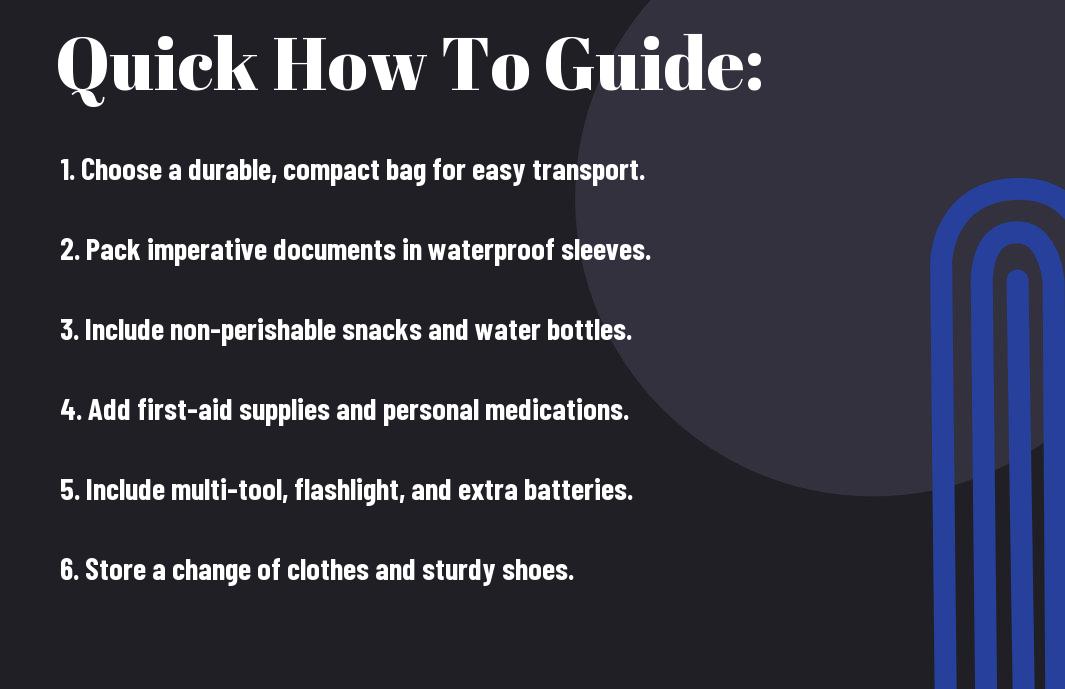
Now that you understand the importance of having a go bag, it’s time to pack it with crucial items that can enhance your safety during city emergencies. Your go bag should be compact yet comprehensive, ensuring you have everything you need to navigate unpredictable situations. Think about both basic survival gear and personal identification items as you curate your go bag’s contents.
Basic Survival Gear
While selecting basic survival gear, aim for items that provide immediate assistance and facilitate basic needs. Include a multi-tool for versatility, a flashlight with extra batteries for visibility, a first aid kit to address minor injuries, and non-perishable food and water to keep you nourished. Compact and lightweight options are preferable, allowing for easy mobility.
Personal Identification and Important Documents
With personal identification and important documents, you ensure that you can verify your identity and access critical services when necessary. Pack copies of your ID, insurance information, medical records, and emergency contacts for quick reference.
Plus, consider storing these documents in a waterproof bag to protect them from water damage. Having digital copies saved on your phone or a USB drive is also wise, as it provides backup in case your physical documents are lost or damaged. This foresight can save you time and hassle during stressful situations, helping you focus on what really matters—your safety and survival.
Packing Your Go Bag Efficiently
For an effective urban survival experience, packing your go bag efficiently is imperative. You want to ensure that you can access your items quickly while maximizing the available space. Prioritize versatility and weight distribution as you curate your selection, making sure you can carry your bag comfortably in an emergency situation.
Choosing the Right Bag
Even the best-prepared go bag can be ineffective if it’s not in the right container. Look for a durable, lightweight bag with various compartments to keep your gear organized and readily accessible. A backpack is often ideal for urban environments since it allows for hands-free movement and better weight distribution.
Tips for Compact and Organized Packing
An organized bag can make all the difference when you’re in a pinch. Here are some tips for effective packing:
- Use packing cubes or zip-lock bags to separate items by category.
- Prioritize imperative items and keep them at the top for easy access.
- Utilize every space, including pockets and hidden compartments.
The goal is to create a well-organized structure that allows for quick retrieval and easy transport.
Choosing the right techniques can enhance your go bag’s efficiency. You might consider the following strategies:
- Roll your clothes instead of folding them to save space.
- Group like items together, such as all first aid supplies in one area.
- Weigh your bag periodically to ensure that it remains manageable.
The right approach to compact packing ensures you can grab your go bag and move when needed, keeping you prepared for any emergency situation.
Additional Supplies and Comfort Items
Unlike standard preparedness kits, your go bag should also include additional supplies and comfort items to enhance your ability to navigate urban emergencies. Consider including a portable phone charger, multi-tool, flashlight, and a whistle for signaling. Furthermore, packing a small blanket, headphones, or a favorite book can provide necessary mental comfort during stressful situations. These items will not only offer practical support but can also help maintain your morale in challenging times.
Food and Water Considerations
With food and water being necessarys for survival, ensure you pack non-perishable snacks like energy bars, nuts, or jerky, alongside a portable water filter or purification tablets. Aim for calorie-dense options that are lightweight to sustain your stamina over an extended period. It’s also wise to include a collapsible water bottle for convenience in varying locations.
First Aid and Hygiene Essentials
With adequate first aid and hygiene necessarys, you can effectively address any minor injuries and maintain personal well-being during emergencies. A compact first-aid kit should include band-aids, antiseptic wipes, pain relievers, and any personal medications you may need. Including items like soap, hand sanitizer, and toothbrushes can help you stay clean and reduce the risk of illness in stressful situations.
It’s necessary to regularly check and restock your first aid supplies to ensure everything is up-to-date. Consider adding items such as gloves and gauze for additional safety in treating wounds. A hygiene kit with feminine products, wet wipes, and a compact towel will also help maintain personal care. These supplies not only address immediate health needs but also promote a sense of normalcy as you navigate through challenging circumstances.
Creating a Go Bag for Different Scenarios
All urban survivalists must tailor their go bags to fit various emergencies. Each situation requires different supplies, so consider the unique challenges you might face. From natural disasters to civil unrest, adjusting your approach is imperative for effective preparedness. Think about the specific needs of your household and the most probable threats in your area to ensure you have the right gear at hand.
Urban Natural Disasters
Now is the time to consider the impact of urban natural disasters on your go bag. Earthquakes, floods, and severe storms all require specific items to protect you and your loved ones. Make sure your bag is stocked with water, non-perishable food, first aid supplies, and important documents. Also, include tools that will help you navigate or communicate should infrastructure be damaged.
Civil Unrest and Evacuations
Clearly, being prepared for civil unrest and potential evacuations is vital for your safety. You need to equip your go bag with imperatives that enable quick mobility and personal security. Include items like a portable phone charger, emergency cash, and multi-tools to help you stay equipped in chaotic situations.
A well-organized go bag for civil unrest should prioritize both safety and mobility. Besides emergency supplies, include a trusted means of identification, and dress your bag in a way that doesn’t attract attention. You may also want to carry a whistle and a personal alarm for added protection. With these preparations, your go bag can provide imperative support during unpredictable circumstances, helping you navigate through urban challenges effectively.
Maintenance and Updates for Your Go Bag
Not keeping your go bag updated can leave you ill-prepared during an emergency. It’s crucial to routinely check your supplies and equipment to ensure everything is functional and ready for use. Over time, items can expire or degrade, making your pack less effective when you need it most. Regular maintenance of your go bag will provide peace of mind and enhance your readiness for unexpected situations.
Regular Check-ups
Regular check-ups of your go bag should be part of your emergency preparedness routine. Take time every few months to inspect your gear, ensuring all items are intact and functioning. Replace any expired food supplies, and restock crucial items that have been used. This proactive approach prevents panic during a crisis and ensures your go bag is always ready to grab and go.
Seasonal Adjustments
Adjustments to your go bag are necessary as seasons change, ensuring your supplies match the current climate. As temperatures drop in winter, you’ll want to include warm clothing and heating gear, while summer may require hydration supplies and sun protection. Tailoring your go bag to seasonal needs ensures you are equipped to handle the specific challenges each season presents.
Updates are also a great opportunity to review your local environment and potential risks. Changing weather patterns may introduce new hazards, so incorporating seasonal gear like rain ponchos or cold weather gear can help you adapt. Consider local events that could impact your urban landscape, such as large crowds or public emergencies, and modify your go bag contents accordingly. By being proactive with seasonal adjustments, you’ll enhance your readiness for anything that comes your way.
To wrap up
To wrap up, being prepared for urban emergencies means having a well-stocked go bag that caters to your unique needs. You should include vital items such as water, non-perishable food, first-aid supplies, and important documents. Consider any personal necessities, like medications or specialized gear, to ensure you can navigate through potential challenges effectively. Regularly check and update your go bag to reflect changes in your lifestyle or preferences. By taking these steps, you empower yourself to face unexpected situations with confidence in the city environment.


