
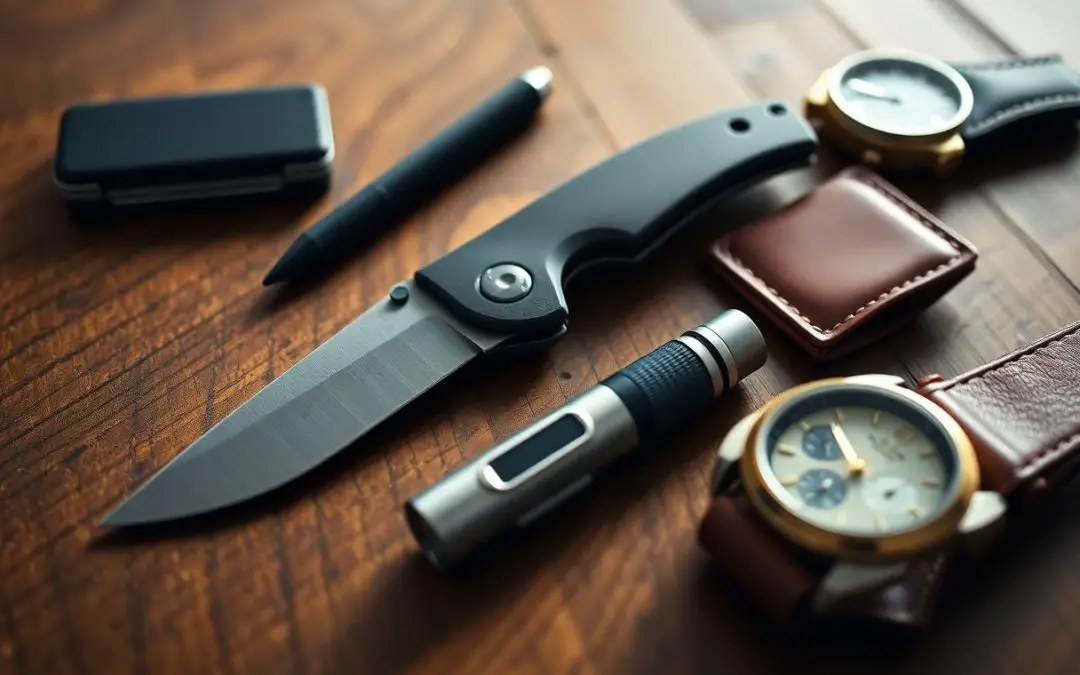
Function dictates the choices you make for everyday carry, so you favor compact, reliable, and multiuse tools tailored to your daily movements and likely problems. You evaluate materials, ergonomics, legal restrictions, and redundancy, then test gear in real conditions to ensure every item justifies its space and weight.
The Evolution of Everyday Carry
You can trace modern EDC from the 19th-century pocket watch and the 1891 Swiss Army Knife to the 1983 Leatherman multitool; each leap solved a specific everyday problem. Contemporary carry blends that lineage with tech-compact lights, pocket knives, credit-card multitools and modular key organizers-so you end up choosing items by weight, function and durability rather than tradition alone.
History and Cultural Significance
You see cultural shifts mirrored in carry: Victorian gentlemen favored pocket watches and handkerchiefs, soldiers standardized knives and compasses through the 20th century, and today urban professionals carry slim wallets, pens and compact flashlights. Communities like r/EDC (over 1.5 million members) turned personal habits into shared aesthetics and practical norms, making carry a statement about preparedness, craft and identity.
Trends in EDC Equipment
You’re witnessing miniaturization and material innovation: titanium and carbon fiber replace steel for lighter weight, while battery tech (AAA, CR123A, 18350/18650) enables tiny lights with 300-1,000+ lumen outputs. Key organizers from Orbitkey and KeyBar, along with modular pocket tools, let you optimize for 2-10 daily tasks instead of bulk.
You’ll also notice crowdfunding shaping gear availability-many popular titanium pens, compact lights and slim wallets launched on Kickstarter-and price stratification where a titanium pen or knife often costs 2-3× its stainless counterpart. Practical metrics guide choices: you might accept a 60-120 gram carry budget, pick a flashlight with 200-600 lumens and 2-8 hour runtime, and prioritize tools that solve three to five frequent tasks rather than one-off functions.
Functionality in Design
You judge a piece by how its features translate to real use: materials like 6061-T6 aluminum, G10, and titanium balance weight and abrasion resistance, while blade lengths under 3 inches (76 mm) often sidestep legal hassles. Designers push tolerances into hundredths of a millimeter for smooth action, and you’ll notice ergonomics, clip placement, and 30-150 g target weights directly affect daily carry comfort and access speed.
Ergonomics and Usability
When you handle a tool, contouring, handle thickness (commonly 8-14 mm), and textured scales determine grip security and fatigue over repeated use. Fast one-handed deployment-via flippers, thumb studs, or assisted opens-reduces draw time to under a second for practiced users, while locking mechanisms and finger choils prevent slips during heavy tasks.
Multi-Purpose Tools
You trade single-purpose lightness for consolidated capability: full-size multi-tools like the Leatherman Wave pack ~17 functions in roughly 241 g, whereas slim credit-card tools sacrifice leverage for pocketability. Choosing between a 30-tool kit and a 3-tool pocket blade comes down to the missions you face and the weight you’re willing to carry.
In practice, you evaluate multi-tools on tool set, locking safety, and serviceability: replaceable wire cutters and a 1/4″ bit driver expand real-world use, and stainless steels such as 420HC offer easy sharpening while premium steels like S30V hold edges longer. Expect price bands from ~$40 for basic pliers to $100-180 for feature-rich models; field tests often show a Wave-style tool replaces several individual items, saving space but adding 150-300 g to your pocket load depending on model and materials.
Essential EDC Items
Your everyday carry usually condenses into 5-7 items you reach for daily: a pocketknife or multitool, a compact flashlight, a reliable pen, a slim wallet or cardholder, keys with a key organizer, phone plus a small power bank, and sometimes a watch or lighter; brands like Victorinox, Leatherman, KeySmart and Olight illustrate typical choices. Aim for functionality over redundancy and keep total pocket load in the 200-800 g range so mobility stays effortless.
Must-Have Gear
A 2.5-3.5 inch folding knife covers most cutting tasks while staying legal in many locales, and a 200-1,000 lumen flashlight handles indoor and night duties. Carry a pressurized pen like a Fisher for reliable writing, a 5,000-10,000 mAh power bank for one to two charges, and a thin RFID-blocking cardholder instead of a bulky wallet; multitools such as the Leatherman Wave add pliers, screwdrivers, and scissors without separate tools.
Customization for Individual Needs
Commuters typically carry 3-5 tech-focused items (phone, earbuds, charger, transit card, small multitool), while outdoor-focused EDC adds 2-4 survival items like a compact filter, firestarter, or emergency whistle. If you work in healthcare, swap metal tools for trauma shears and a tourniquet; urban professionals may prioritize slim wallets and noise-cancelling earbuds. Adjust based on local laws, job policies, and daily routines so every item earns its pocket space.
For deeper customization, audit tasks you perform weekly: if you bike, add a mini pump and replace a heavy knife with a multi-hex tool; if you photograph, include spare SD cards, a pocket tripod, and a lint cloth instead of a multitool. Track weight and access-limit frequently used items to two pockets and store backups in a bag-and iterate every 30-90 days to refine what truly serves your daily patterns.
Material Considerations
When choosing materials for your EDC, you weigh trade-offs-strength, weight, corrosion resistance, and patina. Titanium, stainless steel, aluminium, G10, carbon fiber, brass and leather each behave differently in daily use: titanium resists corrosion and is lighter than steel; carbon fiber and G10 cut weight dramatically; brass develops a patina you can customize. Think in terms of density, hardness, and expected wear at the point of use when selecting components for your carry.
Durability and Weight
You’ll balance density and hardness: titanium is ≈4.5 g/cm³ versus steel at ≈7.85 g/cm³ and aluminium at ≈2.7 g/cm³-so swapping steel parts for titanium or aluminium can cut weight 40-65%. Carbon fiber/G10 drop mass further (≈1.6 g/cm³ for CF) while offering excellent stiffness. Choose premium stainless alloys (CPM-S30V, S35VN) for edge retention; expect softer metals like brass to wear and develop patina instead of holding a keen edge.
Eco-Friendly Options
You can favor recycled metals, reclaimed leather, and bio-based polymers without sacrificing function: recycled aluminium uses up to 95% less energy than primary production, and recycled steel cuts energy use by ~60-70%. Cork, FSC-certified wood, and recycled PET fabrics add renewable or circular materials, while PLA and other biopolymers reduce petroleum dependence. Check manufacturers’ recycled-content percentages and end-of-life recyclability when you evaluate options.
You should weigh lifecycle impacts beyond material origin: recycled aluminium’s big energy savings only pay off if the item is durable and repairable. Look for GRS or FSC certification and request third-party EPD or lifecycle data when available. Prioritize modular designs, replaceable parts, and brands with repair programs so your carry stays in service longer and actually reduces long-term environmental impact.
Balancing Aesthetics and Practicality
You assess pocket depth, daily tasks, and commuting habits to decide what earns a spot in your EDC; items under 100 g and blades shorter than 3 inches typically sit comfortably in pockets and avoid legal gray areas in many regions. You prioritize finishes and ergonomics that survive constant handling, choosing low-profile clips, rounded edges, and materials like titanium or leather that age well while keeping total bulk under control.
Style Meets Function
You pair finishes and color schemes with performance specs: a brushed stainless clip resists wear, PVD coatings reduce glare, and scales in G-10 or leather balance grip with refinement. You look for steels hardened to roughly 58-62 HRC for edge retention without brittleness, and you match hardware-screws, pivots, clips-to the aesthetic so the tool reads cohesive while delivering reliable function.
Real-World Applications
You test combinations against actual days: a weekday commuter might carry a slim wallet, folding knife, and 300-500 lumen light; a fieldworker adds a multi-tool and 150-250 g of backup gear. You evaluate how each item performs during specific tasks-opening boxed shipments, tightening screws, or navigating low-light routes-and drop anything that adds unnecessary bulk or duplicative capability.
You can prototype three practical setups to refine choices: an urban commuter kit (≤10-card wallet, ≤3″ knife, 300 lm light), an outdoor kit (multi-tool with 12-15 functions, compact first-aid, 100-200 g extra weight), and a minimalist kit (key organizer for 6-8 keys, pen, single-purpose blade). You iterate based on frequency of use and measured carry weight to keep function aligned with daily aesthetics.
Future of Everyday Carry
Innovations on the Horizon
Expect modular multi-tools and customizable rigs that let you swap blades, bit drivers, and electronics on the fly; brands like Leatherman and Victorinox are prototyping interchangeable heads, while 3D-printed scales and clip designs let you tune your carry weight by 10-30 g. You’ll also see integrated solar keychain chargers, ultra-compact power banks (5,000-10,000 mAh), and multi-function writing implements becoming standard in both urban and backcountry kits.
Impact of Technology
Bluetooth Low Energy trackers (Tile since 2013, Apple AirTag in 2021) and UWB-enabled phones now give you location precision down to roughly 10-30 cm, dramatically reducing time spent searching. Batteries in coin-cell trackers typically last close to a year, and the ubiquity of USB-C means faster, standardized charging for most EDC electronics.
You’ll also see biometric access and secure connectivity reshape how you protect items: replaceable CR2032-powered trackers with one-year runtimes pair with encrypted Bluetooth and OTA firmware updates to patch vulnerabilities. Integration into phone ecosystems unlocks lost-item notifications, network-assisted locating via other users’ devices, and remote disablement-so your gear’s security and functionality improve without swapping hardware.
Final Words
Taking this into account, you should prioritize items that deliver consistent performance, ergonomic design, and durable materials so your everyday carry supports daily tasks without excess bulk; by assessing how you move, what you carry, and the tradeoffs between form and utility, you can curate a compact, dependable kit that fits your life.


