
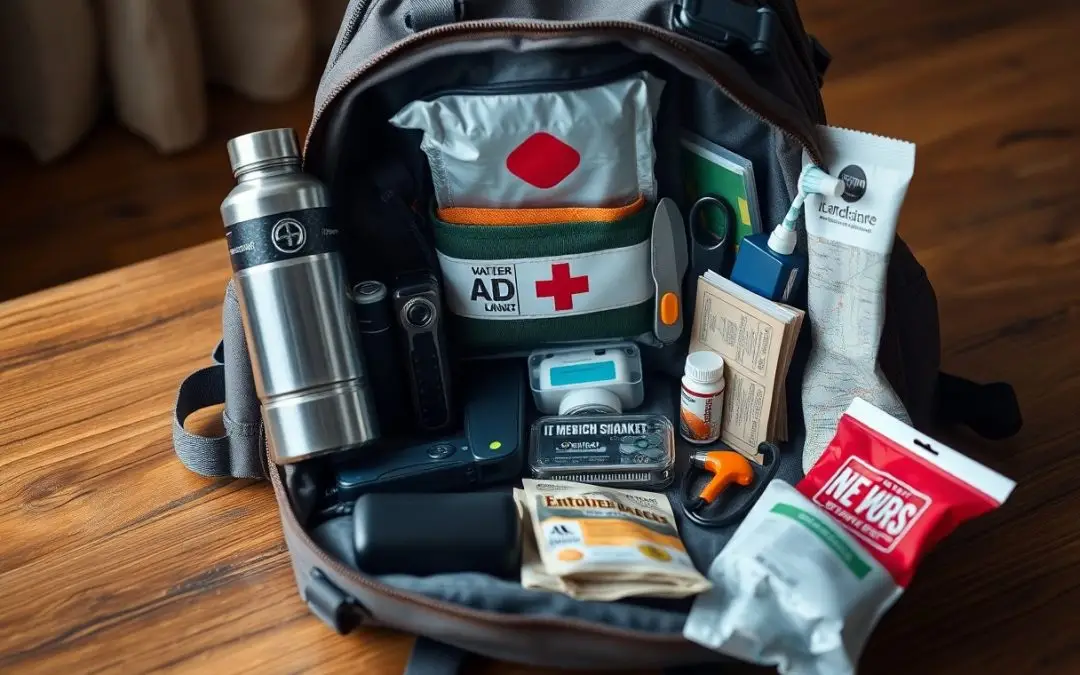
Survival hinges on practical items you can access and operate quickly; your go bag should prioritize multipurpose tools, reliable water purification, a compact first-aid kit, weather-appropriate shelter layers, and easy-to-prepare food. Choose durable, familiar gear you test regularly so when an emergency hits you move with confidence and efficiency.
What is a Go Bag?
A go bag is a compact, portable emergency kit you can grab in under five minutes to sustain yourself for the first 72 hours after evacuation. It typically holds water (1 gallon per person per day), prescription meds, ID and copies of important documents, a phone charger, flashlight, basic first-aid supplies, and some cash. You tailor contents for mobility, pets, children, and local hazards.
Definition and Purpose
It’s a curated kit designed to secure your immediate needs and mobility during short-term displacement. FEMA and the Red Cross recommend a 72-hour supply; common items include a multi-tool, emergency blanket, three days of nonperishable food, medications, copies of identification, and a whistle. You assemble it so one bag can support you-or your household-until you reach safety or external aid arrives.
Importance of Being Prepared
Being prepared shifts you from reactive panic to decisive action, reducing delays during evacuation and lowering the chance of injury or exposure. During Hurricane Harvey (2017), many evacuees with pre-packed bags reached shelters faster and required less immediate assistance. Emergency response can be delayed 48-72 hours after major events, so your go bag fills that gap and helps you stay self-sufficient.
Practical steps increase that effectiveness: keep the bag by your primary exit, maintain a smaller car kit, and rotate food, water, and batteries every six months. Store $100-$200 in small bills, back up critical documents on a USB and encrypted cloud, include pet supplies and extra prescriptions, and run a two-minute grab drill quarterly so you can leave quickly under stress.
Essential Items for Your Go Bag
Prioritize items that earn their space: target a 10-15 lb carry weight you can move with for several hours, favor multipurpose gear and long shelf-life consumables, and organize by use-case (evacuation, shelter, medical). Pack in modular pouches so you can swap supplies seasonally; include a lightweight backpack (20-30 L), a checklist taped inside, and date every perishable item so you rotate food, water gear, and meds every 6-12 months.
Water and Water Purification
You should carry 1-2 liters of ready-to-drink water plus purification options for extended use: a 500-1,000 ml stainless bottle, a collapsible 1 L bladder, a Sawyer Mini or LifeStraw filter (0.1-0.2 micron), and chemical tablets (chlorine dioxide) for backup. Pack a small collapsible cup, and note that filters handle bacteria/protozoa while chlorine dioxide treats viruses and biofilms-use filters first, tablets for viral-risk sources.
Food and Nutrition
Plan for roughly 2,000 kcal per day for 72 hours and prioritize calorie-dense, nonperishable items: energy bars (300-400 kcal each), MREs or retort pouches, nut butters, and dehydrated meal pouches that rehydrate quickly. Include a compact spork and a portable can opener if you carry tins; pick foods you can eat cold and that match your dietary needs to avoid waste.
Check shelf lives: commercial energy bars often last 6-12 months, freeze-dried meals 5-25 years depending on packaging, and MREs average ~3-5 years stored at room temperature. You should prefer meals needing ≤250 ml hot water, since boiling consumes fuel; consider a 1-2 oz Esbit stove or single-use alcohol tabs and pack a fuel source that fits your meal rehydration requirements.
First Aid Supplies
You need a compact, well-stocked kit: adhesive bandages (various sizes), sterile gauze pads (4×4), tape, antiseptic wipes, a CAT tourniquet, hemostatic dressing, trauma shears, tweezers, SAM splint, and baseline meds (ibuprofen, acetaminophen, antihistamine). Include any personal prescriptions in a waterproof pouch, label dosages, and keep a simple first-aid manual or quick-reference card for common procedures.
Train to use high-impact items: practice applying a tourniquet and packing a wound with hemostatic gauze, since improper use reduces effectiveness. Stock counts to aim for: ~10 assorted adhesive strips, 6-8 4×4 gauze pads, 2 occlusive dressings, 1 tourniquet, 1 hemostatic packet, and a compact CPR mask-replenish after deployment and check expirations annually.
Clothing and Shelter
Use layering: a moisture-wicking base, an insulating midlayer (synthetic or down), and a waterproof breathable shell. Pack an extra pair of socks, a beanie, lightweight gloves, and a compact mylar bivvy or 3-season sleeping bag depending on climate. Include a small tarp (6×8 ft), 10-15 ft paracord, and a packable poncho that doubles as shelter-prioritize items that compress to fit under 5 liters.
Avoid cotton because it holds moisture and chills you; instead choose synthetic or merino layers that dry fast. Carry two pairs of socks (one dry), one insulating layer rated to your expected low temperatures (for cold zones, a 20°F/-6°C bag or bivvy), and store clothing in a 1-2 L dry sack so you can keep importants dry and organized inside your bag.
Tools and Gear
You’ll prioritize compact, multi-purpose items that earn space: 50 ft of 550 paracord, a 3-6 inch fixed or folding knife, a 17-tool multi-tool, 10 feet of duct tape wrapped on a water bottle, a folding saw, small pry bar and zip ties. Pack a lightweight hand-crank radio, a basic sewing kit and nitrile gloves. Weigh items where possible; keep total extra tool weight under 5-7 pounds for mobility.
Multi-tools and Knives
Choose a multi-tool with pliers, wire cutters, a saw, can opener and at least one screwdriver; Leatherman Wave-style tools pack ~17 functions in 8-9 ounces. Pair it with a 3-4 inch locking folder or small fixed blade-steel like 440/420 stainless or S30V balances corrosion resistance and edge retention. You want easy maintenance in the field: oil the pivot, strop or carry a ceramic rod for quick touch-ups.
Flashlights and Batteries
Bring both hands-free and handheld lights: you need a headlamp at 150-300 lumens plus a handheld 500+ lumen LED for signaling or search. Opt for lights rated IPX7 or higher and with selectable modes; mean high-output runtimes of 500 lumens typically run 1.5-3 hours on a quality 18650 cell. Carry two spare batteries and a small charger or at least 4 extra AA/CR123A cells depending on your light’s chemistry.
Prefer 18650 lithium-ion cells when you need sustained high output-typical capacity 2,500-3,500 mAh versus a single AA alkaline around 2,000 mAh-because they support higher discharge for turbo modes. You should keep one bank of disposable cells (CR123A or AA) for redundancy and store spares in original packaging; rotate them every 12 months and test your lights monthly so batteries don’t corrode unseen.
Communication and Information
Prioritize multiple, redundant ways to receive and verify alerts: a battery-powered NOAA weather radio with SAME, a fully charged smartphone with offline maps, and a satellite messenger such as Garmin inReach for two-way text. You should carry spare AA/AAA for radios, a 10,000-20,000 mAh power bank for phones, and note local emergency frequencies and planned evacuation routes.
Emergency Radio
Choose a hand-crank or battery-powered NOAA weather radio with SAME alerts and AM/FM; models like the Eton FRX5 or Midland ER310 receive weather, AM, and local broadcast updates. Many hand-crank units provide roughly 10-20 minutes of runtime per 1-3 minutes of cranking; you should keep fresh AA/AAA or a rechargeable NiMH pack and a small solar panel for multi-day outages.
Maps and Compasses
Carry a printed topographic map of your region (USGS 1:24,000 for hiking or 1:50,000 for broader navigation), laminated or in a waterproof sleeve, plus a clear-baseplate compass with adjustable declination like a Silva or Brunton. Also save offline maps on your phone with apps such as Gaia GPS or Maps.me and store at least one paper street map for urban egress.
Practice map-and-compass skills: orient the map to north, take a bearing to a visible landmark and plot back bearings, and use triangulation from two known points to fix your position. Account for magnetic declination – often 5-20 degrees depending on region – by adjusting the compass housing or applying an offset when converting between magnetic and true bearings.
Personal Safety Items
Pack items that let you avoid or signal danger: a high-decibel whistle, compact signal mirror, and legal self-defense tools matched to your locale. Keep one-handed operation and a sub-8-ounce combined weight in mind, and attach these to an outside pocket for immediate access. Test functionality monthly-an inoperative whistle or empty spray is useless when seconds matter.
Whistles and Signal Mirrors
High-pitched whistles such as the Fox 40 produce roughly 110-115 dB at one meter and cut through urban noise better than shouted calls; carry one on a breakaway lanyard. Signal mirrors with a sighting hole let you aim sunlight flashes that can be seen for miles in clear conditions; practice angling them to hit distant aircraft or shoreline rescue teams so you can convert sunlight into an effective SOS.
Self-Defense Tools
Pepper sprays typically reach 6-12 feet and come in 10-25 gram canisters delivering several 1-2 second bursts, while compact stun devices measure about 4-6 inches and rely on charged batteries. Choose items that are legal where you live, match your strength and training, and store them in a quick-access outer pocket. Check canister pressure and battery charge monthly.
Select a pepper spray with a safety flip and practice a two-step draw so you can deploy in under two seconds; for stun devices, verify charge cycles and test on a training unit. You should log local regulations-many states and countries restrict possession or require permits-and take a basic self-defense class to learn deployment, retention techniques, and the legal limits of force.
Customizing Your Go Bag
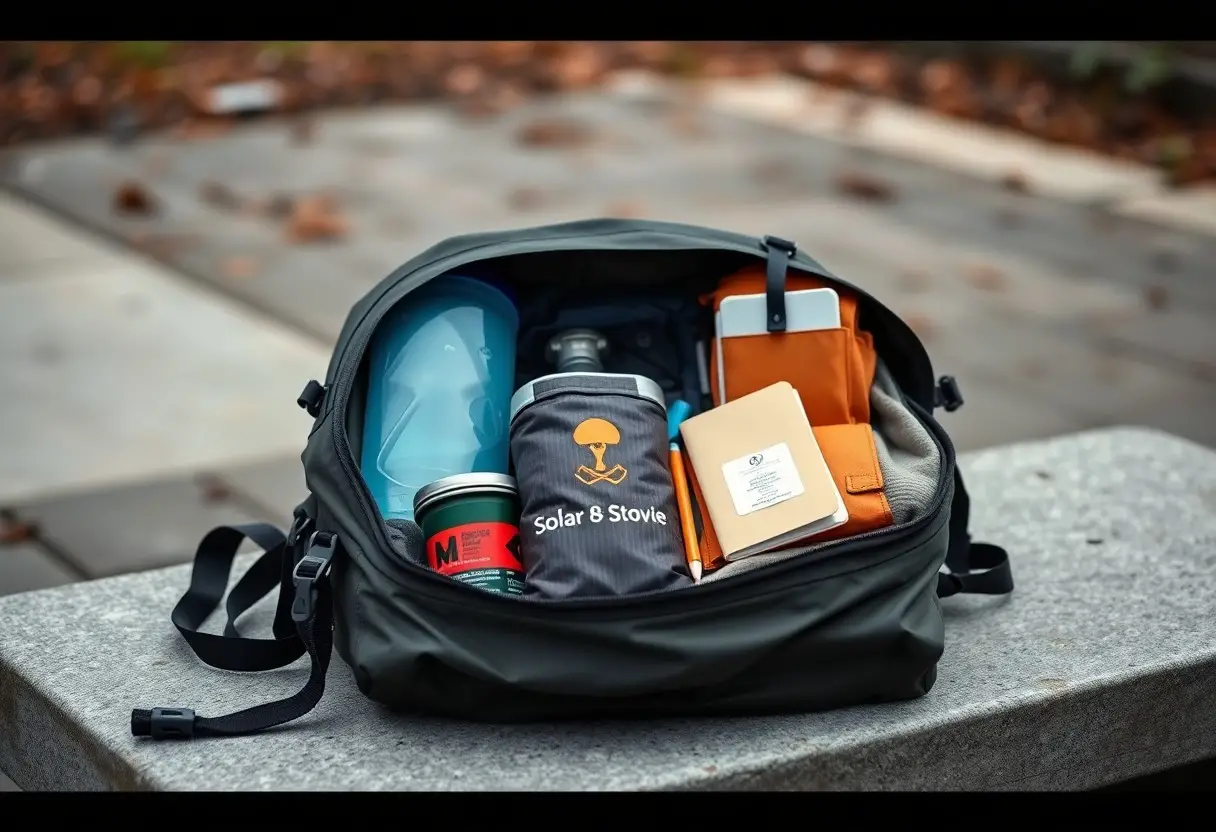
Tailor your bag around the scenarios you’re most likely to face: aim for a 10-15 lb grab-and-go kit, include a 20,000 mAh power bank (18W PD ideal) for phone recharge, rotate prescription meds every six months, and use modular pouches so you can swap items in under two minutes; prioritize multi-use gear like a Mylar bivvy, 2-3 energy bars at 400-600 kcal each, and a compact water filter that treats 1-2 L/min.
Considerations for Family Needs
When packing for multiple people, plan 1 gallon of water per person per day for 72 hours (three gallons), store two days of infant formula and three extra diapers per child, include spare prescription bottles and a copy of medical records, pack two complete clothing sets per person, and color-code pouches so each family member can access their necessarys in seconds.
Environmental Factors
Match your kit to local risks: in cold zones add a sleeping bag rated to 20°F (−7°C) and an insulated sleeping pad; in hot climates include SPF 50, electrolyte tablets, and a 10-20W solar charger; in wildfire or dust-prone areas stash multiple N95s and goggles; in floodplains prioritize waterproof cases and a small hand pump.
- Mountain/Cold: insulated 20°F sleeping bag, gaiters, chemical hand warmers.
- Wet/Flood-prone: waterproof dry sacks, 30L pack cover, quick-dry base layers.
- Urban/Heatwave: portable battery fan, 20,000 mAh bank, small cash stash.
- Recognizing seasonal shifts lets you rotate insulation, hydration, and respiratory protection proactively.
Study recent local events to refine gear: after Hurricane Ida (2021) many evacuees lost charging ability-carrying a 10W solar panel plus an 18W PD power bank kept communication alive for days; similarly, in the 2018 Camp Fire, evacuees who had three N95s and eye protection had fewer smoke-related issues. Test systems annually and adjust quantities to household size.
- Rotate gear every six months and log expirations for meds and filters.
- Test solar chargers and battery banks under load at least once a year.
- Store seasonal swaps in labeled tubs so you can rebuild a grab bag in under 10 minutes.
- Recognizing how past incidents affected locals will guide specific item selection and quantities.
Summing up
With these considerations you prioritize practical, regularly used items in your go bag: potable water and a personal filter, a compact first-aid kit, reliable light and power sources, a multi-tool, weather-appropriate clothing, copies of ID and emergency cash, and small comfort/medication items you actually need. You keep gear compact, test and rotate consumables, and tailor contents to your health, mobility, and likely scenarios so your bag is ready and truly usable when you need it.


