
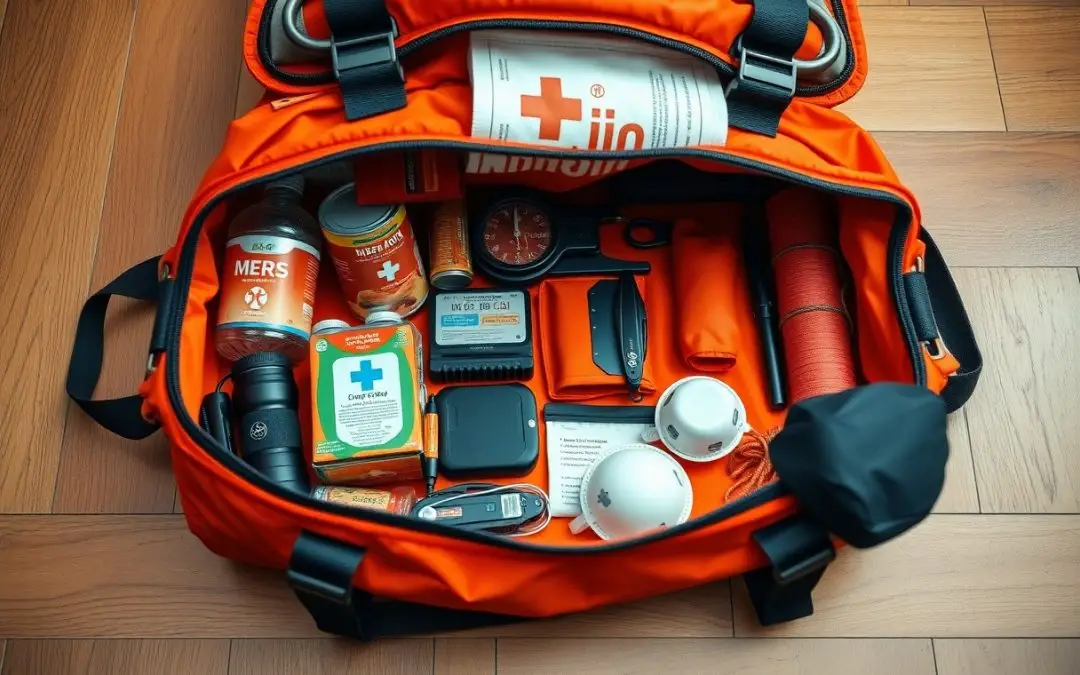
With the first 72 hours determining your immediate safety, your go bag must include water and purification, nonperishable food, a first-aid kit, a multi-tool and sturdy knife, reliable light and batteries, a portable charger, warm layers and rain protection, copies of ID and emergency cash, hygiene supplies, and basic shelter and signaling items so you can sustain and communicate until help arrives.
Understanding the Importance of a Go Bag
What is a Go Bag?
A go bag is a compact, portable emergency kit built to sustain you for the first 72 hours after an evacuation or infrastructure failure. It typically contains one gallon of water per person per day, 72 hours of nonperishable food, a basic first-aid kit, flashlight, battery power bank, a NOAA radio, copies of IDs and insurance, and a change of clothes so you can leave immediately without hunting for imperatives.
Why You Need One
FEMA advises being self-sufficient for 72 hours because emergency responders can be overwhelmed after large-scale events; during Hurricane Sandy many communities waited days for full relief. With a go bag you can evacuate quickly or shelter in place with water, medications, cash, and communication tools, reducing the risk of dehydration, missed treatments, or being stranded when services are delayed.
Plan for likely challenges: if power is out, include manual tools and spare batteries; if roads are blocked, you’ll depend on what’s in your pack. Add a seven-day supply of critical prescriptions when possible, copies of key documents, and pet supplies (three days of food and a leash). Post-disaster case reports show households with preassembled bags experience fewer medical complications and shorter displacement periods.
Essential Items for Your Go Bag
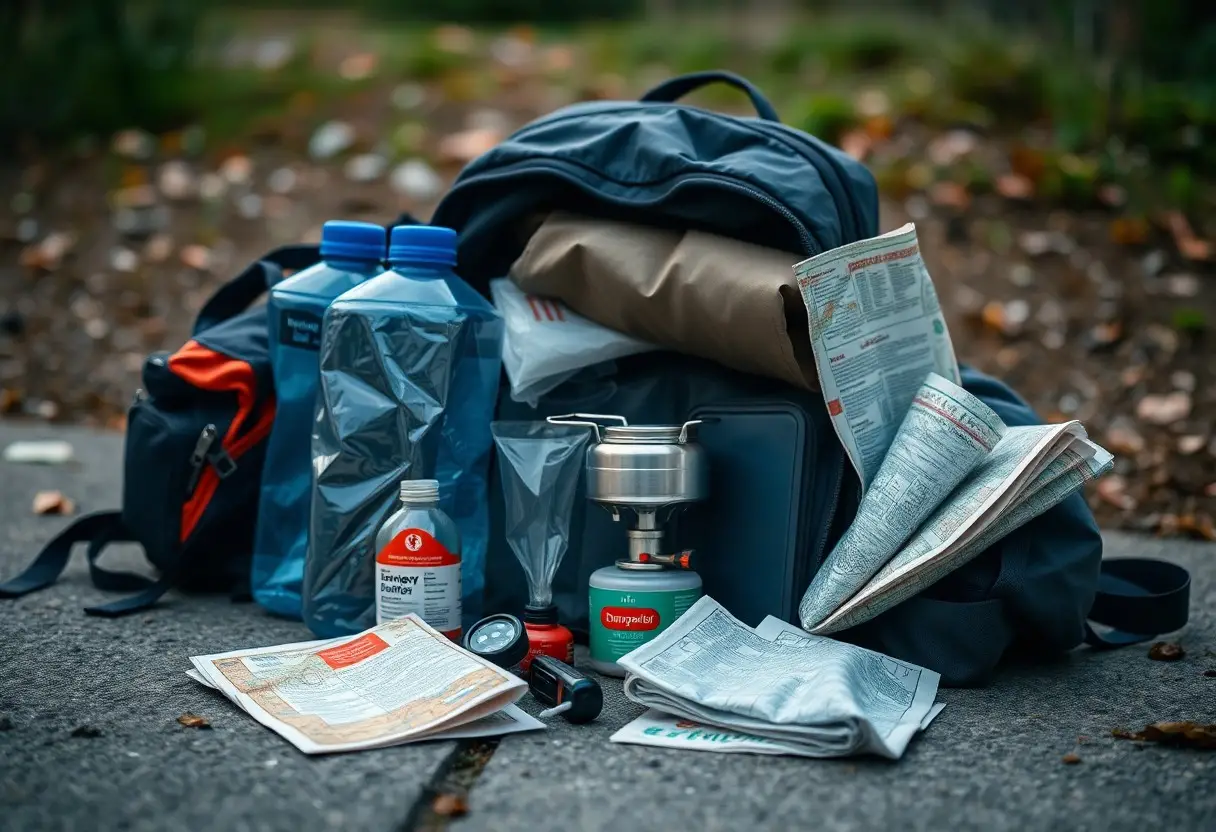
You should pack water (1 gallon per person per day), about 2,000 calories per person per day in compact food, a first-aid kit with trauma dressing and basic meds, a mylar blanket and poncho for shelter, a 200-lumen headlamp plus spare batteries, a crank or battery radio, a 10,000 mAh power bank, a multitool and fixed blade, and at least one change of layered clothing including wool socks-tailor quantities to your household and choose multi-use items to save space.
Water and Water Purification
You should carry at least one gallon per person per day and include a Sawyer Mini or LifeStraw for immediate filtration plus chlorine dioxide tablets (Aquamira) as backup. Boil water for 1 minute (3 minutes above 6,500 ft) to disinfect when possible, store extra in a collapsible 1-gallon container and a durable Nalgene, and pack a small syringe and spare O-rings for backflushing filters to maintain flow over multiple days.
Non-Perishable Food
You should focus on compact, calorie-dense items that need little or no cooking: energy bars, MREs or freeze‑dried entrees (Mountain House), canned tuna, peanut butter packets, nuts, and jerky. Plan roughly 2,000 calories per person per day-about 6,000 calories for three days-and include a manual can opener if you pack canned goods, plus at least one savory and one sweet option to preserve appetite.
You should prioritize calorie density and shelf stability: nuts (~600 kcal/100g), peanut butter (~588 kcal/100g), and energy bars deliver energy in small volume. Favor ready-to-eat MREs or commercially sealed freeze-dried meals that list a shelf life-many range from 5 to 25 years-and rotate items annually or by manufacturer date. Account for rehydration needs (some entrees require about 1-2 cups of hot water), include baby formula or special-diet supplies if applicable, and store dry goods in Mylar bags with oxygen absorbers to extend freshness.
First Aid Supplies
Assemble a compact first-aid kit that treats bleeding, burns, and basic fractures: 20 adhesive bandages, four 4×4 sterile gauze pads, a roll of 3-inch elastic bandage, two triangular bandages, a pair of trauma shears, tweezers, six antiseptic wipes, two pairs of nitrile gloves, an instant cold pack, SAM splint and a CPR mask. Store everything in a waterproof bag and label items with expiration dates so you can rotate supplies every 6-12 months.
Must-Have Medical Items
Include a tourniquet (CAT style), one hemostatic dressing (e.g., QuikClot), digital thermometer, tweezers, safety pins, adhesive tape, a 2-inch and 3-inch roll of cohesive bandage, antibiotic ointment packets (10), burn gel packets (4), oral rehydration salts (4 packets), ibuprofen 200 mg (20 tabs), acetaminophen 500 mg (20 tabs), diphenhydramine 25 mg (10 tabs) and loperamide 2 mg (4 tabs).
Personal Medications
Carry at least a 7‑day supply of prescription meds in original labeled containers, plus a list of generic names, dosages, prescribing doctor and pharmacy contact. Pack emergency items like EpiPen, inhaler with spacer, or insulin pen if applicable, and keep a photocopy of prescriptions and a medical alert card in your wallet so first responders can act fast.
Store meds in a waterproof, labeled pouch and keep temperature‑sensitive drugs (insulin, some biologics) in a small insulated case with cold packs and a thermometer; you can request emergency refills from your pharmacy and ask for a 90‑day supply to simplify rotation. Use a pill organizer for daily doses, update your medication list after changes, and add phone numbers for physicians and pharmacies to the list.
Shelter and Warmth
You’ll pick items that block wind, shed rain, and keep your core temperature stable for the first 72 hours: a 2-3 season sleeping bag rated to 20°F (‑7°C) or better if you’re in cold regions, an insulated sleeping pad with R-value 3-5, a compact tent or tarp system, and emergency blankets for backup. Aim for total carry weight under 6-8 lbs for shelter gear if you must move, and include stakes, cord, and a small repair kit.
Emergency Blankets
You should carry a mylar emergency blanket (typically 52×84 inches, ~1-3 oz) that reflects about 90% of radiated body heat; use it as a heat reflector, windbreaker, or ground sheet. They cost $2-8 apiece and pack flat, making them ideal for spare insulation or signaling with the shiny side. Be aware they’re not breathable-condensation can accumulate-so pair one with an insulating layer or pad in cold, wet conditions.
Compact Tents and Tarps
You can choose a 1-3 lb 1-2 person ultralight tent for freestanding protection or a 3×3 m (10×10 ft) tarp for versatile coverage; sil‑nylon tarps resist water and pack small, while polyethylene tarps are cheaper and heavier. Include 4-6 stakes, 20-30 ft of cord, and quick‑attach guylines so you can erect a shelter quickly in wind or rain. Check packed volume-aim for under 4 liters for tents if space is limited.
When deciding, compare hydrostatic head ratings (≥1,500 mm for light rain, ≥3,000 mm for heavy storms), floor bathtub height, and whether a tent is freestanding. A common reliable spec is a 2‑person freestanding tent at ~2.5 lbs, 29 sq ft floor, 39 in peak height; it balances comfort and packability. Also prefer taped seams, zipper covers, and trekking‑pole compatibility for faster setups; carry spare cord and seam sealer for field repairs.
Tools and Gear
You should prioritize compact, high-quality tools that cover cutting, prying, digging and cordage: a 3-4″ fixed-blade knife, a multi-tool with pliers and wire cutters, 50 ft of 550 paracord, a folding shovel or trowel, heavy-duty gloves, and 2-3 feet of duct tape. Brands that perform reliably in field tests include Leatherman, Victorinox and Gerber, and a minimal kit with these items keeps weight under 6-8 lbs while covering most first 72-hour tasks.
Multi-Tools and Knives
You’ll want a multi-tool with 10-18 functions-locking pliers, wire cutters, Phillips/flat drivers, and a serrated blade-plus a separate fixed-blade knife for heavy tasks; choose a 3-4″ full-tang blade in stainless or high-carbon steel for strength. Models like the Leatherman Wave+ or a compact fixed blade rated for hard use are common in field reports, and you should keep blades sheathed and tools oiled for reliable performance.
Flashlights and Batteries
You need at least two light sources: a hands-free headlamp (100-300 lumens) and a handheld flashlight (300-1000 lumens) with multiple output modes. Opt for LED lights with USB recharge (USB-C preferred), IPX6-IPX8 water resistance, and carry spare cells-two 18650 or three CR123A/AA equivalents depending on your light. Aim to pack one compact backup keychain light (20-50 lumens) plus spare batteries for 72-hour redundancy.
Battery choice affects shelf life and cold-weather performance: lithium primaries (CR123A) store ~8-10 years and handle low temperatures better than alkalines, while 18650 rechargeables (2,500-3,500 mAh) deliver high runtime-expect 1-3 hours at 500-1,000 lumens on high but 20-50+ hours on low. You should store spares in original packaging, rotate them every 2-3 years, and carry a USB power bank to recharge USB-compatible lights and cells in the field.
Important Documents
Keep originals and certified copies of key papers in a waterproof pouch: passport, driver’s license, Social Security card, birth certificate, insurance policies, mortgage or lease papers, and advance directives; make sure you scan everything at 300 dpi into searchable PDFs, encrypt the files, store them on a password-protected USB and a secure cloud, and give an encrypted copy to a trusted out-of-area contact for redundancy.
Identification and Medical Records
Pack your government ID, a copy of your passport, and a one-page medical summary that lists chronic conditions, allergies, current prescriptions with dosages, immunization records, blood type, organ-donor status, and primary physician contact; you should carry originals when possible, plus encrypted digital copies and a laminated paper summary in your go bag for first responders.
Emergency Contacts
List 3-5 contacts including a primary household member, a secondary local contact, and an out-of-area contact-provide full name, relationship, mobile and alternate numbers, email, and physical address; store this list at the front of your document pouch, save it as a priority file on your phone, and include one printed copy in your wallet for quick access.
Also create an ICE (In Case of Emergency) card with the top two contacts and key medical alerts on one side and insurance policy numbers on the other; update it every six months, share a copy with your employer or caregiver, and keep an encrypted vCard and PDF in your cloud plus a password-protected USB so responders and loved ones can act quickly if you cannot.
Summing up
Ultimately, a well-packed go bag ensures you can sustain yourself and your loved ones through the first 72 hours after an emergency: water, food, shelter items, basic first-aid and medications, communication and power, identification and cash, and multi-tools. You should review and personalize contents regularly so your kit meets your needs and remains ready.


