
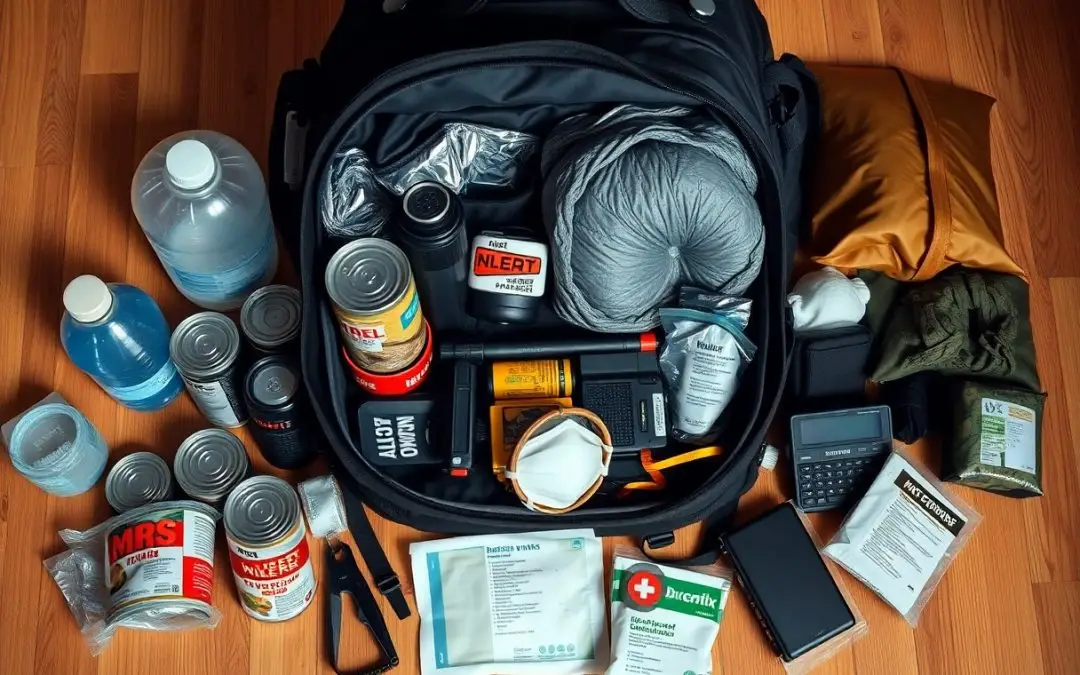
It’s prudent to assemble a compact go bag with water, nonperishable food, first aid, extra clothing, power and communication tools so you can evacuate quickly and maintain safety.
Essential Hydration and Nutrition
Pack lightweight water, electrolyte packets, and calorie-dense snacks so you can sustain energy and hydration while moving or sheltering in place.
Potable Water and Filtration Systems
Carry at least one gallon per person per day and include a compact filter plus purification tablets so you can treat questionable water sources safely.
High-Calorie, Shelf-Stable Food Rations
Choose calorie-dense, shelf-stable options like energy bars, nut mixes, and MREs so you have ready food that requires no refrigeration or cooking.
Rotate your food every six months, replacing expired items and favoring compact, high-fat and protein options such as peanut butter packets, meal bars, and freeze-dried entrees for prolonged energy.
Medical Preparedness and Trauma Care
Medical items in your go bag should prioritize bleeding control, airway management, and basic wound care so you can stabilize injuries before help arrives.
Comprehensive First Aid Kits
Assemble a first aid kit that includes a tourniquet, hemostatic dressings, chest seals, airway adjuncts, splints, and multi-purpose supplies so you can treat trauma and common injuries on the move.
Personal Prescriptions and Sanitation Supplies
Store a multi-day supply of prescriptions in labeled, waterproof containers and include hand sanitizer, disposable gloves, masks, and menstrual products so you maintain treatment continuity and hygiene.
Pack copies of prescriptions, a written medication list with dosages and emergency contacts, and extra doses of critical drugs such as insulin, inhalers, or epinephrine so you can continue ongoing treatment; place them in waterproof, labeled containers and an insulated pouch for temperature-sensitive meds, and include a pill organizer, spare glasses or contact solution, wipes, and waste bags to preserve hygiene during evacuation.
Emergency Shelter and Environmental Protection
Shelter and protection items in your go bag reduce exposure and offer temporary privacy; pack a tarp, cord, stakes, insect netting, and a compact sleeping pad to insulate against cold ground.
Portable Tents and Thermal Blankets
Tents and emergency thermal blankets give you immediate shelter and hypothermia protection; choose lightweight, quick‑set tents and foil blankets that reflect body heat while conserving bag space.
Weather-Resistant Clothing and Footwear
Durable weather‑resistant clothing and sturdy footwear keep you dry and mobile; include a waterproof jacket, insulated layers, breathable socks, and supportive boots that fit with room for swelling.
Pack clothing by layering: a moisture‑wicking base, an insulating midlayer (fleece or synthetic), and a waterproof breathable outer shell. Bring an extra set of socks and undergarments, a warm hat, and gloves. Choose boots with good tread and ankle support, and break them in before an evacuation to prevent blisters.
Communication, Navigation, and Power
Communication, navigation, and power items keep you connected during evacuations; include a dependable multi-band radio, extra batteries, a compact power bank, and a solar charger so you can receive updates, charge devices, and maintain situational awareness without mains power.
Multi-Band Radios and Solar Charging Units
Multi-band radios let you monitor emergency frequencies and public broadcasts; pick one with NOAA weather channels and a hand-crank or solar option, and pair it with a high-capacity solar charging unit to keep phones and radios powered when outlets are unavailable.
Physical Maps and Signaling Devices
Physical maps and signaling tools ensure you can find routes and attract help if electronics fail; pack regional paper maps, a compass, a whistle, and reflective signal mirrors to aid orientation and draw attention during low-visibility scenarios.
Carry laminated local and regional maps, mark primary and alternate evacuation routes, and store them in a waterproof pouch. You should include spare pencils, a basic compass and practice bearings, plus a high-visibility flag or chemical light sticks and hand-held flares for night signaling to speed responder location.
Multi-Purpose Tools and Utility Gear
Pack multi-purpose tools like adjustable wrenches, paracord, duct tape, and heavy-duty zip ties to handle varied tasks when you evacuate. You benefit from compact items that save space while expanding capability.
Tactical Multi-Tools and Cutting Implements
Select a quality tactical multi-tool, folding knife, and small pry bar; they allow you to cut cordage, open containers, and perform minor repairs. You should prioritize durability, a reliable locking mechanism, and legal carry considerations.
Illumination Tools and Fire-Starting Kits
Carry multiple light sources-headlamp, compact flashlight, and chemical light sticks-and a small fire-starting kit with waterproof matches, a ferro rod, and tinder. You will rely on redundancy during blackouts and wet conditions.
Inspect your lighting and fire-starting gear regularly; swap batteries seasonally, keep matches sealed in waterproof containers, and test your ferro rod and headlamp before storms. You should include spare bulbs, rechargeable batteries with a solar or crank charger, and small packets of dry tinder to ensure reliable ignition options under adverse conditions.
Critical Documentation and Financial Security
Organize paper and digital copies of IDs, insurance, wills, and emergency contacts in your go bag so you can retrieve them quickly during evacuation. Keep lists of account numbers, policy details, and trusted contacts accessible offline.
Waterproof Storage for Legal Documents
Protect originals and certificates in waterproof pouches or a sealed dry bag, and include color scans on a USB stored in a waterproof case. Label contents so you can find items, and place backups separately.
Emergency Cash and Identification Records
Carry small-denomination cash, spare ID copies, and photocopies of critical papers in a secure, zipped pouch so you can pay for necessarys if electronic systems fail.
Assemble a mix of cash and payment options: carry $200-500 in small bills (prefer $1-20), some coins, and a prepaid debit or travel card for larger purchases if ATMs are offline. Store paper ID copies and passport photos in a sealed pouch, plus encrypted digital backups on a password-protected USB and a secure cloud account shared with a trusted contact. Conceal extra cash in clothing or a money belt and keep one copy of documents separate from your main bag for redundancy.
Conclusion
Considering all points, you should pack a compact evacuation go bag with water, three days of nonperishable food, first-aid, flashlight, radio, spare batteries, copies of documents, cash, warm clothing, and basic tools; inspect and update it regularly so you can evacuate quickly and sustain safety for 72 hours.


