
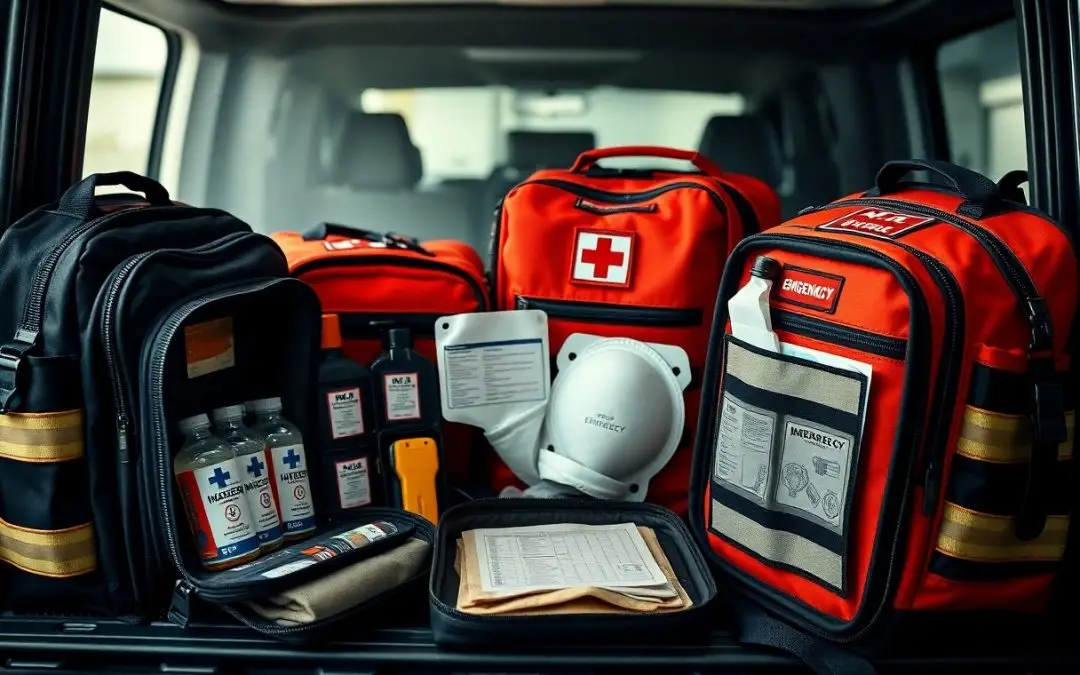
You need a compact, well-organized go bag stocked with medical supplies, water, light, communication gear, and clear instructions so you can respond quickly and keep yourself and others safe during emergencies.
Assessing Regional Threats and Environmental Risks
Assess local hazard patterns so you can tailor your go bag contents and staging locations to likely risks, seasonal shifts, and infrastructure limits.
Identifying Natural and Man-made Hazards
You should map likely hazards-flood, quake, wildfire, industrial spill-and align supplies, shelter options, and communication plans with each threat’s specific demands.
Determining Duration and Mobility Requirements
Estimate how long you may be displaced and whether you’ll travel on foot, by car, or via public transit to set quantities and packaging for your kit.
Plan for layered scenarios: short shelter-in-place events, 72-hour evacuations, and extended relocations. You should stock per-person water and food for each duration, choose compact carry options if mobility is constrained, and include tools for vehicle repair, alternate shelter, extra batteries, and important documents to maintain continuity during prolonged displacement.
Selecting the Optimal Pack Foundation
Choice of pack foundation shapes how you carry importants; pick internal frames and padded hip belts that match mission length and body fit to reduce fatigue and keep items accessible.
Structural Integrity and Load-Bearing Design
Frames, reinforced stitching, and load-distributing hip belts help you carry heavier kits farther while preventing strain and preserving posture.
Weatherproofing and Modular Attachment Systems
Sealing main compartments and adding modular attachment panels lets you configure gear quickly and shield supplies from rain and dust.
Consider a layered weatherproof strategy: you should choose water-resistant fabrics, taped seams, and a rain cover sized to fit over packed gear. You can also use dry bags for electronics and quick-access pouches with sealed zippers. Mounting points should accept modular pouches so you rearrange tools without emptying the bag, keeping mission-critical items reachable and protected.
Core Sustenance and Hydration Systems
Core sustenance planning helps you maintain energy and hydration during rapid response; pack multi-day meal mixes, electrolyte tablets, and a compact stove so you can sustain operations without resupply.
Potable Water Filtration and Storage
Water filtration options like gravity filters, pump filters, and chemical tablets let you secure safe drinking water; carry collapsible bladders and a one-liter bottle per person for immediate access.
Calorie-Dense Rations and Energy Preservation
Rations such as high-calorie bars, nut mixes, and compressed biscuits provide sustained energy while minimizing weight; rotate supplies and pack a lightweight fuel canister for occasional hot meals.
Stock rations that deliver 450-600 kcal per 100g to maximize energy-to-weight; include protein bars, nut butters, jerky, and compact MREs, and rotate every 12-24 months while storing in airtight, waterproof containers.
Essential Shelter and Thermal Protection
Shelter and insulation let you survive cold or wet conditions quickly; pack a lightweight tarp, compact emergency blanket, and multi-use shelter to reduce heat loss and exposure during rapid response.
Emergency Bivvy and Sleeping Systems
Bivvy sacks and space blankets keep you dry and retain heat in confined spaces; choose breathable, waterproof designs that fit in your go bag and deploy in seconds.
- Ultralight waterproof bivvy sack
- Mylar space blanket
- Compact emergency sleeping bag
Bivvy Options
| Item | Benefit |
|---|---|
| Ultralight bivvy | Weather protection with minimal bulk |
| Mylar blanket | Reflects body heat, extreme compactness |
| Emergency bag | Added insulation and coverage for longer stays |
Advanced Layering and Moisture Management
Layering systems let you regulate temperature and moisture; pack moisture-wicking base layers, insulating mid-layers, and a windproof shell to stay warm and dry during sustained activity.
You should select base layers that move sweat away, insulating layers that trap air without bulk, and a breathable, waterproof shell to eject moisture; focus on fit, ventilation, and quick-dry fabrics so you remain comfortable during high-exertion response tasks.
- Moisture-wicking base fabrics (synthetic or merino)
- Insulating mid-layers (fleece or synthetic fill)
- Protective shell with pit zips and sealed seams
Layering Matrix
| Layer | Recommended Features |
|---|---|
| Base | Quick-dry, odor-resistant, snug fit |
| Mid | High warmth-to-weight, compressible |
| Shell | Breathable waterproofing, adjustable vents |
Navigation and Communication Protocols
Protocols guide how you establish priorities for positioning, reporting, and check-ins; set clear call signs, timing, and encryption standards; and define roles for team members during movement. Train to follow simple, repeatable steps so communications remain concise under stress.
Redundant GPS and Analog Map Skills
Backup GPS units plus paper maps and a reliable compass ensure you maintain course if electronics fail; practice plotting coordinates, pacing, and dead-reckoning so you can orient yourself without power or signal.
Emergency Radio and Signaling Devices
Radios, whistles, and strobes let you call for aid when phones are down; learn frequencies, simplex procedures, and visual and audio signaling techniques for low-visibility scenarios.
You should prioritize a primary VHF/UHF radio plus a backup handheld, spare batteries, and a compact antenna; program local emergency frequencies, repeaters, and NOAA weather channels and keep them written on paper. Carry a registered PLB or EPIRB, flares, a strobe light, and an emergency whistle (three blasts signals distress). Learn concise call formats, radio checks, and repeater etiquette, and run routine drills to verify gear and battery readiness.
Medical Supplies and Trauma Management
Stock your go bag with layered trauma care so you can treat bleeding, shock, and airway emergencies until help arrives; include tourniquets, chest seals, pressure dressings, and compact airway tools, plus clear instructions and replacement supplies tailored to likely risks.
Individual First Aid Kit (IFAK) Essentials
Pack a focused IFAK that fits quick-access pockets and contains a tourniquet, hemostatic dressing, pressure bandage, chest seal, airway adjunct, nitrile gloves, and adhesive tape; practice deploying each item so you can act under stress.
Long-term Medication and Hygiene Security
Store extra prescriptions, over-the-counter basics, and clear dosing notes in waterproof packaging so you can maintain treatment schedules and avoid lapses during extended displacement.
Maintain a rotating stock of meds, label expiration dates, include copies of prescriptions and medical history, and pack compact hygiene kits with soap, hand sanitizer, feminine supplies, and wet wipes to reduce infection risk and sustain comfort over weeks on the move.
Final Words
So you can rely on a well-packed go bag to speed your response and protect you during emergencies; choose durable gear, rotate supplies regularly, and practice quick deployment so you act decisively when seconds matter.


