
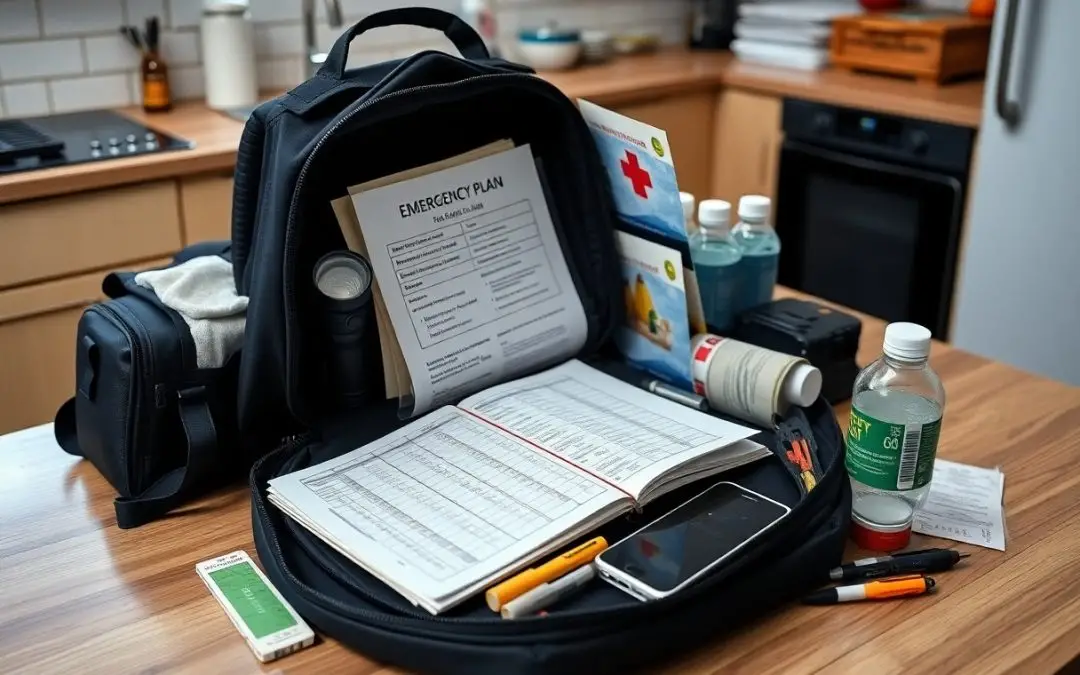
Over 70% of households aren’t prepared for sudden disasters. You need a clear emergency plan that works hand-in-hand with your go bag. This guide shows you how to build both, so you can act fast, stay safe, and protect your loved ones when every second counts.
Assessing Critical Factors for Household Risk Management
- Identify natural disaster risks common to your region
- Review proximity to emergency services and evacuation routes
- Consider structural safety of your home
- Account for utility vulnerabilities like power or water loss
After evaluating these elements, you’ll shape a plan that reflects your household’s real-world challenges and strengths.
Evaluating local environmental and infrastructure threats
Start by reviewing the most frequent hazards in your area-flood zones, wildfire risks, or earthquake faults. Check how local infrastructure might respond under stress, including road access and communication networks. Knowing these conditions helps you anticipate disruptions. After mapping these threats, your go bag contents and escape strategy become more targeted and effective.
Accounting for unique family health and mobility requirements
Think about any prescriptions, medical devices, or mobility aids someone in your home depends on daily. Include backup supplies and documentation in your go bag. After identifying these needs, your emergency response will support everyone’s well-being without delay.
Every family member’s physical and medical needs directly influence how quickly and safely you can respond. If someone uses insulin, oxygen, or a wheelchair, those factors dictate packing priorities and evacuation methods. Plan for power-free solutions, extra batteries, or alternate transportation. Build in check-ins and roles so no one is left behind. Your go bag must reflect these realities to keep your household protected when seconds count.
How-to Designate Effective Evacuation and Transit Routes
Every second counts when an emergency strikes, so you need clear, practiced routes out of danger. Map multiple ways to leave your neighborhood and reach safety, accounting for blocked roads or traffic. Keep these routes simple, well-known to all household members, and regularly updated based on seasonal or construction changes.
Mapping primary and secondary exit paths from the residence
You should identify at least two ways out of every room, especially sleeping areas. Test these paths regularly to ensure windows open easily and doors aren’t obstructed. Sketch a simple floor plan with arrows showing both primary and alternate exits, and post it where everyone can see.
Selecting secure meeting locations for rapid reunification
Choose a spot near your home where everyone can meet if separated during an evacuation. Pick a second location outside your neighborhood in case you can’t return. Make sure both places are easy to reach, unlikely to be affected by the same hazard, and known to all family members.
Your out-of-area meeting point should be a familiar place like a relative’s house or a community center at least 10-15 miles away. This location becomes crucial if roads are closed or communication lines fail. Confirm access by multiple transportation methods and rotate practice drills to ensure everyone knows how to get there under different conditions.
Establishing a Redundant Emergency Communication Protocol
Every emergency scenario demands reliable ways to stay connected when normal channels fail. You need multiple methods to reach loved ones and authorities, even if one system goes down. Design your communication plan with backup options built in, ensuring you can send and receive messages under any condition.
Creating a master contact list for out-of-area coordination
You should compile a list of key contacts who live outside your immediate region. These individuals can relay messages between separated family members when local lines are overloaded or down. Keep printed and digital copies in your go bag and share the list with everyone involved.
Utilizing varied signaling and messaging technologies
Different emergencies disrupt different communication networks. Include tools like hand-crank radios, signal mirrors, whistles, and satellite messengers in your plan. Test each device regularly so you know how to use them when cell service or power isn’t available.
Satellite-based tools like personal locator beacons or two-way messengers work when cell towers are damaged or unreachable. Pair these with low-tech options-such as prearranged signal codes or visible markers on your home-so rescuers or neighbors can identify your status. Rotate through your devices during drills to stay familiar with their functions and limitations.
Synchronizing Go Bag Readiness with Your Action Plan
Aligning your go bag with your emergency action plan ensures you’re prepared to act quickly and effectively. Every item in your bag should support the steps outlined in your plan, whether evacuating on foot, sheltering in place, or meeting at a designated spot. Review both together regularly so adjustments in one reflect in the other.
Tailoring survival gear to match specific escape scenarios
Design your go bag around the emergencies most likely in your area. If wildfires threaten your region, include respirators and protective clothing. For flood zones, pack waterproof bags and buoyant items. A hurricane plan may require water purification tools, while an earthquake response needs heavy-duty gloves and dust masks. Match gear to risk.
Ensuring accessibility and weight distribution for all members
Every household member must be able to carry their bag comfortably. Adjust pack size and weight based on age, strength, and mobility. Store bags where they’re easy to grab, and practice shouldering them quickly. Kids’ packs should never exceed 10-15% of their body weight to prevent strain during escape.
Consider physical differences when assigning go bags. An elderly person may need a waist-supported pack with important meds and glasses within immediate reach. Children benefit from color-coded bags and simplified instructions. Test load distribution during drills to ensure no one slows down. Accessibility means not just reaching the bag, but using it effectively under stress.
Expert Tips for Regular Plan Maintenance and Testing
- Review your emergency plan every six months to ensure accuracy.
- Test communication methods with all household members regularly.
- Update contact information and escape routes as needed.
- Rotate emergency supplies to prevent spoilage.
- Practice using your go bag under simulated conditions.
Perceiving small flaws before a crisis saves time and reduces stress when it matters most.
Conducting semi-annual drills and strategy walkthroughs
Practice your evacuation route every six months with everyone in your household. Run timed drills that simulate power outages or blocked exits to test adaptability. Include children by assigning simple tasks so they respond confidently under pressure. These rehearsals reveal gaps in your plan before real emergencies occur.
Updating documentation and rotating perishable supplies
Check all stored documents every six months to confirm they’re current and legible. Replace expired food, medications, and batteries in your go bag without delay. Store items like water and canned goods in a cool, dry place to extend shelf life. Keeping these elements fresh ensures reliability when seconds count.
Outdated maps or expired medication can compromise your safety during evacuation. You must replace water every six months and inspect sealed food pouches for damage or swelling. Store important papers in waterproof folders and keep digital backups on encrypted drives. Replacing perishables on schedule maintains the integrity of your emergency resources and supports swift, effective action when needed.
To wrap up
Now you have a clear emergency plan paired with a well-packed go bag. You know where to meet, how to communicate, and what to take. This readiness puts you in control when seconds count. Your actions today ensure safety for you and your loved ones tomorrow.


