
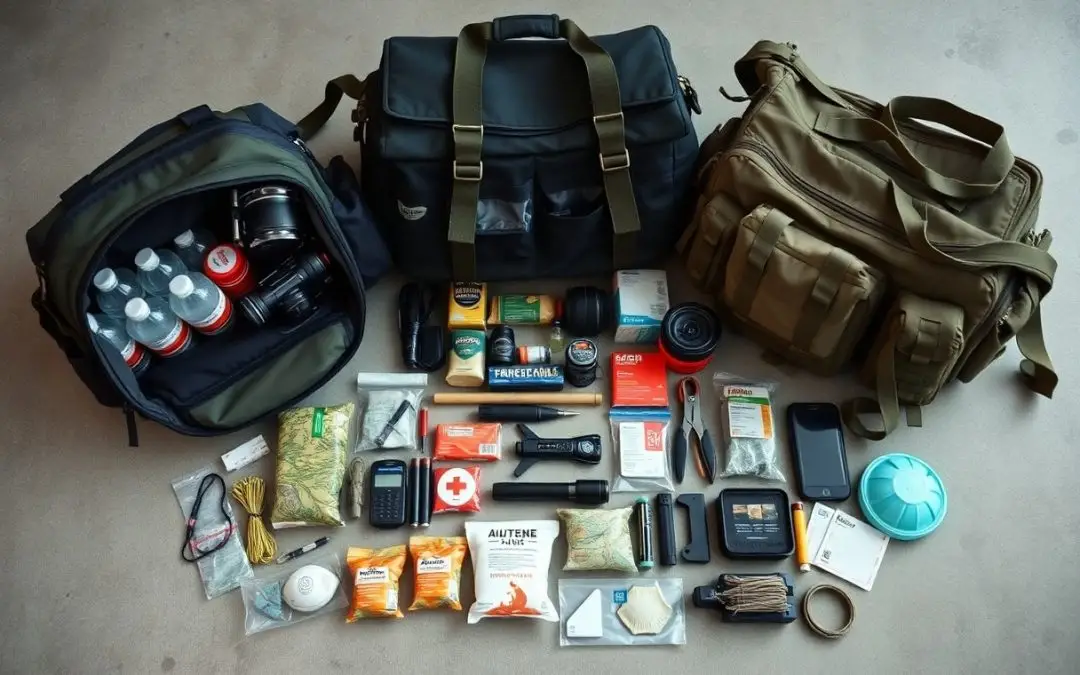
There’s one clear rule: build a grab-and-go kit you can rely on; include water, shelter, first aid, tools, power, and critical documents so you can act quickly and protect your family during sudden evacuations.
The Core Pillars of Survival Gear
Pack your bag around water, food, shelter, medical supplies, and imperative tools so you maintain mobility and endurance during prolonged disruptions.
Hydration and Advanced Water Purification
Carry a reliable filter, UV purifier, or chemical tablets, plus a collapsible container and at least one liter per person; you should include a redundant purification method.
- Gravity filter
- Hand pump filter
- UV pen purifier
- Chemical tablets (chlorine/iodine)
- Collapsible water container
Water Purification Items and Purpose
| Item | Purpose |
|---|---|
| Gravity filter | High-volume, low-effort purification |
| Hand pump | Fast filtering from murky sources |
| UV pen | Portable pathogen inactivation |
| Chemical tablets | Lightweight backup method |
| Collapsible container | Safe storage and transport |
Caloric Density and Nutrient-Rich Food Supplies
Choose high-calorie, nutrient-dense rations like energy bars, MREs, and nut mixes so you sustain calories and electrolytes without excess bulk.
Focus on calorie-per-ounce options, rotate stock to prevent spoilage, and combine ready-to-eat meals with dehydrated staples so you can prepare hot meals using minimal fuel; include powdered milk, electrolyte mixes, and a multivitamin to cover micronutrient gaps.
Shelter Systems for Environmental Exposure
Select lightweight, weather-rated options such as a bivvy, tarp, or fast-pitch tent so you stay dry, retain heat, and reduce pack weight.
Include an insulating sleeping pad, emergency blanket, durable cordage, and a compact repair kit; you should practice rapid setup in varied conditions and verify seam-sealing and stakes work before deployment.
Medical Readiness and Trauma Management
You should pack lifesaving supplies-tourniquet, pressure dressing, hemostatic gauze, airway adjuncts, and basic analgesics-to stabilize trauma until professional help arrives.
Individual First Aid Kit (IFAK) Essentials
Pack a compact IFAK with a tourniquet, chest seal, hemostatic dressing, pressure bandage, sterile gloves, and simple instructions or training cards for immediate use.
Personal Medications and Hygiene Maintenance
Keep at least a week’s supply of prescription meds, duplicates of critical doses, written dosing instructions, and a waterproof container for moisture protection.
Organize medications by listing drug name (brand and generic), dose, administration times, and known allergies; include a photo of prescriptions, pharmacy and prescriber contact, extra inhalers or EpiPens, and refill notes. Store items in labeled, waterproof pouches, use pill organizers for daily dosing, and pack basic hygiene vitals like soap, sanitizer, toothbrush, and disposable wipes.
Navigation and Communication Redundancy
Redundancy keeps you connected: pack phone GPS, handheld GPS, paper maps, and a quality compass, plus two separate communication options so you can confirm position and call for help when primary systems fail.
Analog Mapping and Compass Proficiency
Maps and a reliable compass should be in your bag, and you should practice orienting the map, triangulation, pace counting, and reading contours so you can route yourself and estimate distance without electronic aid.
Emergency Radio and Off-Grid Signaling
Carry a battery-powered or hand-crank emergency radio plus a programmable handheld two-way radio so you can receive NOAA alerts, reach local responders, and use simplex or repeater channels when cell service is out.
Include a NOAA weather radio, a programmable VHF/UHF transceiver (consider amateur radio if you hold a license), and at least one backup power option; you should pack spare batteries, a compact solar charger, and a hand-crank. Learn basic radio protocol, program local frequencies, test equipment regularly, and add visual signals-whistle, mirror, strobe-for line-of-sight rescue.
Emergency Go Bags Built for Real-World Preparedness
Tools and hardware you carry should balance weight, durability and practical reach so you can repair, reinforce, and improvise shelter, gear, and systems when conditions demand.
Primary Cutting Tools and Multi-Functional Hardware
Knives, folding blades, and compact saws give you cutting versatility; choose corrosion-resistant steel and secure sheaths for safe carry.
Fire Ignition Methods and Cordage Applications
Ignition options and cordage let you start fires and rig shelter; you should pack multiple ignition types and varied-strength cord for tying, hauling, and emergency repairs.
Pairing a ferrocerium rod, windproof lighter, and waterproof matches gives you redundancy; store each in sealed packaging with char cloth or commercial tinder so you can ignite damp material. Include 50-100 feet of 550 paracord plus shorter accessory cord for lashings and repairs, and practice bowline, clove hitch, and trucker’s hitch so you can rig shelter and secure loads under stress.
Selecting the Optimal Load Carriage
Select a pack that balances capacity, accessibility, and durability so you can carry importants without excess bulk.
Ergonomics and Weight Distribution Principles
Balance load near your center of mass, keep heavy items low and close to your spine, and adjust straps so you and the pack move as one.
Low-Profile vs. Tactical External Aesthetics
Prefer a low-profile appearance to avoid attention in urban settings, but choose tactical features like attachment points when your mission needs demand rapid gear access.
Assess the environment and objectives to decide between subdued styling and overt tactical cues. Low-profile packs reduce curiosity and theft risk in crowds, while tactical exteriors give you modular attachment, faster tool access, and clearer organization for specialized tasks. Choose muted colors, water-resistant fabrics, and low-noise closures for urban use; pick reinforced webbing, accessible lash points, and streamlined pockets when you expect active operations.
Maintenance and Inventory Management
Inventory checks keep your go bag mission-ready: schedule monthly audits, document item ages, and remove expired supplies so you can trust what’s inside during a real emergency.
Seasonal Rotation and Expiration Audits
Seasonal rotation helps you swap weather-appropriate clothing, refresh perishables, and verify medication dates so your bag matches current conditions and remains reliable when you leave fast.
Testing Gear Functionality in Controlled Environments
Test radios, stoves, and lights under safe conditions to confirm battery life, ignition, and signal strength so you know how each piece performs before you depend on it.
When you run gear drills, simulate realistic scenarios: operate items for expected durations, pair radios to confirm channels and range, cycle batteries under load, and practice lighting and cooking steps in a ventilated outdoor area so failures are exposed and corrective actions are scheduled well ahead of any emergency.
To wrap up
Following this you will assemble and maintain an emergency go bag tailored to local hazards, prioritize multiuse items, rotate consumables, and rehearse simple plans so you can act quickly and confidently during emergencies.


