

You want to be prepared for any emergency, and having a well-stocked go bag first aid kit is a key component of that preparedness. Knowing what to include in your kit can make all the difference when seconds count, while understanding what to skip can help you avoid overpacking and ensure you have the vitals at your fingertips. In this guide, you’ll learn about the necessary items to include for various situations, as well as those that may take up valuable space without offering significant value in an emergency.
Understanding Go Bags
While the concept of a Go Bag may seem simple, it serves a vital purpose in emergency preparedness. A Go Bag is a portable collection of vital items you can grab quickly in case of evacuation or emergency. This bag allows you to be ready for unexpected situations, ensuring you have access to immediate necessities when you need them the most.
Definition and Purpose
One of the primary functions of a Go Bag is to facilitate a swift and organized response to emergencies. It is designed to carry vital supplies that cater to your immediate needs, such as food, water, clothing, and first aid kits. The main purpose of a Go Bag is to ensure you are equipped to handle unforeseen circumstances until help arrives or you can reach safety.
Importance of First Aid Kits
By including a well-stocked first aid kit in your Go Bag, you prepare yourself for potential health emergencies. These kits not only provide necessary supplies for treating injuries but can also serve to prevent complications in critical situations. Having a first aid kit readily available allows you to act quickly, which can be the difference between a minor issue and a more serious medical emergency.
Purpose-built first aid kits are vital components of your Go Bag as they equip you to manage injuries and ailments effectively. These kits should contain items like adhesive bandages, antiseptic wipes, and gauze to address common injuries. By having one at your disposal, you empower yourself to handle minor medical situations immediately, allowing you to focus on staying safe and securing your environment during a crisis.
Essential Items for First Aid Kits
It is vital to pack imperative items in your first aid kit to address minor injuries and health issues during emergencies. Including the right supplies ensures you are prepared for various situations, whether at home or on the go. Make sure your kit is well-stocked and easily accessible, so you can act quickly when needed.
Basic Supplies
Around your first aid kit, you should include basic supplies such as adhesive bandages, sterile gauze pads, adhesive tape, and antiseptic wipes. Additionally, incorporating items like scissors and tweezers will aid in removing splinters or cutting tape. These fundamental components provide a solid foundation for treating common injuries.
Medication and Treatments
Behind every well-prepared first aid kit is a selection of medication and treatments that can help manage various ailments. Including medications such as pain relievers, antihistamines, and antiseptics gives you the means to combat discomfort and prevent infections.
Consequently, consider including specific medications tailored to your needs, such as allergy medications or gastrointestinal treatments. In addition to over-the-counter options, familiarize yourself with how to use these medications effectively and their appropriate dosages. This will empower you to address health concerns proactively, ensuring your first aid kit is not just a collection of supplies, but a comprehensive resource for managing health issues effectively.
Non-Essential Items to Avoid
To ensure that your go bag remains practical and efficient, it’s wise to avoid including non-important items that can clutter your kit. Focusing on vital supplies allows you to maximize space and carry only what you truly need in an emergency. While it may be tempting to add extra items “just in case,” doing so can hinder your ability to quickly access necessary tools during a crisis.
Overly Complicated Tools
Tools that serve multiple functions can seem like a good idea, but overly complicated tools can lead to confusion in high-pressure situations. You want to avoid items that require extensive knowledge to operate or that could malfunction, as simplicity often aids efficiency. Stick to straightforward, user-friendly tools that can deliver immediate assistance without unnecessary complexity.
Expired Supplies
Supplies that are past their expiration date can undermine the effectiveness of your first aid kit. You want to ensure that everything you include is functional and safe to use, so regularly check the expiration dates on items in your kit. Outdated medicines and supplies can be ineffective, potentially putting you at greater risk during an emergency.
The integrity of your go bag relies on the freshness of its contents. Regularly replacing expired supplies not only avoids potential health risks but also keeps you prepared for unforeseen situations. Create a routine check-up every few months to go through your kit, discarding any expired items and restocking as necessary, ensuring that your first aid kit remains reliable and relevant.
Customizing Your Go Bag
Not all go bags are created equal. To ensure your kit serves you well in an emergency, take the time to customize it according to your unique needs and situations. Evaluating your lifestyle, geographical location, and personal preferences allows you to add or remove items as necessary, making your go bag a more effective resource in times of crisis.
Personal Needs and Considerations
Considerations such as your health conditions, age, and the specific needs of family members should guide your customization process. If you or someone in your family has allergies, chronic illnesses, or requires medications, be sure to include necessary supplies and prescriptions in your go bag. Personal comfort items, like a favorite blanket or hygiene products, can also make a difference during stressful situations.
Specific Situations and Environments
After assessing your personal needs, it’s important to factor in the specific situations and environments you may encounter. Depending on whether you live in an urban or rural area, your go bag should address different challenges, such as natural disasters, civil unrest, or outdoor adventures.
The environment you reside in plays a significant role in shaping your go bag contents. For example, if you live in areas prone to hurricanes, include items like water purification tablets and battery-powered lights. Alternatively, if you’re in a snowy region, you may want to pack thermal wear and snow-melting products. Tailor your go bag to cater to the unique risks and scenarios you might face, promoting greater preparedness and peace of mind.
Maintenance and Updates
Despite the effort you put into assembling your go bag first aid kit, regular maintenance and updates are vital for ensuring its effectiveness during emergencies. As time passes, supplies can deteriorate, and items may become outdated, making dependable upkeep necessary for your preparedness. Regularly reviewing your kit keeps you aware of its contents and equipped to handle unforeseen situations.
Regular Checks
The importance of conducting regular checks on your go bag first aid kit cannot be overstated. Schedule a quarterly review to assess the condition of items, ensuring that everything is in working order. This practice not only provides peace of mind but also ensures that you will have what you need in an emergency.
Replacing Expired Items
Checks for expired items in your first aid kit are vital for safety and readiness. Items that have passed their expiration date may not function as intended and can lead to complications when you need them most.
A consistent review of expiration dates for medications, gauze, and other perishable items allows you to identify what needs to be replaced. Consider creating a checklist of items with expiration dates, so you can systematically address any that are nearing their limit. Keeping your first aid kit stocked with fresh supplies will enhance your confidence in relying on it when emergencies arise.

First Aid Training and Resources
Unlike simply assembling a go bag filled with supplies, understanding first aid and receiving appropriate training is vital to effectively utilize those supplies in an emergency. Enrolling in a first aid or CPR course not only equips you with the skills needed to respond but also boosts your confidence in handling unexpected situations. By investing time in training, you’re making a commitment to your safety and the well-being of those around you.
Importance of Training
Training in first aid ensures that you are well-prepared to act promptly and correctly during emergencies. Having hands-on experience and theoretical knowledge can make a significant difference when every second counts. Understanding how to assess a situation and prioritize care can empower you to save lives and prevent complications.
Available Resources
First, numerous resources are available to help you enhance your first aid skills. Local hospitals, community centers, and organizations like the American Red Cross often offer workshops and courses tailored to various skill levels. Additionally, many online platforms provide instructional videos and guides that can be valuable for your learning journey.
At your local library or online, you can find a wealth of books and manuals dedicated to first aid techniques. Websites and mobile apps also provide structured learning paths, interactive quizzes, and emergency tips at your fingertips. Engaging with these resources will not only prepare you for emergencies but can also be a useful reference when you need to refresh your skills.
Final Words
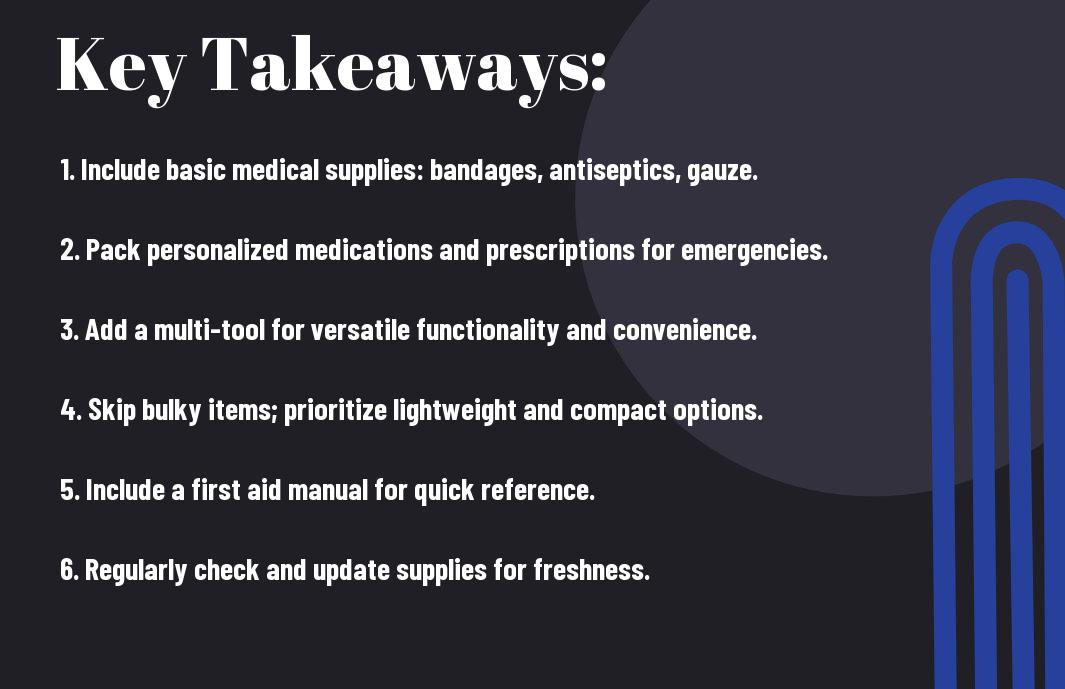
Drawing together the crucials for your go bag first aid kit can significantly enhance your preparedness for emergencies. You should focus on including items that address your specific health needs while ensuring you have the basics, such as adhesive bandages, antiseptic wipes, and pain relievers. Minimize bulk by skipping unnecessary items that don’t serve a purpose for your situation. By tailoring your kit to your lifestyle and potential scenarios, you’ll be equipped to handle emergencies more effectively, providing peace of mind for you and your loved ones.


