

Difference can often be subtle, especially when it comes to emergency preparedness gear like Go Bags and Bug-Out Bags. You might think they serve the same purpose, but understanding their distinctions is necessary for effective planning. A Go Bag is typically designed for short-term evacuations or emergencies, while a Bug-Out Bag is geared towards more prolonged survival scenarios. In this post, you’ll learn how each bag serves your needs and the specific items to include in them, ensuring you are effectively prepared for any situation that may arise.
Definition of Go Bag
Your go bag is a portable kit designed to keep you prepared for unexpected emergencies or urgent situations. This versatile bag typically contains supplies and necessarys that allow you to quickly evacuate your location or navigate unforeseen circumstances. Whether for natural disasters or sudden personal emergencies, having a go bag ensures you’re never left in a lurch when it matters most.
Purpose and Use Cases
At its core, a go bag serves as a safety net, enabling you to respond swiftly to various scenarios, such as natural disasters, civil unrest, or personal crises. Its purpose is to equip you with necessary items and resources that can support your immediate needs, whether you find yourself needing to evacuate your home or stay in a temporary shelter.
Key Components
An effective go bag typically contains a variety of items that address your basic survival needs, such as food, water, shelter, and first aid supplies. It may also include personal documents, a flashlight, communication tools, and hygiene products to keep you comfortable and secure during emergencies.
Indeed, the key components of your go bag should reflect your unique needs and circumstances. Consider including non-perishable food items, a reliable water purification system, a compact sleeping bag, and basic cooking supplies. Additionally, personal documents like identification and insurance information can be vital in emergency situations. Tailoring your go bag to accommodate your lifestyle and potential risks will enhance its effectiveness and your peace of mind.
Definition of Bug-Out Bag
Some people refer to a bug-out bag as an emergency kit designed for quick evacuation. This bag typically contains crucial supplies needed to sustain you for 72 hours during a crisis. Whether due to natural disasters, civil unrest, or other unexpected situations, a bug-out bag is your go-to resource for immediate survival and mobility when you need to leave your home quickly.
Purpose and Use Cases
Below are the primary reasons you might need a bug-out bag. This bag serves as your lifesaver during emergencies, ensuring that you can quickly evacuate from your location. Use cases include natural disasters such as hurricanes or wildfires, civil emergencies, or any situation that demands immediate relocation. The goal is to have everything you need at your fingertips to minimize risk and maximize your safety.
Key Components
Behind every effective bug-out bag are crucial components that ensure you are prepared. Your bag should include food, water, clothing, shelter materials, first-aid supplies, and tools for navigation and communication. Each item serves a specific purpose, tailored to meet your immediate needs in an emergency.
It’s important to personalize your bug-out bag based on your unique needs and the scenarios you anticipate. For example, the food you pack should be non-perishable and lightweight, while your first-aid kit should contain items that address potential injuries. Additionally, consider including a reliable water filtration system, basic toiletries, and important documents in waterproof containers. These components work together to create a well-rounded survival kit that enhances your readiness for any situation.
Key Differences Between Go Bags and Bug-Out Bags
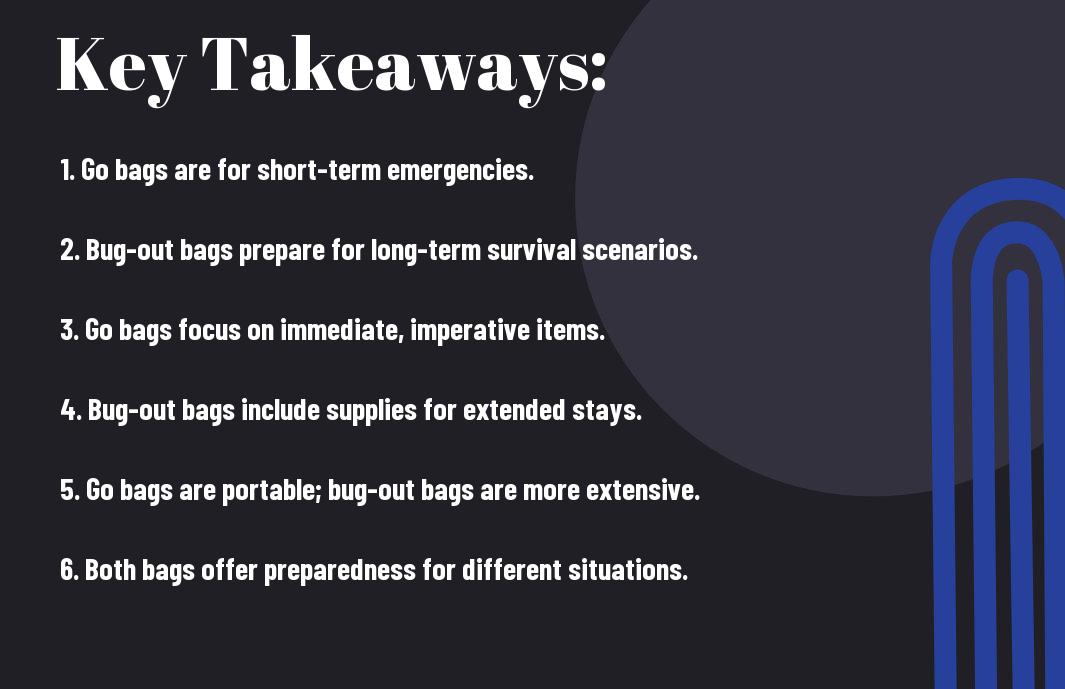
All emergency preparedness kits have their specific purposes, and understanding the differences between a go bag and a bug-out bag can enhance your readiness. Go bags are designed for short-term needs during unexpected emergencies, allowing you to grab and evacuate quickly. Bug-out bags, on the other hand, are more comprehensive, intended for extended stays away from home, often packed with supplies to sustain you for several days or longer. Recognizing these distinctions can help streamline your preparations for various scenarios.
Duration and Preparedness
By assessing the duration of your needs, you’ll find that go bags cater to immediate, short-term situations typically lasting 24 to 72 hours. These bags include basics like water, food, and first aid supplies. Conversely, bug-out bags prepare you for the long haul, equipped with resources to keep you sustained and sheltered for a more extended period.
Situational Usage
With situational usage in mind, each type of bag serves distinct scenarios. Go bags are important when you need to leave quickly due to an imminent threat, such as natural disasters or urgent evacuations. Bug-out bags are your go-to when you anticipate needing to survive independently for longer durations, perhaps due to systemic breakdowns or extended civil unrest.
Indeed, understanding when to utilize each bag can significantly impact your survival strategy. For instance, if a sudden tornado warning prompts immediate evacuation, your go bag allows you to exit swiftly with basic necessities. In contrast, if a prolonged power outage affects your area, your bug-out bag ensures you have important supplies to sustain you while you await assistance or seek alternative shelter. Tailoring your bags to fit specific scenarios enhances your overall readiness for any emergency situation.

Ideal Scenarios for Each Type of Bag
Unlike the Go Bag, which is designed for immediate situations, a Bug-Out Bag is tailored for longer-term emergencies that may require you to leave your home for an extended period. Understanding the scenarios for each type of bag can help you prepare effectively for various unexpected situations.
Go Bag Situations
Around urban disasters, natural calamities, or other emergencies requiring immediate action, a Go Bag is your best ally. It ensures you have crucial items ready to grab and go, making it ideal for situations where time is of the essence.
Bug-Out Bag Situations
Situations that may prompt you to use a Bug-Out Bag include widespread civil unrest, natural disasters that render your home uninhabitable, or long-term evacuation scenarios due to environmental hazards. These bags are designed to sustain you over several days or longer, containing crucial gear and supplies.
It is important to think through the items you pack in your Bug-Out Bag, as it should provide for your basic needs, such as food, water, shelter, and important documents. Ensure that your bag is optimized for both durability and weight, allowing you to carry it comfortably over extended periods. Planning for potential situations will not only help you pack wisely but also give you peace of mind knowing you are prepared for whatever comes your way.
Essential Gear for Each Bag
Now that you understand the differences between a go bag and a bug-out bag, it’s important to consider the important gear for each. While both bags serve survival purposes, the items you include may vary based on your specific needs and the situations you may encounter.
Must-Have Items for Go Bags
Essential items for your go bag include a first aid kit, non-perishable snacks, water purification tablets, a flashlight, a map, and a portable phone charger. These items ensure that you have basic necessities and can communicate while on the move, allowing for quick exits during emergencies.
Must-Have Items for Bug-Out Bags
To effectively prepare for extended crises with your bug-out bag, you’ll need a more comprehensive set of supplies. These should include a durable backpack, an emergency blanket, multi-tools, a tent or tarp, clothing layers, and additional food supplies. This gear will support longer-term survival and ensure you can adapt to changing conditions.
At the core of your bug-out bag’s design is versatility. You want gear that not only covers immediate needs but also supports long-term survival and resilience. Including items like fire-starting tools, water filtration systems, and even a compact cooking setup can significantly enhance your bug-out capability, ensuring you are well-equipped to face various survival scenarios when it really matters most.
Maintenance and Updates
Once again, keeping your emergency bags in optimal condition is vital for effective preparedness. It’s important to routinely check the contents of both your Go Bag and Bug-Out Bag to ensure that all items are functional and current. You may need to replace expired food, batteries, and equipment, as well as update personal documents or contact information. Regular maintenance like this ensures you remain ready for any unexpected situation.
Keeping Your Go Bag Ready
Around your Go Bag, you should conduct regular inspections to ensure every component remains in working order. Pay particular attention to food and first-aid supplies, replacing them as necessary. Consider seasonal changes by adjusting clothing and protective gear to match current weather conditions. This proactive approach ensures you can respond swiftly and effectively when a need arises.
Maintaining Your Bug-Out Bag
About your Bug-Out Bag, it’s important to take a systematic approach to its upkeep. Regularly review its contents and assess whether items are still suitable for your specific needs. This may involve adding new tools, replacing outdated technology, or including relevant maps and supplies that reflect your current location. Staying informed about changes in regulations or environmental hazards can also guide updates.
In addition, you should periodically go through your Bug-Out Bag to ensure functionality and organization. Check gear like flashlights and communication devices for proper operation. Take note of any new skills or knowledge you’ve acquired that might require you to adjust your gear, and consider how your family’s dynamics might affect what you need in an emergency. Keeping your Bug-Out Bag relevant to your evolving situation will enhance your preparedness strategy.
Final Words
Now that you understand the differences between a Go Bag and a Bug-Out Bag, you can make informed decisions based on your specific needs. A Go Bag is ideal for short-term emergencies, while a Bug-Out Bag is designed for more extended scenarios. By clearly defining your purpose and preparing accordingly, you ensure you’re ready for any situation that may arise. Assess your environment, your family’s needs, and pack your bags with the right supplies to stay safe and secure, no matter the circumstance.


