
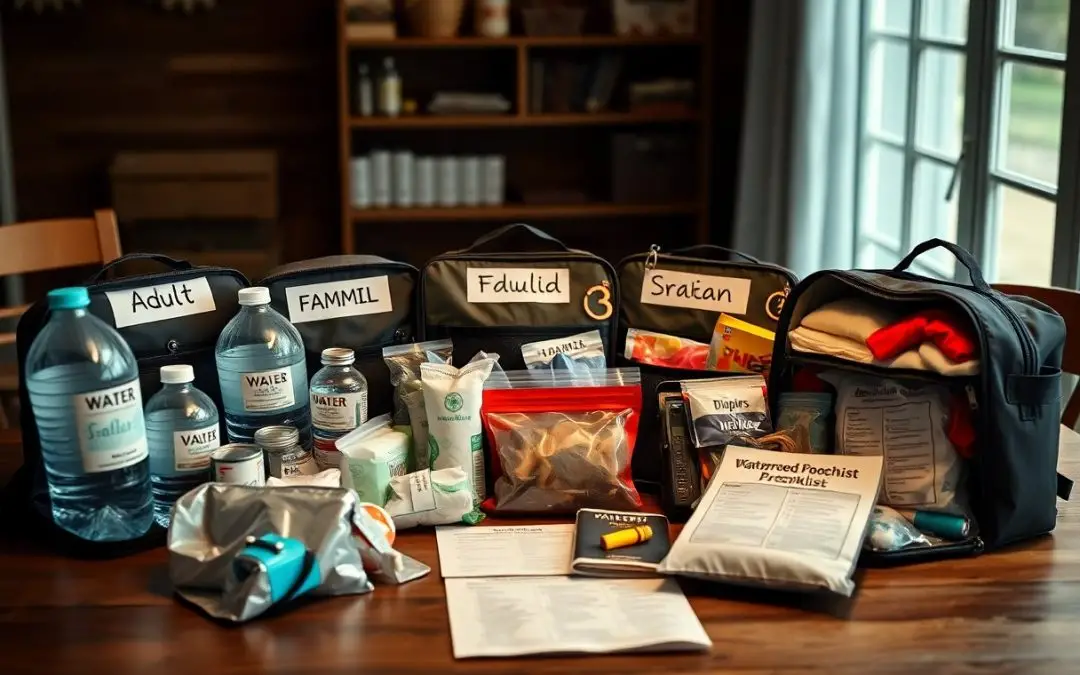
You will assemble customized go bags for every family member by cataloging needs, packing medications, documents, water, food, light, and warmth items, and assigning practical, portable containers for quick evacuation.
Key Takeaways:
- Personalize each bag for age and needs: medications and prescriptions, glasses, baby formula and diapers, pet supplies, and mobility or medical aids.
- Include necessarys: one gallon of water per person per day (three-day minimum), nonperishable food, first-aid kit, flashlight, battery-powered or hand-crank radio, and extra batteries.
- Store important documents and cash in a waterproof pouch: IDs, insurance papers, medical records, emergency contacts, and local maps or photocopies.
- Keep kits ready-to-go in durable, labeled, easy-to-carry bags and rotate food, water, and medications at least every six months.
- Practice evacuation drills, assign family roles, and review kit contents annually or whenever family needs change.
Assessing Essential Factors for Every Family Member
You should weigh age, mobility, daily routines, and caregiving roles when tailoring each go bag so items are usable and reachable during stress.
- Children: comfort items, size-appropriate clothing, medications
- Elderly: medication lists, mobility aids, easy-open containers
- Infants: formula, diapers, sterile feeding gear
- Pets: food, leash, vaccination records
- Allergies/diets: labeled substitutes and emergency meds
Knowing how these specifics change packing choices lets you balance weight, accessibility, and redundancy in every kit.
Identifying Individual Medical and Dietary Needs
Check each person’s prescriptions, dosages, storage requirements, and any medical devices so replacements and instructions are included.
Document allergy protocols, special diets, and feeding schedules in both paper and digital form so caregivers can follow them under pressure.
Evaluating Geographic and Environmental Risks
Assess local threats such as floods, earthquakes, wildfires, or severe winter weather and how those hazards affect evacuation routes and shelter availability.
Prepare go bags with season-appropriate gear-warm layers, sun protection, N95 masks for smoke, and waterproof containers for flood zones-to match likely conditions.
Map alternate evacuation paths, nearby shelters, and medical facilities, and rehearse simple drills so you reduce confusion and speed decision-making during an event.
How-To Choose the Right Backpack and Foundation Gear
Choose a pack that fits each family member by torso length and hip size so weight sits on the hips, not the shoulders; test fit with 20-30% of the person’s expected carry weight to confirm comfort. You should prefer adjustable suspension and a supportive hip belt when you plan longer carries or need to distribute heavier foundation items.
Balance capacity with purpose by matching bag volume to role-child daypacks for school-sized kits, larger packs for adults who carry group gear. You will also want hydration compatibility, external attachment points for quick-access tools, and a simple checklist of shelter, water, food, light, and first aid as your foundation.
Selecting Ergonomic and Durable Storage Solutions
Look for materials like high-denier nylon and reinforced stitching that resist abrasion and wet conditions while keeping overall weight low; sturdy zippers and seam taping extend useful life. You will appreciate padded shoulder straps, a ventilated back, and a firm hip belt that reduce fatigue during sustained movement.
Consider internal organization and modularity so you can separate medical supplies, kid-specific items, and documents for fast retrieval. You should test pockets and compartments with actual kit items, and choose waterproof stuff sacks or dry bags to protect vitals from moisture.
Prioritizing Lightweight Multi-Use Tools
Select multi-tools and gear that perform several functions to cut weight without sacrificing capability, such as a compact multi-tool, a titanium pot that doubles as a bowl, or a poncho that converts into shelter. You will balance durability against grams saved to match your family’s skill level and trip profile.
Opt for items with proven reliability like reliable pocket knives, collapsible water bottles, and filter straws that replace bulkier systems; prioritize simple mechanisms that you can maintain in the field. You should favor corrosion-resistant metals and easily sourced parts to reduce long-term maintenance.
Test each multi-use item in realistic scenarios so you and other family members know how to deploy functions quickly; practice assembling a tarp shelter, filtering water, or using a multi-tool under timed conditions. You will also label components, keep spare small parts, and rotate consumables to ensure readiness when you need them.
How-To Organize Supplies for Maximum Efficiency
Organize your family go bags by grouping items by function and frequency of use so you can grab imperatives without rummaging. Use inventory cards, color-coded pouches, and a master checklist stored digitally and on paper to keep track of rotations and expirations.
Implementing a Zoned Packing System
Divide each bag into clear zones-first aid, hydration, warmth, tools, and documents-and assign a consistent pouch color or label for every zone so anyone in your family can locate items quickly during stress.
Waterproofing Critical Electronics and Clothing
Protect phones, batteries, spare clothes, and important papers in waterproof cases or heavy-duty zip bags, add silica gel packets to cut humidity, and store cables in separate sealed pouches to avoid corrosion and tangling.
Seal seams and closures with quality tape or roll-top dry sacks, perform a brief submersion test on spare pouches to verify watertightness, and replace any damaged packaging immediately to maintain reliability.
Critical Factors for Document and Communication Readiness
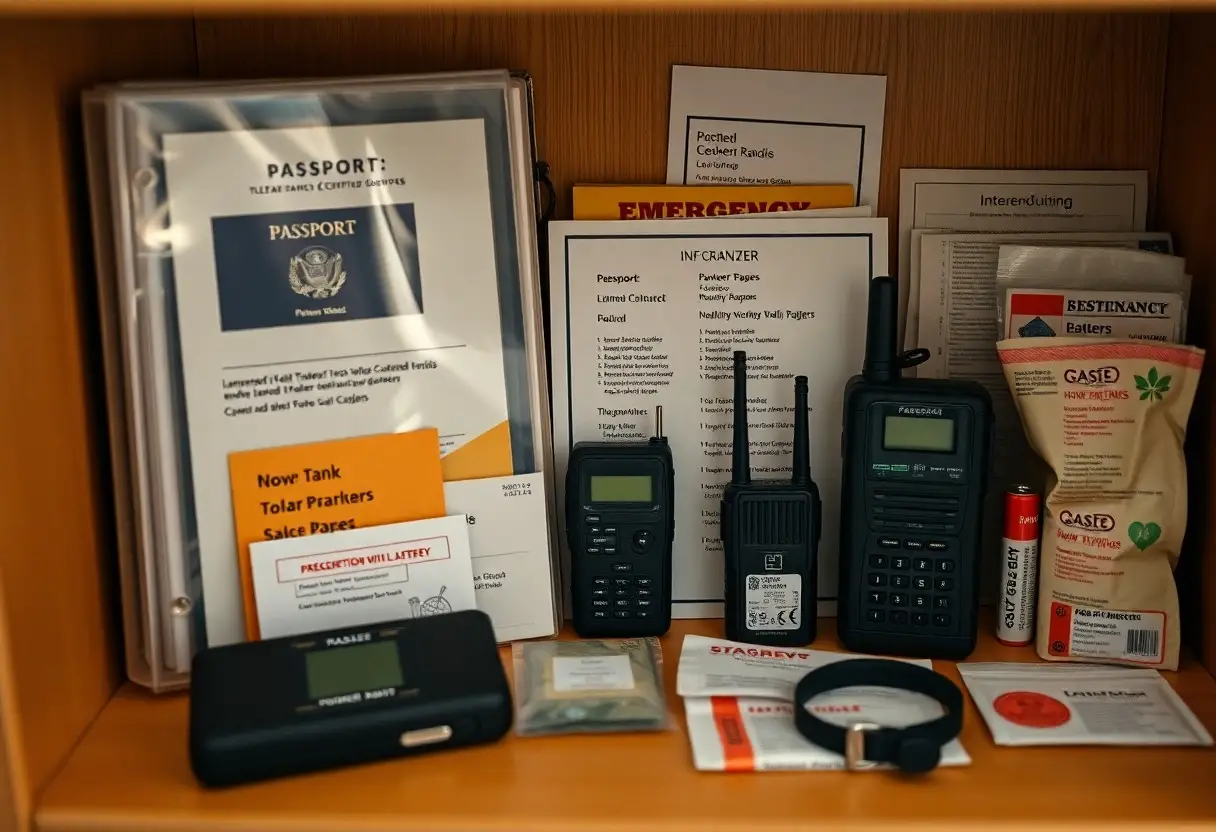
Documents you pack must prove identity, ownership, and medical needs; include passports, birth certificates, insurance cards, and medication lists in waterproof envelopes, plus a copy of emergency plans you can access quickly.
- Hard copies: IDs, insurance, prescriptions
- Digital backups: encrypted cloud and a USB kept separately
- Contact cards: primary, out-of-area, and meeting points
This ensures you can verify identities, secure services, and coordinate reunification without losing time during an evacuation.
Protecting Legal Papers and Digital Backups
Store originals in a fireproof, waterproof safe and maintain encrypted digital copies in a password manager or cloud service you can access from any device; keep a separate USB in a go bag you carry.
Establishing Emergency Contact Protocols
Create a concise contact card for each family member listing names, primary and out-of-area numbers, medical notes, and agreed meeting points, and place one copy in every go bag you assemble.
Verify phone numbers regularly, teach children how to send prewritten check-in texts, and practice short drills so you all know who to contact first and how to confirm everyone’s status.
Summing up
Summing up, you should assemble individualized go bags with water, nonperishable food, prescription meds, copies of IDs, a basic first-aid kit, flashlight, phone charger, clothing, pet supplies and small comfort items. Store bags in accessible spots, label by person, rotate perishables and test contents periodically. Practicing quick evacuations and sharing the plan with family ensures you respond faster when disaster strikes.
FAQ
Q: What is a family go bag and why should every household have one?
A: A family go bag is a compact emergency kit designed to sustain one person for 72 hours during evacuation or sudden displacement. It contains water, nonperishable food, basic first aid, important documents, communication and lighting tools, and personal items tailored to the user’s needs. Keeping a go bag ready reduces decision-making time during a crisis and increases the chances that everyone leaves quickly with their imperative supplies.
Q: How do I build personalized go bags for each family member?
A: Start with a durable backpack or small duffel for each person and use a checklist to cover core categories: water (1 gallon per person per day as a guideline), 72 hours of food, a basic first aid kit, multi-tool, flashlight with extra batteries, emergency radio, whistle, local maps, and cash in small bills. Add clothing layers, sturdy shoes, and rain protection sized for the person. Include a power bank and charging cables for phones, plus backup copies of identification and medical information in a waterproof pouch. Tailor contents for age, health conditions, and daily routines so each bag matches the needs of its owner.
Q: What special items should be added for infants, older adults, people with disabilities, and pets?
A: Infants need formula or breast-feeding supplies, bottles, diapers, wipes, a changing pad, and a few favorite comfort items. Older adults require extra prescription medications, pill organizers, hearing-aid batteries, mobility-assistive items, and eyeglasses with a spare pair. People with disabilities may need battery backups for medical devices, alternate communication tools, copies of care plans, and caregiver contact lists. Pets require food, a leash or carrier, vaccination records, waste bags, and a comfort toy or blanket.
Q: How often should go bags be checked and how do I rotate supplies to avoid expired items?
A: Inspect go bags every six months to check expiration dates on food, water, and medical supplies; replace batteries annually or as needed. Create a simple rotation schedule on a calendar or reminder app and swap out items before they expire. Test electronics and charge power banks during checks, refresh clothing for seasonal changes, and update documents or emergency contacts whenever there is a family change.
Q: Where should go bags be stored and how can the family practice using them?
A: Store one bag in an easy-to-reach spot near the main exit, keep a second bag in the car, and consider a third in an accessible bedroom or the workplace if needed. Keep storage locations known to all family members and mark bags with names. Run quarterly drills where everyone grabs their bag, practices closing it quickly, and follows an evacuation route to a safe meeting place. Include scenarios for limited mobility, night evacuations, and taking pets so the family gains confidence and the bags prove functional.


