
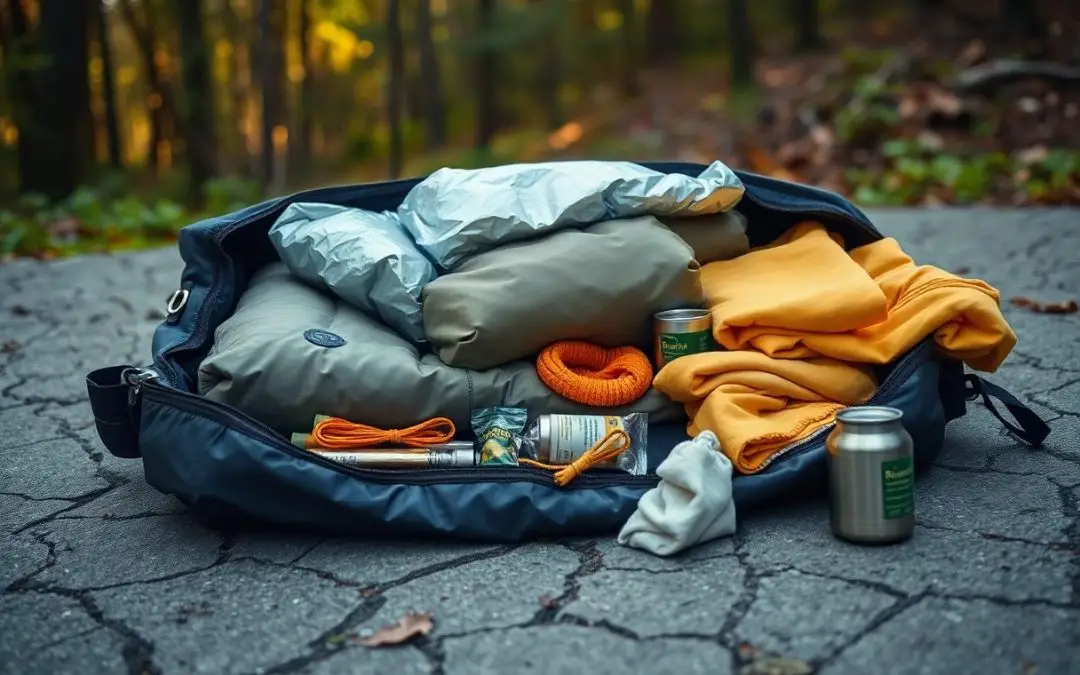
Over 72 hours you should pack a compact kit covering shelter, water, fire, first aid, tools, light, maps and compass, and communication; you prioritize multipurpose items, portability, and regular drills to maintain readiness.

Key Takeaways:
- Water and purification: 1-2 liters on hand, compact filter or purification tablets, and a collapsible bottle or bladder.
- Shelter and warmth: emergency bivy or mylar blanket, lightweight tarp or compact tent, insulating layer and extra socks.
- Food and cooking: high-calorie ready-to-eat meals, lightweight stove or alcohol tabs with fuel, and a spoon/fork.
- Tools and safety: multi-tool and fixed blade, headlamp with spare batteries, waterproof fire-starting kit, paracord and duct tape, whistle.
- Medical and communication: complete first-aid kit, prescription meds, N95 mask, portable charger/power bank, battery or hand-crank radio, paper IDs and cash.
Hydration and Nutrition Systems
Pack layered hydration: a 2-3 L bladder for urban movement, a collapsible bottle for compact carry, and purification tablets as backup. You should plan for at least 3 liters per day in low-activity settings and more when you’re hiking hard or sweating heavily.
Advanced Water Filtration and Purification Methods
Test advanced filters before you depart: pump filters clear sediment, hollow-fiber units stop bacteria, and UV pens neutralize viruses in clear water. You should also carry spare cartridges, O-rings, and a chemical backup for cloudy or icy sources.
- Use a gravity filter when you need to process large volumes without pumping.
- Use a UV pen for quick virus treatment of clear water when you have batteries.
- Use chemical tablets as a lightweight, long-shelf backup for turbid or frozen water.
Filtration Options vs Best Use
| Method | Best For |
|---|---|
| Pump filter | Silty or debris-heavy sources |
| Hollow-fiber/inline | Lightweight backpacking and daily use |
| UV pen | Virus-prone clear water and fast treatment |
| Chemical tablets | Emergency backup and frozen/cloudy water |
Compact, High-Calorie Emergency Food Rations
Carry calorie-dense bars, compressed rations, and nut mixes to provide energy without bulk. You should aim for 2,000-3,000 kcal per day during heavy activity and rotate supplies to maintain freshness and palatability.
Choose rations with concentrated fats and protein-nut-butters in pouches, oil-enhanced bars, or military-style emergency blocks. You will appreciate ready-to-eat items when water or cooking fuel is scarce and need options that require no prep.

Shelter and Thermal Protection
Lightweight Emergency Bivvies and Tents
Choose a lightweight emergency bivvy or tarp that packs tiny but blocks wind and traps body heat, letting you shelter quickly in alleys, rooftops, or dense woods without excess bulk.
Pack a one-person ultralight tent for predictable protection in urban settings and a compact bivvy for wilderness route-finding; prioritize waterproof seams, low weight, and fast setup so you can move with speed.
Tactical Clothing Layers and Heat Retention
Layer base, mid, and shell garments so you can regulate temperature during movement and rest; choose moisture-wicking bases, insulating synthetics, and a breathable waterproof outer for mixed conditions.
Select mid-layers that retain loft when damp-synthetic fleeces or treated down-and carry a compressible emergency insulation piece you can deploy while stationary to reduce heat loss during long waits.

Navigation and Communication Hardware
Pack reliable navigation and comms hardware into your go bag so you can orient and stay in touch when systems fail. Include a compact GPS with spare batteries, a power bank, and neatly coiled cables for rapid access, balancing weight and functionality for urban and wilderness trips.
Carry items in weatherproof cases and label each device for quick identification; store spare SIMs, adapters, and a paper contact list alongside digital files. You should rotate batteries and test connectivity before extended travel.
Analog Topographic Maps and Compass Reliability
Maps give you location detail when satellites are unavailable; keep current topographic sheets in a waterproof sleeve and mark key routes and water sources. You should practice reading contours and estimating distances so map use becomes second nature under stress.
Compass skills remain important; choose a magnetic compass with a sighting mirror and learn declination adjustment to fix accurate bearings. You should carry a spare compass and compare readings against known landmarks periodically.
Emergency Radio Systems and Signaling Devices
Handheld radios provide immediate local comms-select models with programmable channels and NOAA/weather alerts, and pack extra batteries plus a lightweight solar charger. You should also include discreet earpieces and clear channel lists for fast setup.
Consider adding a dual-band VHF/UHF unit and a compact HF option if you travel far; include a durable antenna and study basic radio procedure and call signs to reduce interference. You should keep written frequency lists in your pack.
Signal devices like whistles, strobes, and a small mirror dramatically increase detection chances; pack at least two methods and rehearse using them in low-visibility drills. You should register radios where required and maintain a battery rotation plan.
Essential Tools and Firecraft
Tools like quality knives, multi-tools, a compact saw, and a reliable ferro rod give you flexibility for shelter, food prep, and repairs without weighing down your bag.
Practice basic firecraft and knife skills so you can perform under stress and reduce waste of fuel and time.
Heavy-Duty Multi-tools and Fixed-Blade Knives
Multi-tools provide pliers, screwdrivers, and cutting tools for urban fixes, while a fixed-blade knife with full tang handles heavier tasks and survival chores you might face off-grid.
Weatherproof Ignition Sources and Tinder
Weatherproof lighters, a ferrocerium rod, and waterproof matches keep you lighting fires when conditions are wet or windy, and nesting them with treated tinder speeds ignition.
Stored tinder such as cotton balls smeared with petroleum jelly, waxed jute, or commercial fire tabs lets you get a flame from sparks with minimal effort.
Medical Supplies and Trauma Care
Keep a compact trauma kit accessible so you can treat major bleeding, fractures, and shock until help arrives. You should train with a tourniquet, pressure dressings, and chest seals to act quickly and confidently under stress.
Comprehensive First Aid Kits and Hemostatic Agents
Pack a first aid kit tailored to urban and backcountry needs, including hemostatic gauze, a pressure dressing, and a reliable tourniquet. You should add wound-closure strips, analgesics, sterile gloves, and a compact splint for limb stabilization.
Personal Hygiene and Sanitation for Disease Prevention
Include water purification tablets, hand sanitizer, waste bags, and menstrual supplies to reduce infection risks during prolonged displacement. You should favor compact, multi-use items that conserve space while maintaining hygiene standards.
Use a small hygiene checklist to rotate supplies and keep your kit stocked; you should practice proper handwashing, safe waste containment, and routine wound cleaning to prevent outbreaks in crowded shelters or remote camps.
Urban vs. Wilderness Specific Gear
City kits should be compact and discreet, focusing on transit-ready tools, personal safety gear, and easy-access supplies so you can move through crowded areas and maintain basic needs without attracting attention.
Wilderness packs prioritize longer-term survival items like water treatment, shelter, navigation, and foraging aids; you should balance weight against necessity and plan for self-rescue and signaling over immediate comforts.
Urban Entry Tools and Cash Reserves
Carry a compact pry tool, reliable flashlight, multitool, and a discreet self-defense item so you can clear obstacles, secure temporary shelter, and stay safe while legal constraints vary by location.
Keep a mix of small bills, preloaded transit cards, and a waterproofed emergency cash envelope split among pockets and bag compartments so you can pay for transport, supplies, or emergency services if digital systems fail.
Wilderness Foraging and Signaling Equipment
Pack a fixed-blade knife, lightweight plant ID guide or offline app, small trowel, and food-safe containers so you can harvest and store wild edibles safely while minimizing damage to the area.
Store multiple signaling options-whistle, signal mirror, high-visibility tarp, and a compact flare or strobe-so you can attract rescuers by day or night and increase your detection range.
Practice plant identification and signaling techniques in nonemergency settings; you should also test your water filter, flare deployment, and shelter setup so those skills and tools perform reliably when needed.
Conclusion
Following this you should prioritize compact water filtration, a multi-tool, tailored first-aid, lightweight shelter, reliable fire-starting gear, and dependable lighting to cover both urban and wilderness needs. You must also secure critical documents, carry communication options, and train with your kit so you act decisively during an emergency.
FAQ
Q: What are the core items every go bag should contain for both urban and wilderness survival?
A: Core items include a reliable water source (collapsible bottle or bottles) and a backup purification method (filter straw or tablets), at least 72 hours of high-calorie, nonperishable food (energy bars, MREs, dehydrated meals), a compact shelter system (emergency bivvy, space blanket, or lightweight tarp), a warm insulating layer and a rain shell, a comprehensive first-aid kit with trauma supplies and common medications, a quality fixed-blade or folding knife and a trusted multi-tool, dependable fire starters (reliable lighter, ferrocerium rod, waterproof matches) with tinder, illumination (headlamp plus spare batteries and a compact flashlight), a power bank and charging cables for electronics, paper maps and a compass, whistle and signaling mirror, durable gloves and sturdy footwear, cordage (50-100 ft of paracord), duct tape and a compact sewing kit, local cash and copies of IDs/important documents in waterproof bags, and personal hygiene/basic sanitation supplies.
Q: How should I tailor a go bag differently for urban emergencies versus wilderness trips?
A: Urban go bags prioritize items that solve confinement, collapse, or infrastructure-failure problems: N95 or P100 respirators for smoke or dust, heavy-duty work gloves and pry tools (small crowbar or multi-purpose pry bar), a lightweight pry/lock tool kit if trained, a small folding shovel and wire cutters, keys and local transit maps, extra phone credit or SIM, and compact food that needs no fuel. Wilderness go bags emphasize self-sufficiency and exposure protection: a four-season sleeping bag or rated liner, tent or larger tarp, stove with fuel and cookset, more extensive navigation tools (topographic maps, GPS device with spare batteries), insect repellent and water-carrying capacity for long routes, and a signalling plan for rescue. Family or pet needs alter both packs: include child-appropriate food, infant supplies, or pet food and leash.
Q: How much water and what types of food should I include for short-term survival?
A: Plan at least one gallon (about 3.8 liters) per person per day for urban short-term needs (drinking, basic hygiene), and a minimum of two liters per person per day for active wilderness situations; increase totals for hot climates or heavy exertion. Water storage options that save space include collapsible bladders, squeezable pouches, and sterilized bottles. Add portable filtration (pump, gravity filter, or filter straw) plus chemical purifiers for redundancy. Food choices should prioritize calorie density, long shelf life, and minimal prep: energy bars, high-calorie meal bars, dehydrated meals (with simple hot-water rehydration), salted nuts, dried fruit, canned proteins with a compact can opener, and electrolyte mix. Rotate perishable items and annotate expiration dates on external labels.
Q: Which tools and shelter items offer the best balance of weight, durability, and versatility?
A: A durable fixed-blade knife (with sheath) covers cutting, batoning, and prying tasks; a quality multi-tool adds pliers, screwdrivers, and scissors without excess bulk. A lightweight tarp and cordage provide multiple shelter configurations, and a single-person tent or ultralight bivy works for longer stays in the wild. A compressible sleeping bag or modular quilt system matched to expected temperatures delivers warmth without unnecessary weight. A compact folding saw or wire saw speeds wood gathering; a small hatchet or baton can be added if weight allows. For urban settings, replace heavy shelter items with a compact emergency blanket, a poncho that doubles as a shelter, and a pry tool or compact prybar for egress tasks.
Q: What routine should I follow to maintain and optimize my go bag so it’s ready when needed?
A: Inspect the bag and contents every three to six months: check expiration dates on food, batteries, medications, and chemical purifiers; run batteries through a charge cycle and top off power banks monthly if the bag is stored long-term; reseal or replace degraded packaging and repair worn straps or zippers. Keep an inventory sheet inside the pack with purchase or rotation dates and allergies or medical notes. Store the bag in an accessible, climate-appropriate location and swap seasonal clothing and footwear as weather changes. Practice quick-grab drills and at least one full-kit field test annually to confirm fit, comfort, and familiarity with tools and systems.


