

Many families overlook the importance of involving children in emergency go bag planning, yet engaging them in this process can foster a sense of responsibility and preparedness. By actively including your kids, you not only teach them valuable survival skills but also help them feel more secure during unpredictable situations. This guide will provide you with practical tips on how to make emergency planning an interactive and educational experience for your children, ensuring they understand the significance of being ready when it matters most.

Understanding Emergency Go Bags
Your family’s safety begins with understanding the purpose of an emergency go bag. This imperative kit is designed to help you and your loved ones survive during unexpected situations, such as natural disasters or other emergencies. Having a well-prepared go bag ensures that you can quickly grab the necessary supplies when time is of the essence, making it a vital element of your family’s emergency plan.
What is an Emergency Go Bag?
You might wonder what exactly an emergency go bag is. Essentially, it’s a portable kit filled with imperative items that you may need during an emergency. These bags are designed to provide basic survival needs such as food, water, first aid supplies, and important documents—all in one convenient location that can be accessed quickly when you need it most.
Importance of Having a Go Bag
Little did you know, having a go bag can make a significant difference in emergency preparedness. In high-stress situations, a go bag allows you to act swiftly and efficiently, ensuring that you have access to vital resources. It not only helps you survive but can also provide peace of mind, knowing you are ready for a range of unexpected events.
Bags filled with imperative supplies can be lifesavers in emergencies. They typically include items like non-perishable food, bottled water, flashlights, batteries, and a first aid kit. By having these prepared and organized, you minimize chaos and confusion during an already challenging time. Investing time in creating a go bag with your kids can teach them about preparedness while ensuring you all have the supplies needed to face emergencies together.
How to Involve Your Kids in Planning
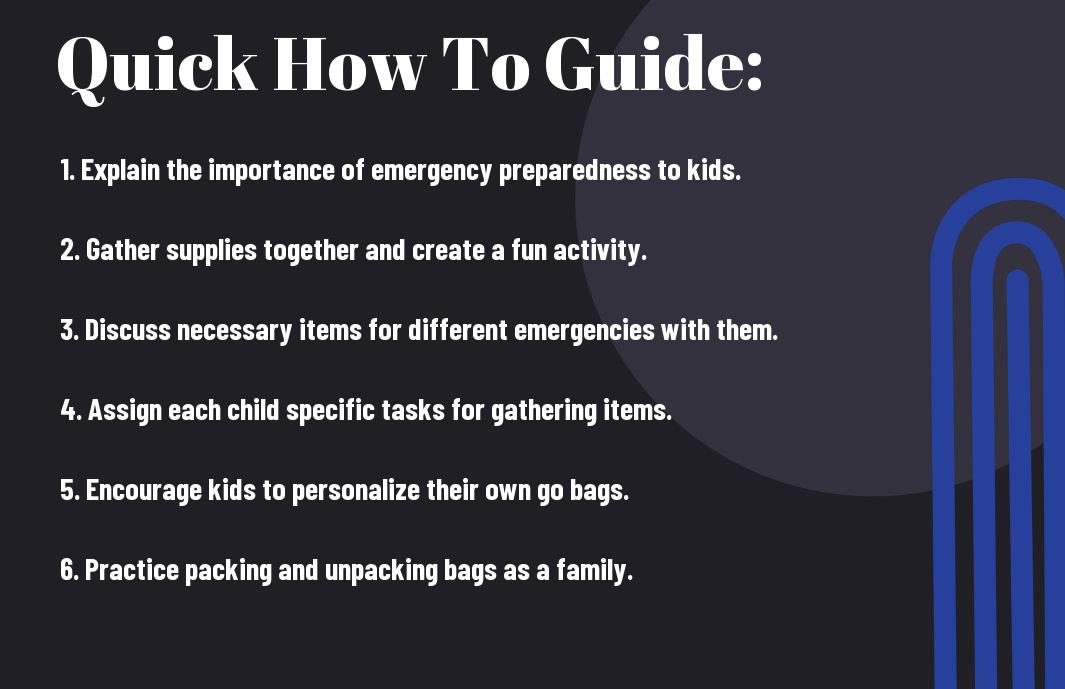
Any emergency preparedness plan becomes more effective when you engage your children in the process. By involving them in the planning of your family’s go bag, you not only educate them about safety but also empower them to take part in important decisions. This teamwork fosters a sense of responsibility and ensures they understand the importance of emergency readiness from an early age.
Making it a Fun Activity
Any project can be transformed into an enjoyable experience, and planning a go bag is no different. You can incorporate games, creative tasks, or themed challenges to keep your children interested. Consider allowing them to choose their favorite items for the bag, or set up a ‘treasure hunt’ for vital supplies, making safety both educational and engaging.
Assigning Responsibilities
To further enhance your kids’ involvement, assign specific roles and responsibilities within the planning process. This not only gives them ownership but also allows them to learn valuable skills.
Kids thrive when they have a sense of purpose. Assigning each child a particular responsibility—such as picking out non-perishable snacks, packing first-aid items, or selecting comfort items—can make them feel integral to the team. Encourage them to research what makes an effective go bag, as this will instill a sense of accomplishment and deepen their understanding of emergency preparedness. Assigning responsibilities helps develop their decision-making skills while reinforcing the significance of being prepared as a family unit.
Factors to Consider in Go Bag Content
Once again, identifying the right items for your emergency go bag is vital for ensuring your family’s safety. As you plan, consider the following factors:
- Your family’s specific needs
- Duration you might be away from home
- Environment you are in
- Accessibility of resources
- Age and health conditions of family members
Knowing these factors helps tailor your go bag to effectively support your family in emergencies.
Age Appropriateness of Items
To ensure your kids can effectively use the contents of the go bag, choose items that are age-appropriate for them. Younger children may need items that are easy to handle and understand, while older kids can be involved in more complex preparations, such as assembling a first aid kit.
Personal Needs and Preferences
Preferences also play a significant role in go bag planning. You should incorporate items that resonate with your family members, such as favorite snacks, comfort toys, or even personalized hygiene products. This ensures not only practicality but also emotional support during emergencies.
Another important aspect is balancing the imperatives with personal touches. Each family member may have distinct preferences about snacks, blankets, or games they find comforting. Including these personal items will help everyone feel more secure during stressful situations, making the go bag more functional and less intimidating for your kids.
Tips for Effective Communication
For successful emergency go bag planning, effective communication is key. Involve your kids by using clear and straightforward language that they can understand, ensuring everyone feels comfortable to share their thoughts. Here are some tips:
- Ask open-ended questions.
- Use relatable examples and stories.
- Encourage kids to express their feelings about emergencies.
- Reassure them that their opinions matter.
Perceiving their concerns will help you address issues more effectively and foster a cooperative spirit in the planning process.
Discussing Possible Scenarios
Discussing possible scenarios allows you to prepare your kids mentally for emergencies. Talk about various situations they might encounter, such as natural disasters or power outages. By framing these discussions in a calm manner, you can alleviate fears while ensuring your children know how to respond appropriately. Make it a safe space for them to express their worries and thoughts, reinforcing that it’s okay to talk about emergencies.
Engaging Kids in Decision-Making
Some ways to engage kids in decision-making include involving them in choosing items for the go bag or planning family drills. This hands-on involvement makes the process more enjoyable while also empowering them with knowledge and skills.
Kids thrive when they have a role in decision-making, especially in scenarios that might seem daunting. By including them in choices like what food to pack or which items are vital in the go bag, you give them a sense of ownership. This participation not only boosts their confidence but also enhances their understanding of preparedness. It can be an empowering and educational experience, fostering a proactive mindset regarding safety.
Regular Updates and Drills
Now that you’ve engaged your kids in creating the go bag, it’s imperative to keep the plan fresh and relevant. Schedule regular updates to review the contents, discuss any new family needs, and ensure everyone knows where the bag is located. Incorporating your children in these updates will also reinforce their understanding of emergency preparedness, making them feel more involved and responsible.
Establishing a Review Schedule
Even a well-prepared go bag needs periodic attention. Establish a review schedule, ideally every six months or at the start of each new season. This allows you to reassess the contents based on your family’s changing needs and to refresh the items that may have expired or become outdated. Engaging your kids in this process can help them learn the importance of maintaining readiness.
Practicing Emergency Scenarios
Little practices can help solidify your emergency plans. Conducting drills with your family ensures everyone knows what to do in various situations. Engage your kids by making it fun—turn a drill into a game, or set up a scenario they can act out. This hands-on involvement instills confidence and reinforces their understanding of the emergency procedures.
Drills should simulate realistic emergency scenarios, such as a fire evacuation or a natural disaster. Designate roles for each family member, ensuring that your kids understand their tasks. Allowing them to practice different scenarios regularly will prepare them emotionally and mentally, reducing anxiety in actual emergencies. You can also create variations to keep it interesting; for example, introduce new obstacles or challenges to solve as a team, fostering collaboration and critical thinking skills.
Educational Resources for Kids
Unlike typical school subjects, emergency preparedness can be both engaging and informative for your kids. Incorporating fun learning resources helps them understand the importance of being prepared, while fostering a sense of responsibility. This chapter will introduce you to various educational materials that can help your children grasp the crucials of emergency planning.
Books and Materials
Little ones often learn best through stories and illustrations, making books a fantastic resource for teaching kids about emergency preparedness. Seek out age-appropriate books that explain emergency situations in a relatable way, encouraging discussions and instilling vital information about safety and preparedness.
Online Tools and Games
Online tools and games provide interactive and engaging ways for your children to learn about emergency readiness. Utilizing these digital resources can make the learning process enjoyable and accessible, showcasing scenarios and safety tips that your kids can explore as they navigate through them.
Plus, many websites offer games designed to teach valuable skills like identifying emergency items, creating safety plans, and understanding natural disasters. These playful resources allow your children to practice decision-making in fun environments, making it easier for them to remember key concepts and strategies during real-life situations.
To wrap up
On the whole, involving your kids in emergency go bag planning not only equips them with crucial survival skills but also fosters a sense of responsibility and teamwork. Start by discussing potential emergencies relevant to your area and include them in the selection of items for the bag. Make the process educational and engaging by turning it into a fun activity. Encourage questions and provide explanations about each item’s purpose. This collaborative approach will help ensure your family’s safety while reinforcing the importance of preparedness.


