
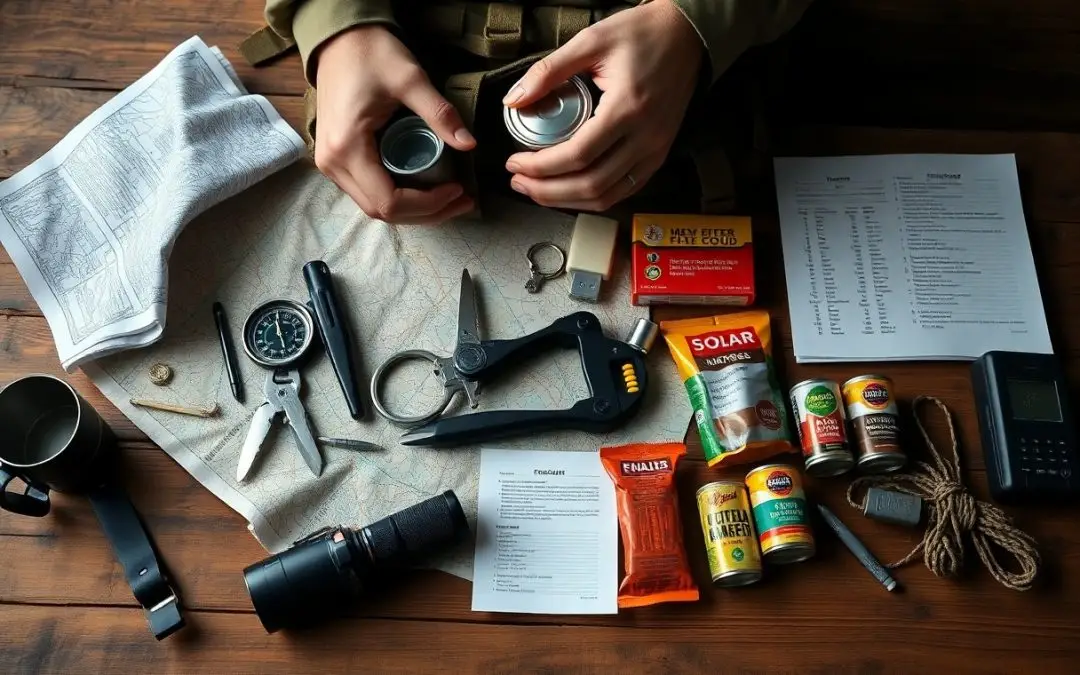
This guide shows you how to develop mental resilience and practical awareness that prepare you for unexpected challenges. You’ll learn to assess risks calmly, adapt quickly, and maintain focus under pressure. With the right mindset, you can respond effectively in any crisis.
Identifying Core Psychological Factors of Resilience
Resilience grows from traits you already carry within.
- Emotional regulation helps you stay steady under pressure
- Realistic optimism keeps you moving forward
- Adaptability allows quick shifts when plans fail
- Self-efficacy fuels action, not paralysis
Thou must recognize these traits not as gifts, but as skills sharpened through challenge.
Analyzing the Survival Arc and Behavioral Responses
Stress reshapes your behavior in predictable phases-denial, then deliberation, followed by decisive action. You often freeze before you fight, and that’s normal. Recognizing this arc helps you anticipate your own reactions. When danger strikes, you won’t be caught off guard by fear. Instead, you’ll see it as part of the process, not a failure.
Understanding the Internal Locus of Control
Belief in your ability to influence outcomes defines your response to crisis. You either see yourself as the driver or a passenger. Those with an internal locus act, adapt, and persist. They don’t wait for rescue. Thou must cultivate the mindset that your choices matter, even when circumstances don’t.
When you operate from an internal locus of control, you interpret events through agency, not fate. Setbacks become feedback, not final judgments. You ask, “What can I do?” instead of “Why is this happening to me?” This perspective doesn’t deny external threats-it simply refuses to surrender to them. Your power lies not in controlling the world, but in directing your response to it.
How to Regulate Stress Responses in High-Pressure Scenarios
When pressure peaks, your body reacts before your mind catches up. Learning to intercept this automatic response gives you back control. You can train your physiology to stay calm, even when conditions are not. The key lies in consistent practice before crisis strikes.
Breathing Techniques to Stabilize the Nervous System
Slow, deliberate breaths signal safety to your brain. Inhale for four counts, hold for four, exhale for six. This pattern lowers heart rate and reduces cortisol. You don’t need minutes-just three cycles can reset your state. Practice daily so it becomes automatic under stress.
Cognitive Reframing Strategies for Panic Prevention
Thoughts shape your reaction more than the event itself. When fear rises, question the story you’re telling. Is this threat immediate or imagined? Reframe danger as challenge. You gain clarity when you stop treating every surge of adrenaline as a warning.
Your mind often misreads stress signals as life-threatening when they’re not. Instead of thinking “I can’t handle this,” try “This is tough, and I’ve handled tough before.” You build resilience by changing internal language. Over time, this shift reduces panic triggers and strengthens emotional control when it matters most.
Developing Proactive Situational Awareness
You train your mind to notice what others overlook by staying mentally present in every environment. Instead of reacting after danger appears, you learn to detect subtle shifts-a change in crowd behavior, an unfamiliar sound, or a blocked exit. This awareness becomes automatic with practice, allowing you to adjust your actions before threats escalate. You’re not predicting disaster; you’re simply staying ahead of it.
How to Implement the OODA Loop for Rapid Assessment
Observe your surroundings with intent, gathering real-time data without jumping to conclusions. Process what you see-assess movement, tone, and patterns. Decide on a response aligned with your safety, then act with confidence. This cycle repeats continuously, sharpening your ability to adapt under pressure. Speed and clarity grow with repetition.
Practical Tips for Identifying Environmental Hazards
Scan for exits the moment you enter a new space, noting lighting, terrain, and potential barriers. Listen for unusual sounds-breaking glass, raised voices, or sudden silence. Watch how people move; erratic behavior can signal danger. Identify shelter options and escape routes in parking lots, trails, and buildings. Thou remain alert, not alarmed.
- Always note the nearest exit when entering a building
- Watch for wet floors, loose railings, or obstructed pathways
- Assess lighting conditions in parking areas and walkways
- Identify natural cover like walls or thick vegetation outdoors
- Trust sudden discomfort-you may sense risk before understanding it
Recognizing hazards isn’t about fear-it’s about preparation. You condition yourself to see the overlooked details: a frayed wire near water, a stranger loitering near your vehicle, or a storm cloud building on the horizon. These observations feed your decision-making long before action is required. Regular practice turns caution into instinct. Thou stay sharp, not suspicious.
- Carry a flashlight to inspect dark corners or under vehicles
- Use reflections in windows or mirrors to monitor behind you
- Check fire alarms and extinguishers in hotel rooms
- Notice animal behavior-birds fleeing can signal approaching danger
- Keep a mental log of changes in familiar environments
Cultivating the Essential Will to Live
Your survival often hinges not on strength or skill alone, but on an unshakable inner drive to keep going. When conditions deteriorate, it’s this deep-seated will-fueled by purpose, connection, and hope-that keeps you moving forward. You don’t need extraordinary courage; you need the quiet determination to choose action over surrender, one breath at a time.
Key Factors that Drive Human Perseverance and Grit
Meaningful connections anchor your resolve when isolation threatens to break you.
- A sense of purpose beyond survival
- Emotional ties to loved ones
- Belief in your ability to influence outcomes
- Small, consistent wins that build confidence
The foundation of endurance is built long before crisis strikes.
Building Mental Fortitude Through Daily Discipline
Consistency in small choices trains your mind to handle larger stressors. Choosing to wake early, stick to a routine, or push through discomfort conditions your response to pressure. You’re not waiting for a crisis to prove your strength-you’re shaping it with every disciplined act.
Each time you follow through on a commitment, even a minor one, you reinforce neural pathways linked to resilience. Skipping distractions, honoring your word to yourself, and maintaining structure-even when no one is watching-builds an internal standard. Over time, this self-trust becomes your anchor, allowing you to remain composed and decisive when real challenges emerge.

How to Execute Effective Decision-Making Under Stress
Stress narrows your focus, but your ability to choose wisely defines survival. In high-pressure moments, rely on practiced patterns, not perfect outcomes. Break problems into manageable parts and act swiftly on what you can control. Clarity emerges through action, not endless analysis. Trust your training and move forward with confidence.
Prioritizing Critical Tasks Using the Rule of Three
Focus on no more than three imperative tasks at any moment. This method prevents overwhelm and sharpens attention on what truly matters. Identify immediate threats, basic needs, and next steps-then act in that order. Simplicity increases effectiveness when time and resources are limited. Recognizing which three actions drive survival keeps you on track.
Tips for Maintaining Decisiveness During Uncertainty
Uncertainty tests your resolve, but hesitation costs time and energy. Stay grounded by sticking to known facts, not speculation.
- Pause for ten seconds before acting-enough to assess, not delay
- Use simple criteria: Is it safe? Is it necessary? Can it be reversed?
- Limit input to trusted sources or direct observation
- Accept that imperfect decisions now beat perfect ones too late
Recognizing that doubt is normal-but not a command-keeps you moving.
When the path ahead is unclear, your mindset becomes your compass. Instead of waiting for certainty, train yourself to operate within ambiguity by setting short feedback loops-act, observe, adjust. This rhythm builds momentum and reveals hidden options. Confidence isn’t the absence of fear; it’s the discipline to choose despite it.
- Label your emotions without letting them steer
- Repeat a personal decision mantra under pressure
- Anchor to past challenges you’ve already overcome
- Focus on the next right move, not the final outcome
Recognizing that decisiveness is a skill, not just instinct, allows you to strengthen it with practice.
Strategies for Ongoing Mental Preparedness
Consistency builds resilience over time. You strengthen your mental edge not through occasional effort but through daily discipline. A prepared mind stays calm when chaos strikes. Build routines that condition your thoughts like muscles. Assume that
Tips for Realistic Visualization and Mental Rehearsal
- Picture scenarios with sensory detail-sights, sounds, smells
- Run through responses step by step, not just outcomes
- Include setbacks and adapt mid-scenario
- Limit sessions to 5-10 minutes daily for focus
Practice sharpens instinct. You train your brain to respond before thought catches up. Assume that
How to Integrate Survival Skills into Regular Training
Every workout can double as survival prep. You don’t need extra time-just shift focus. Turn runs into navigation drills, strength sessions into load-carrying practice. Assume that
Turn everyday activities into skill builders by adding constraints or purpose. Carry a backpack during errands to simulate evacuation loads. Practice fire-starting techniques during weekend camping trips. Use stair climbs instead of elevators to build endurance under load. Each small act reinforces capability without disrupting routine. You’re not preparing for one event-you’re shaping a resilient identity through repetition. Assume that
Conclusion
With this in mind, you build a personal survival mindset by staying calm, thinking clearly, and acting decisively. You train yourself to assess risks, adapt to change, and trust your judgment. Confidence comes from preparation, practice, and the quiet certainty that you can handle what comes your way.


