
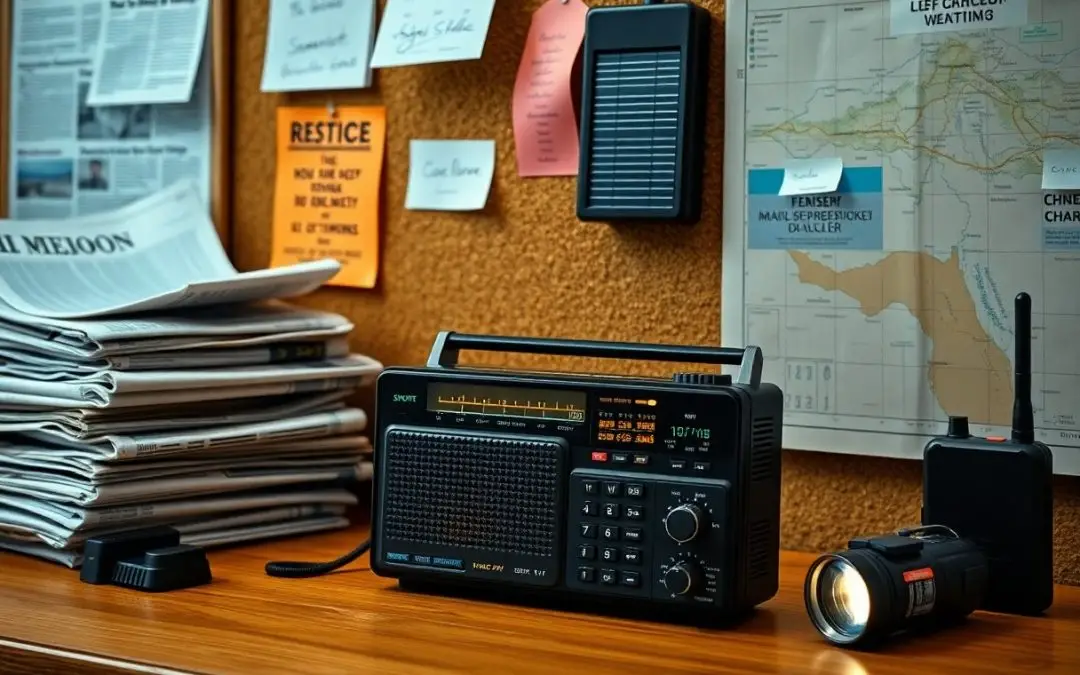
There’s a way to stay updated even when the internet is down or news outlets go silent. You rely on direct human connections, physical resources, and low-tech tools. Your neighbors, radios, printed schedules, and community boards become important sources. You listen, observe, and ask questions to keep yourself informed without digital access.
Evaluating the Factors That Lead to Information Blackouts
- Physical damage to communication networks
- Government-imposed internet restrictions
- Power grid failures
- Cyberattacks on critical infrastructure
- Natural disasters disrupting connectivity
The choices you make before a blackout determine how well you adapt when signals fade.
Identifying infrastructure vulnerabilities and outages
Networks rely on interconnected systems that fail silently until they don’t. You often overlook weak points until service drops. Power substations, cell towers, and undersea cables are single points of failure. Monitoring local outage reports and understanding regional dependencies helps you anticipate gaps. The earlier you spot fragility, the sooner you act.
Assessing the impact of localized vs. global shutdowns
A city blackout feels different than a worldwide digital silence. Local outages may stem from storms or equipment failure, limiting access but leaving alternate routes. Global disruptions suggest deeper systemic issues, possibly geopolitical or cyber-physical attacks. The scale shapes your response and resource needs.
When a blackout hits one region, neighbors might still relay news through radio or word of mouth. You can travel short distances to regain contact or access printed updates. In contrast, global shutdowns cut off nearly all digital pathways, disabling satellites, banking, and emergency networks. These events demand self-reliance, pre-established communication plans, and physical tools like hand-crank radios. The duration and reach define how deep your preparedness must go.
How to Utilize Analog Radio for Real-Time Updates
Radio remains one of the most reliable tools when digital networks fail. You can receive live updates during power outages or natural disasters with a simple battery-powered receiver. Tune into local stations or emergency broadcasts to stay aware of developing situations, even without internet access. This low-tech method delivers timely information when you need it most.
Selecting the best AM/FM and Shortwave receivers
Choose a receiver with hand-cranking capability and built-in solar charging for off-grid reliability. Look for models that support AM, FM, and shortwave bands to access both local and international broadcasts. A built-in flashlight and USB charging port add practical value during extended outages. Your selection should prioritize durability, range, and power independence.
Mastering frequencies for emergency weather and news bands
NOAA Weather Radio operates on seven dedicated VHF frequencies between 162.400 and 162.550 MHz, providing 24/7 weather alerts and emergency updates. Program these into your radio so you don’t waste time searching during a crisis. Many modern receivers include alert tones that activate only when urgent messages are issued.
Knowing the exact frequencies for emergency broadcasts saves critical time when conditions deteriorate. Beyond NOAA, government and international shortwave stations often broadcast on predictable frequencies during disasters. You can find published frequency guides from agencies like the FCC or international broadcasters such as BBC World Service. Store a printed list with your radio kit so you can quickly locate active channels, even if you’re in an unfamiliar region. Practice tuning in during calm periods to build confidence and speed when real emergencies occur.
Tips for Leveraging Mesh Networks and Peer-to-Peer Apps
- Use apps that work without internet by connecting devices directly
- Share updates with neighbors during outages using local networks
- Keep your device charged and discoverable when needed
Recognizing how these tools function in isolation gives you an edge when traditional systems fail.
Setting up communication via Bluetooth and Wi-Fi Direct
You can exchange messages or files between nearby devices using Bluetooth or Wi-Fi Direct, even without cellular service. Pair your phone with others in your group ahead of time and test file transfers. These connections work over short distances and conserve battery when used sparingly.
Joining decentralized nodes for local information sharing
You gain access to community-sourced updates by connecting to local mesh nodes in your area. These networks pass along alerts, maps, or supply locations without relying on central servers. Simply install a compatible app and allow your device to relay messages for others nearby.
Decentralized nodes operate like neighborhood message hubs, where each connected device helps carry information further. You don’t need to host the network-just participate by staying connected. Over time, these shared threads build a reliable flow of real-time updates, from road closures to safe zones, all without internet access.
How to Build an Offline Digital Intelligence Library
Creating your own offline digital library gives you access to critical knowledge when connectivity fails. You can store medical guides, communication protocols, and technical references on portable drives or ruggedized devices. This personal archive becomes a reliable source of truth when external information channels go dark.
Pre-loading necessary databases and survival wikis
Install curated databases like offline Wikipedia, medical handbooks, or survival guides onto USB drives or microSD cards. You’ll want these resources accessible without relying on live internet. Choose formats that work with lightweight offline browsers for faster retrieval during emergencies.
Managing storage for offline maps and technical manuals
Save topographic maps, GPS-free navigation charts, and equipment repair manuals in compressed formats to conserve space. Use tools like OsmAnd or MOBAC to export map regions you’re likely to need. Organize files by category so you can locate them quickly when conditions change.
Efficient storage means balancing detail with capacity. High-resolution maps and full technical schematics consume space, so prioritize areas relevant to your location and needs. Split large files into labeled sections, and verify readability across backup devices to ensure nothing is corrupted when you need it most.
Critical Factors in Establishing Community Information Hubs
- Reliable leadership with clear communication roles
- Accessible physical locations known to all residents
- Backup power and signal-resistant messaging tools
- Regularly updated information logs
After setting up trusted coordinators and fallback systems, your network becomes resilient even when digital channels fail.
Coordinating neighborhood watch and relay stations
You assign trusted neighbors to specific zones, creating a chain of observation and message transfer. Each station confirms receipt before passing updates, reducing errors. This human network keeps information flowing when phones go silent.
Using visual and audible signaling for urgent alerts
You rely on simple, pre-agreed signals like flashing lights or whistle patterns to warn of danger. Every household learns the codes so responses are immediate and accurate.
Red lanterns hung at street corners can signal evacuation, while three short bell rings may mean shelter-in-place. These methods work without electricity or language fluency. You ensure signals are distinct to prevent confusion, and practice them monthly so everyone reacts instinctively when real emergencies occur.
Tips for Verifying Information Without Digital Fact-Checkers
- Seek firsthand accounts from trusted individuals on the ground
- Cross-reference details with people who have direct knowledge
- Assess the plausibility of claims based on known facts
- Watch for emotional language designed to provoke reactions
Recognizing inconsistencies in timing, location, or behavior helps separate truth from distortion.
Triangulating reports from multiple independent sources
You can build a clearer picture by comparing accounts from unrelated people or groups. When three or more independent sources describe similar events without coordination, confidence in accuracy increases. Rely on diverse messengers-neighbors, travelers, local leaders-to avoid echo chambers.
Recognizing and filtering rumors during crisis situations
Rumors often spread quickly when fear is high and information is scarce. You’ll notice they usually lack specific details like names, times, or verifiable locations. They may feel urgent or sensational, urging immediate action or panic.
People under stress are more likely to accept unverified claims that confirm their fears. A rumor might claim a road is blocked, but no one can say when or by what. Instead of repeating it, ask who saw it and how they know. Test the story against your own observations or trusted contacts. Over time, patterns emerge-rumors shift, while facts hold steady. Trust what’s consistent, not what’s loudest.

Conclusion
Conclusively, you maintain awareness during news and internet blackouts by relying on trusted offline sources-printed newspapers, battery-powered radios, community bulletin boards, and direct conversations. You stay informed by building local networks, verifying information through multiple channels, and staying alert to official announcements delivered in person or via emergency broadcasts.


