
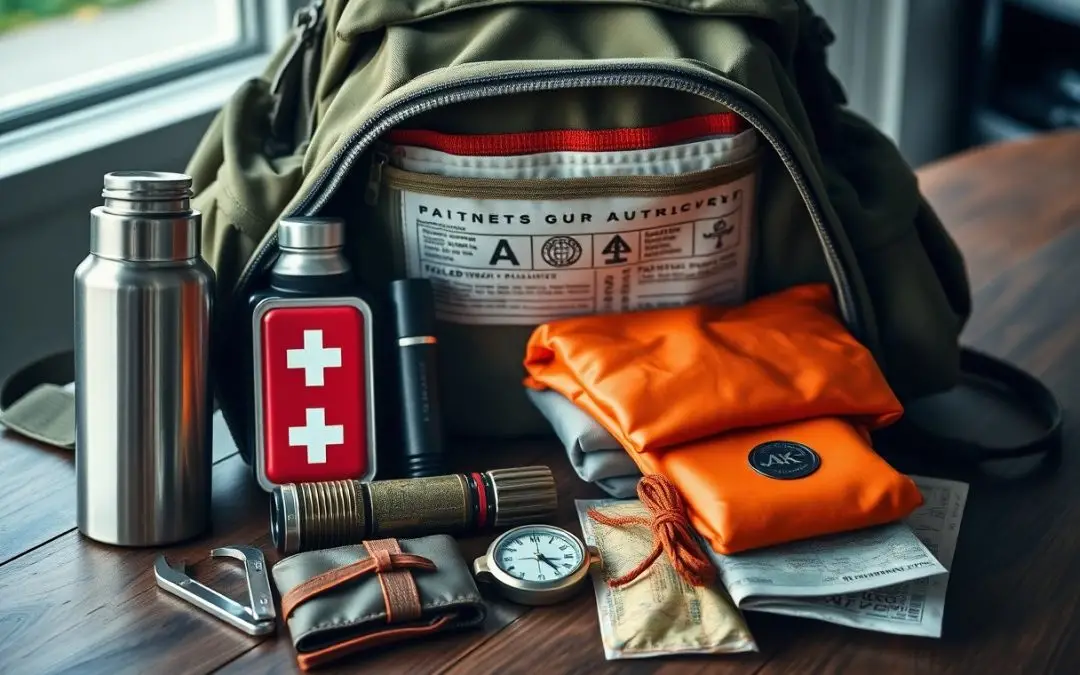
Most experienced survivalists expect you to carry shelter, water, fire, first aid, tools, maps and compass, light, food, communications, and personal items; this concise guide tells you what to pack and why each item matters for lasting readiness.
Key Takeaways:
- Water and purification: pack 1-3 liters, a lightweight filter, and chemical tablets to ensure safe drinking water.
- Food and cooking: high-calorie, nonperishable rations, a compact stove, fuel, and a can opener.
- Shelter and warmth: emergency blanket or bivvy, compact sleeping bag, tarp, and extra thermal layers to prevent hypothermia.
- Medical supplies: comprehensive first-aid kit, personal prescriptions, plus trauma items like a tourniquet and pressure dressings.
- Tools and communication: multitool and fixed blade, fire-starting kit, headlamp with spare batteries, whistle, map and compass, and a NOAA/hand-crank radio or power bank.
Water Filtration System
You need a reliable water filtration system to remove pathogens and particulates when tap water isn’t available. Mechanical filters paired with chemical options protect against bacteria, protozoa, and many viruses, giving you layers of defense in varied conditions.
Portable straw filter
You can drink directly from lakes or streams using a portable straw filter that removes bacteria and protozoa. Compact models fit in pockets and weigh ounces, so you maintain quick access during hikes, evacuations, or sudden water needs.
Purification tablets
You should include purification tablets as a lightweight backup for treating small water volumes. Tablets kill bacteria, some viruses, and protozoa when used according to directions, though contact time varies by product and water clarity.
Choose chlorine dioxide tablets for broader virus and protozoa coverage; chlorine tablets act faster on bacteria but struggle with cryptosporidium. Allow 30 minutes for clear water, up to four hours for cloudy water, and aerate treated water if taste is strong. Avoid iodine if you are pregnant or have thyroid issues and check expiration dates since potency declines over time.
Fire Starting Kit
You should include at least three ignition methods, a selection of dry tinder, and a watertight container to keep them safe. Pack a lighter, a ferrocerium rod, and waterproof matches so you can start a fire in wind, rain, or cold.
Ferrocerium rod
You can produce thousands of hot sparks with a ferrocerium rod even when components are damp; use a sturdy striker or the back of a knife to shave intense sparks onto prepared tinder. Practice striking and angling sparks so you can quickly catch fine tinder and sustain a flame under adverse conditions.
Waterproof matches
You should carry waterproof or stormproof matches sealed in a tube or tin to prevent moisture damage and ensure dependable ignition. Keep a small striker on the container and store matches with a bit of spare tinder so one match will light a cooking fire or signal.
You should store matches upright and inspect heads before trips, replacing any that show wear; test a few at home to confirm reliability. Consider pairing matches with waxed cotton or cotton balls soaked in petroleum jelly to guarantee a quick, long-burning ignition from a single strike.
Emergency Shelter
You pack shelter to stay dry, retain heat, and avoid exposure when you’re on the move. Compact options like tarps, bivvies, and emergency blankets let you create quick cover without adding bulk to your go bag.
Mylar space blanket
You carry a mylar space blanket for heat reflection and compact emergency warmth. The foil material reflects radiant body heat, fits one person in a pinch, and doubles as a bright signal or groundsheet when needed.
Lightweight nylon tarp
You can rig a lightweight nylon tarp as a lean-to, A-frame, or groundsheet to block rain and wind while conserving weight in your pack. Choose a size that covers your sleeping area yet still folds small.
A tarp plus cord and a few carabiners expands shelter setups and speeds deployment under stress. Pack one with reinforced corners to reduce tearing when tensioned against trees or stakes.
Look for nylon with waterproof coating and taped seams; a 6×8 to 8×10 foot tarp often balances coverage and weight for solo or two-person use. Add lightweight guyline and mini stakes, and practice pitching different configurations before you need them.
First Aid Kit
You should pack a compact, comprehensive first aid kit that addresses bleeding, burns, fractures, and common ailments. Include gauze, adhesive bandages, medical tape, a triangular bandage, pain relievers, tweezers, and a CPR mask to stay prepared for emergency scenarios.
Sterile trauma bandages
You should carry sterile trauma bandages to control heavy bleeding and protect deep wounds from contamination. Select large, compressive dressings with built-in pads and include extra sterile dressings to manage multiple injuries during evacuation.
Antiseptic cleaning wipes
You should pack antiseptic cleaning wipes to reduce infection risk in cuts, abrasions, and before dressing wounds. Choose individually wrapped wipes that are effective against bacteria and viruses and dry quickly to speed treatment.
You can choose alcohol-based wipes for rapid drying and chlorhexidine or povidone-iodine pads for longer antimicrobial action; carry a mix if space allows. Store wipes in a waterproof pouch and rotate them before their expiration dates to ensure potency.
Multi-Tool Device
You should pack a compact multi-tool that combines pliers, screwdrivers, a can opener and a locking blade; quality steel and a solid hinge matter when you need reliable performance.
Assess weight, corrosion resistance and warranty; keep the multi-tool in a quick-access pocket so you can retrieve it during high-stress situations.
Folding pliers
You will use folding pliers for gripping small objects, bending wire and cutting cord; choose one with a comfortable handle and a tight pivot for precise control.
Prefer pliers with replaceable wire cutters and spring-assist for quick operation; test the bite and alignment before you buy.
Stainless steel blade
You want a stainless steel blade that resists corrosion while holding a decent edge for food prep, cutting cord and first-aid tasks.
Look for blade steels like 440C or 154CM depending on your need for corrosion resistance versus edge retention; a reliable locking mechanism prevents accidental closure.
You should maintain the blade by drying and oiling after moisture exposure and by sharpening with a fine stone; a 20-degree per-side edge balances longevity and cutting performance for most field tasks.
High-Calorie Food
You need calorie-dense, shelf-stable items to sustain energy during prolonged emergencies. Pack a mix of fats, proteins, and carbs-nuts, nut butters, dried meats, and compact mixes-to maximize calories per ounce while keeping weight manageable.
Emergency ration bars
You should choose high-calorie bars with long shelf life and balanced macros. Look for bars that provide at least 300-400 calories, stable packaging, and minimal refrigeration. Keep multiple bars per person per day and test texture and taste before an emergency.
Freeze-dried meals
You will value freeze-dried meals for low weight and long shelf life; they rehydrate quickly with hot or cold water and deliver complete meals. Pack options that match your calorie needs and any dietary restrictions to maintain energy on the move.
You can boost calories by adding oils, powdered milk, or extra grains into the pouch. Check serving calories, practice rehydration times at home, and store unopened pouches in a cool, dry place to maximize shelf life.
Navigation Tools
You rely on simple, reliable navigation tools when GPS fails. A magnetic baseplate compass and up-to-date local topographic maps let you orient, plan routes, and identify hazards without batteries.
Magnetic baseplate compass
You should choose a clear, liquid-filled baseplate compass with an orienting arrow, index lines, and a rotating bezel. Practice map-to-compass skills so you can take bearings, follow courses, and correct for magnetic declination under pressure.
Local topographic maps
You carry waterproof, tear-resistant topographic maps of your area at appropriate scales-1:24,000 for close terrain, 1:50,000 for broader travel.
Study contour lines, water features, trails, and access points before you set out so you can pick safe routes and alternate exits.
Annotate maps with compass bearings, hazard notes, water sources, and cache locations; store originals in a waterproof sleeve and keep copies in your pack and on a separate digital device.
Illumination Gear
You need reliable light to move, signal, and work after dark. Pack multiple light sources that balance brightness, battery life, and weight.
Choose waterproof, impact-resistant models and store them where you can reach quickly during an emergency.
Powerful LED headlamp
You want a powerful LED headlamp with an adjustable beam and at least 300 lumens for hands-free tasks. Look for long battery life, comfortable straps, and multiple brightness settings to manage runtime.
Rechargeable models reduce waste and let you top off with your power bank; keep a small handheld flashlight for redundancy and precise tasks.
Lithium backup batteries
Carry lithium backup batteries to power headlamps, radios, and phones for extended periods. Select high-capacity cells with built-in protection and check expiration dates before packing.
Store batteries in a protective case to prevent shorting and keep them separate from metal objects. Rotate stock to maintain charge readiness.
Prefer lithium-ion or lithium iron phosphate (LiFePO4) for longer cycle life and safer chemistry; match voltage to your devices and include a compact charger or solar panel to reload batteries in the field.
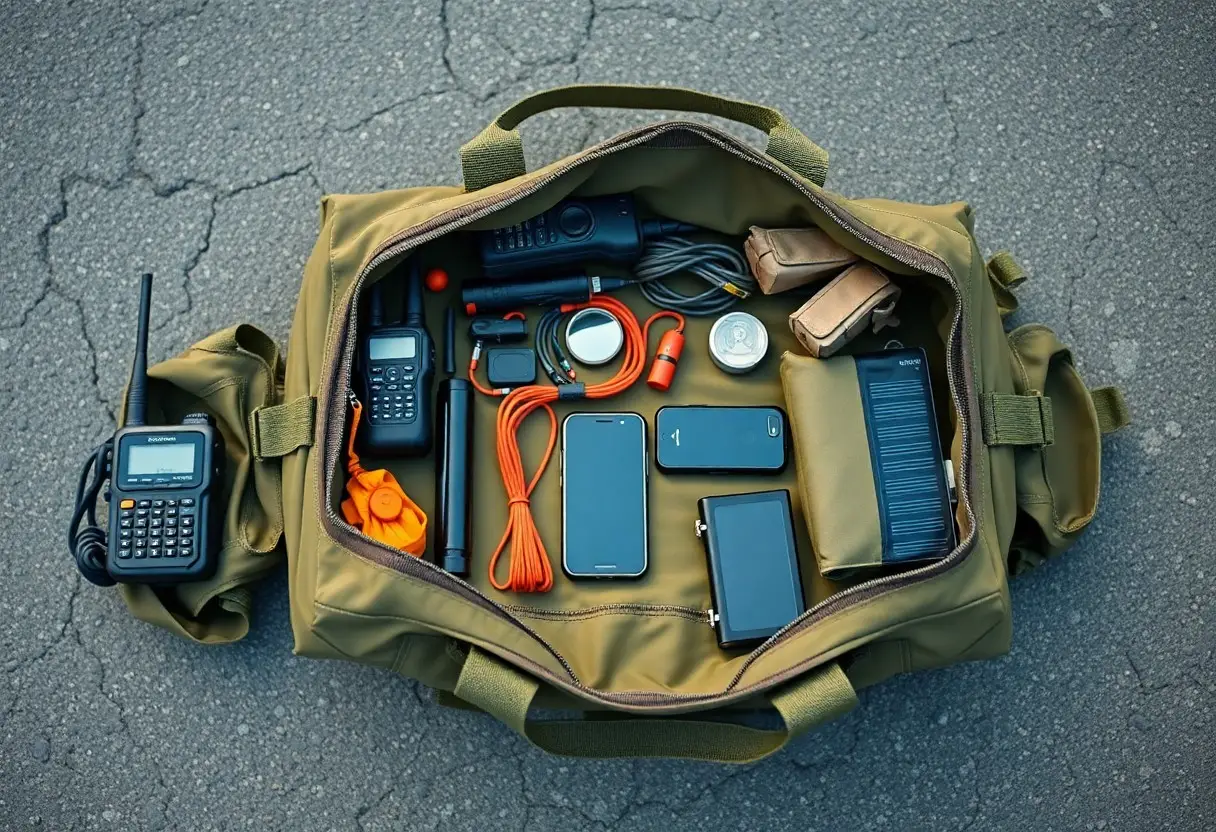
Communication Device
You must pack reliable ways to send and receive information when systems fail. Include a battery or hand-crank radio, a satellite messenger or PLB, and spare batteries or a compact solar charger so you can call for help and get weather updates.
You should choose devices based on range and power. Two-way satellite messengers let you text rescuers, while PLBs send one-way distress with coordinates. Label controls, keep manuals dry, and practice using each device before you need it.
Emergency crank radio
You want an emergency crank radio that receives NOAA weather and AM/FM and offers USB charging. Hand-crank or solar power lets you stay informed when batteries die, and many models include an LED flashlight and SOS alarm for extra signaling.
Signal mirror
You can use a compact signal mirror to reflect sunlight toward aircraft or distant searchers; light flashes carry farther than sound and are visible from miles away. Choose a mirror with a sighting hole or aiming device for accurate bursts.
You should practice aiming: hold the mirror at arm’s length, sight your target through the hole, then tilt the mirror until the glint appears on the target. Store the mirror in a protective pouch and attach it to a lanyard for quick access.
Durable Cordage
Durable cordage belongs in every go bag for shelter, rigging, repairs and emergency rescues. You should include multiple types and lengths-nylon rope for load-bearing tasks and lighter cord for general utility.
You should inspect cord regularly for wear and store it dry to maintain strength. Compact spools, braided wrist loops or short pre-cut lengths save space and give quick access when seconds count.
Paracord 550
Paracord 550 delivers roughly 550 pounds of tensile strength and a flexible sheath you can use for lashing, snares or sewing thread from inner strands. You should carry 50-100 feet in your kit.
You can strip inner strands for fishing line, emergency sutures or trap cord. Paracord also serves as a zipper pull, gear strap or improvised tourniquet when needed.
Heavy-duty duct tape
Heavy-duty duct tape patches gear, seals seams and builds temporary shelters with minimal tools. You should pick cloth-reinforced tape with a weather-resistant adhesive for longer-lasting repairs.
You can wrap a small roll around a pencil, water bottle or flat card to save space and prevent unwinding. Keep tape near your bag opening for immediate access during emergencies.
Use tape to secure bandages, create splints, prevent blisters, insulate exposed wiring and attach reflective markers. You can also finish frayed cord ends or fashion temporary straps; avoid leaving adhesive exposed to extreme heat, which reduces hold.
To wrap up
Considering all points, you should prioritize compact water purification, shelter, first-aid, fire-starting tools, a multipurpose knife, reliable light, extra batteries, emergency food, communication devices, and signaling gear in your go bag.
You will maintain readiness by rotating supplies, tailoring contents to local climate and personal skills, and practicing use so each item performs when needed.
FAQ
Q: What are the top 10 items to include in a go bag?
A: Pack these 10 items: reliable water supply (at least 1 gallon per person per day for 3 days), a portable water filter or purification tablets, high-calorie nonperishable food, multi-purpose shelter and insulation (emergency blanket, compact tarp or bivy, season-appropriate clothing), a fixed-blade or quality folding knife and a multi-tool, fire-starting kit (ferro rod, waterproof matches, lighter), a comprehensive first aid kit tailored to personal needs, reliable lighting (headlamp with spare batteries), communication and signaling items (battery-powered radio or hand-crank radio, whistle, signal mirror), and copies of personal documents with small cash. Organize items in labeled compartments so you can access importants quickly during an evacuation.
Q: How much water should I pack and what are the best purification methods?
A: Store a minimum of one gallon per person per day and plan for at least three days of water for short-term evacuation; extend to 72 hours or more for longer outages. Carry a lightweight water filter rated to remove bacteria and protozoa plus chemical tablets for redundancy. Boil water for one minute at sea level or three minutes above 6,500 feet to kill pathogens when heat source is available. Keep spare collapsible water bottles and a metal cup for boiling, and replace stored bottled water every six to twelve months based on manufacturer guidance.
Q: What should a practical first aid kit for a go bag contain?
A: Include adhesive bandages of various sizes, sterile gauze pads, adhesive tape, antiseptic wipes, antibiotic ointment, trauma dressing, triangular bandage, elastic bandage for sprains, tourniquet, disposable gloves, scissors, tweezers, CPR face shield, personal prescription medications with copies of prescriptions, OTC pain relievers and antihistamines, and a compact first aid manual. Add specialty items for known conditions such as epinephrine auto-injectors or diabetes supplies, and seal medications in waterproof packaging to protect from moisture.
Q: Which tools and fire-starting items should never be left out of a survival go bag?
A: Carry a dependable fixed-blade or strong folding knife, a multi-tool with pliers and screwdrivers, a ferrocerium rod or striker, waterproof matches and a lighter, at least 50 feet of paracord, a roll of duct tape or tape wrap, a compact folding saw, a small shovel or entrenching tool when space allows, and a whistle for signaling. Store fire-starting materials in waterproof containers and practice basic fire-building techniques so you can deploy tools efficiently under stress.
Q: How often should I inspect and update my go bag, and what should I check each time?
A: Inspect the go bag every three to six months and perform a full inventory at least twice a year. Check expiration dates on food, water, and medications; test batteries and rechargeable power banks; operate radios and headlamps briefly to confirm functionality; replace worn clothing and waterproof any degraded packaging. Adjust contents for seasonal clothing changes, evolving medical needs, and changes in household size or destination, and document the inspection date and any items replaced on a checklist kept inside the bag.


