
It’s easy to overlook important details when packing your go bag, especially when time is of the essence. Many individuals make common mistakes that can hinder their preparedness during emergencies. From selecting the wrong items to failing to update your supplies, inefficiencies can lead to unnecessary stress when you need your go bag the most. In this post, we’ll discuss the pitfalls you may encounter and how to avoid them, ensuring your go bag is ready when you need it.
Common Packing Mistakes
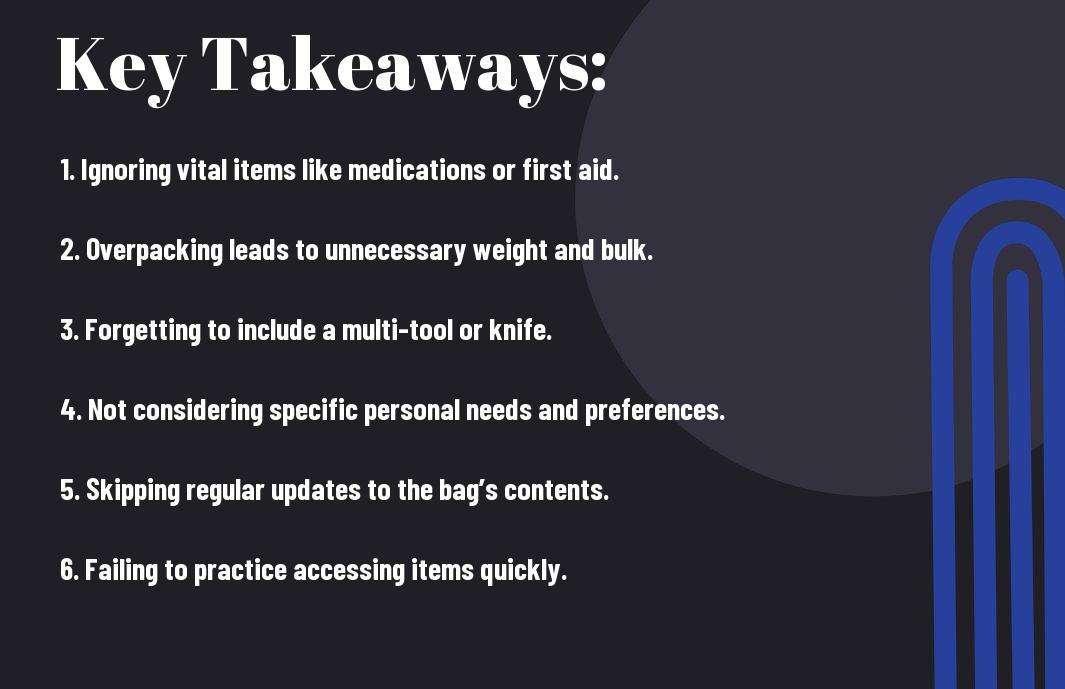
Before setting out with your go bag, it’s vital to be aware of the common packing mistakes that can hinder your preparedness. Often, individuals focus on packing a wide array of items but neglect to streamline their selection. Failing to prioritize vital gear can result in a bulging bag that weighs you down, instead of a well-organized kit that meets your immediate needs.
Overpacking Essentials
After packing your go bag, you might find yourself cramming in items that seem necessary. It’s easy to fall into the trap of overpacking vitals, thinking that having more gear will make you safer. However, by curating your selection to only the most vital items, you can lighten your load and enhance your mobility during emergencies.
Ignoring the Weather
Behind your packing decisions, the weather should be a significant factor in determining what goes into your go bag. Disregarding the current and forecasted conditions can lead to packing the wrong types of clothing or gear, which could impede your ability to face outdoor elements effectively.
Overpacking based on climate conditions can lead to bulky bags that are difficult to manage. If you overlook the weather, you might include unnecessary items that won’t serve you in a storm or extreme heat, for example. Instead, focus on versatile gear that allows you to adapt to varying circumstances. Knowing the expected temperature and conditions can guide you to select clothing that layers well and withstands the elements, ultimately making your go bag more functional and easier to maneuver.
Not Including Important Documents
Now is the time to focus on the often-overlooked aspect of packing your go bag: important documents. In times of emergency, having easy access to vital paperwork can make a significant difference in managing your situation effectively. Without these documents, you may face unnecessary obstacles, such as delays in getting medical assistance or financial support. Make sure you’re not caught unprepared by taking the time to gather and organize the importants.
Identification and Insurance
Behind every great emergency plan is a collection of key documents, such as your identification and insurance information. These documents serve as proof of who you are and what resources you have at your disposal. Take the time to make copies of your ID, insurance cards, and any important policy numbers to ensure that you can easily prove your identity and access necessary services during stressful times.
Emergency Contacts
The value of having emergency contacts readily available cannot be overstated. In the chaos of an emergency, you may not be in a position to remember or communicate important phone numbers. List down key contacts, including family members and local services, and keep this information in your go bag. This ensures that you won’t lose touch with loved ones, and you can access necessary help without wasting precious time looking for contact details.
Understanding how to manage your contacts is vital in emergencies. Consider including not just immediate family but also neighbors or friends who may be able to assist you. Avoid relying solely on your phone, as electronic devices can fail or become damaged. Writing these contacts down also allows for easy access, enabling you to focus on what’s truly important: your safety and well-being.
Underestimating Food and Water Needs
To ensure you are adequately prepared, it’s crucial to consider your food and water needs carefully. Many people fail to pack enough supplies, assuming they’ll manage with minimal provisions. Disregarding this aspect can become overwhelming during emergencies, making it vital to plan ahead and have sufficient resources on hand.
Non-perishable Food Options
Any effective go bag should include a range of non-perishable food items. Focus on calorie-dense choices like energy bars, canned goods, nut butter, and dried fruits. These options not only pack well but also provide the necessary sustenance to keep your energy levels up when it matters most.
Hydration Considerations
With proper hydration being crucial for survival, always prioritize water in your go bag. Pack enough bottled water to last several days, aiming for at least one gallon per person per day. Having additional water purification tablets or filters can also be beneficial to ensure safe drinking water when necessary.
And while you may pack enough bottled water, don’t overlook other hydration methods. Consider including electrolyte packets or portable water filters to optimize your hydration options. Staying hydrated can significantly affect your endurance and overall well-being during emergency situations, enhancing your ability to deal with challenges effectively.
Failing to Customize Your Bag
Keep in mind that a one-size-fits-all approach doesn’t work for go bags. Customizing your bag based on your personal needs and circumstances is crucial. Your go bag should reflect your lifestyle, health considerations, and unique situations that could arise in emergencies. Taking time to personalize your gear can make a significant difference when you need it the most.
Personal Needs and Preferences
Across different situations, your specific needs and preferences are vital in ensuring that your go bag is effective. Whether you have dietary restrictions, medical needs, or are faced with personal comfort requirements, tailoring your go bag to address these factors will enhance your readiness and peace of mind during emergencies.
Family vs. Individual Needs
To ensure everyone in your household is prepared, consider the varying needs of your family members compared to your individual requirements. A family go bag should include crucial items for every member, while your personal go bag can focus more on your unique circumstances.
It’s important to understand that each family member may have different necessities, such as age-specific items for children or medical supplies for elderly family members. Take the time to assess the needs of your entire family and incorporate items that cater to those differences. This thoughtful approach ensures that your family is well-equipped to handle emergencies together, providing comfort and support when needed the most.
Neglecting the Importance of Practice
Once again, many individuals overlook the significance of practicing with their go bag. Simply packing it is not enough; you need to familiarize yourself with its contents and how to use them effectively. Regular practice can help you react swiftly and confidently in emergencies. Knowing where important items are located allows for quicker responses, which could make a significant difference in critical situations. Make it a habit to incorporate practice sessions into your routine, ensuring that you and your loved ones are well-prepared when it matters most.
Regular Updates and Drills
By routinely updating your go bag and conducting drills, you enhance your preparedness for unexpected situations. Keep track of expiration dates, check equipment functionality, and make necessary adjustments as your needs change. Drills will familiarize you with your go bag’s contents, ensuring you can locate crucial items quickly. Engage your family members in these practices to improve teamwork and communication during emergencies.
Assessing Weight and Accessibility
Before finalizing your go bag, it’s crucial to consider both its weight and accessibility. A heavily packed bag can slow you down in an emergency, while items that are difficult to reach may compromise your safety. Aim for a balance where your bag is lightweight yet functional, containing only the crucials. Familiarize yourself with how to access everything quickly, which can make a world of difference in urgent situations.
Indeed, the weight and accessibility of your go bag can greatly impact your ability to act swiftly in high-pressure scenarios. A bag that is too heavy can lead to fatigue and delay your escape, while contents tucked away or hard to reach may waste precious seconds. Opt for lightweight, high-quality materials and strategically organize your items for easy access. Regularly test your bag’s weight during practice drills and make adjustments as necessary to ensure it remains optimized for quick deployment in any emergency. Prioritizing these aspects will enhance your overall preparedness.
Conclusion
Now that you understand common mistakes people make when packing their go bag, you can make informed decisions to enhance your preparedness. Ensuring you have crucial items and avoiding overpacking will make your go bag more effective. Take the time to regularly review and update your contents to meet your evolving needs. This proactive approach will empower you to feel confident and ready for any situation that may arise.


